A Republican senator has publicly called on President Donald Trump to remove Defense Secretary Pete Hegseth, escalating a leadership crisis at the Pentagon just as the U.S. military pushes to modernize around drones and faster battlefield procurement.
Pentagon turmoil raises defense procurement risk

The political blowup matters because it goes beyond one cabinet fight: it raises questions about whether the Defense Department can keep experienced commanders, execute acquisition reforms and maintain continuity in programs tied to the next phase of U.S. military readiness. When lawmakers start describing the Pentagon as “incompetent,” the issue stops being personnel drama and becomes a test of whether Washington can actually convert defense budgets into capability.
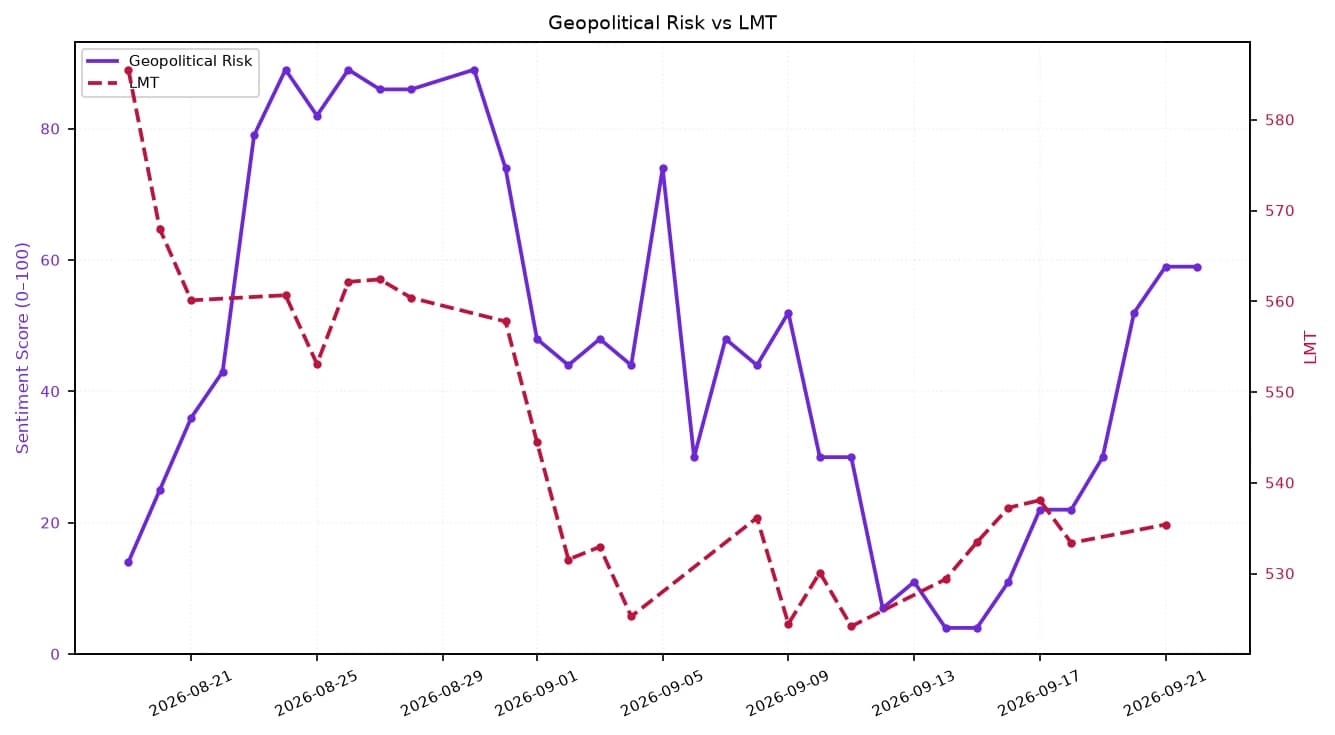
Sentiment IndicatorsⓘProprietary · adalytica.com · September 3, 2026
This is a snapshot — live sentiment, awareness and momentum for 130+ markets update continuously in the dashboard.Open AlphaPulse
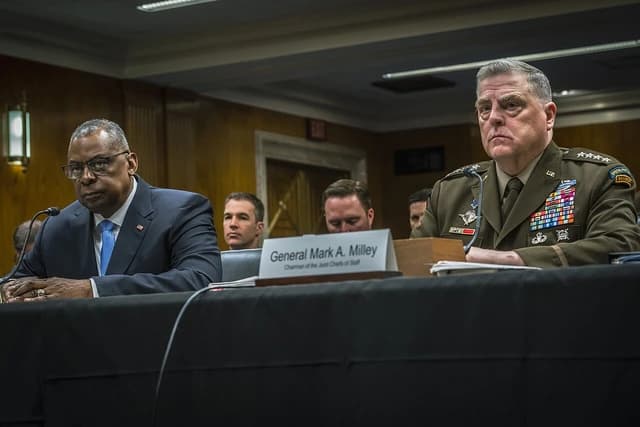
Thom Tillis, a North Carolina Republican and former member of the Senate Armed Services Committee, said he had “never seen an administration more incompetent” in its stewardship of service members. He accused Hegseth of preferring culture-war fights over the “vital work” of national defense and said the secretary had created a leadership vacuum by driving away senior officers.
The attack is especially notable because Tillis supported Hegseth’s confirmation last year. That reversal suggests the backlash is not confined to Democrats or Pentagon insiders. It is spreading into the Republican coalition that Trump needs to sustain his defense agenda. For investors, that raises the probability of policy churn, slower procurement decisions and more uncertainty around which contractors and platforms get prioritized.

The immediate trigger was the resignation of Army Secretary Dan Driscoll after repeated disputes with Hegseth over the removal of senior military officials, including former Army chief of staff Gen. Randy George. Tillis praised Driscoll and backed his push to accelerate the Army’s transformation toward unmanned systems, saying the service understood that the old way of fighting no longer fits the battles seen in Ukraine and elsewhere.
That is the investable core of the story. The Trump administration has been signaling a shift toward fixed-price discipline, acquisition reform and faster adoption of drones and other autonomous systems, which should favor the defense primes and suppliers best positioned to scale production and integrate new technology. But leadership instability at the top of the Pentagon can delay those shifts, undermine procurement confidence and weaken the Pentagon’s ability to reward the companies that are building the future of warfare.
The market already knows defense spending remains supported by geopolitics, but it may be underestimating how much execution matters. The sector does not just need bigger budgets; it needs competent buyers. A Pentagon distracted by personnel battles can slow contracting timelines, complicate modernization plans and create stop-start demand that punishes programs dependent on clear requirements and stable champions.
That helps explain why defense names have become more sensitive to Washington headlines even when strategic demand is intact. Lockheed Martin, Northrop Grumman and RTX are all tied to long-cycle programs that benefit from stable funding and predictable acquisition paths. But if the Army’s drone push, force restructuring and procurement overhaul become politicized or disrupted, the near-term winners may be the companies closest to existing production lines and the suppliers that can pivot fastest to autonomy, sensors, software and electronic warfare.
Adalytica’s U.S. White House policy direction sentiment gauge is in “Fear,” with awareness in “Extreme Fear,” underscoring how quickly investors are pricing political uncertainty around the administration. By contrast, the broader Global Stability Sentiment remains neutral, suggesting markets are separating U.S. policymaking noise from the underlying strategic backdrop. That is exactly where mispricing can emerge: the geopolitical case for defense is strong, but execution risk at the Pentagon can still create entry points in the best industrial names.
| Entity | Gains | Losses |
|---|---|---|
| Pentagon reformers | ▲More coherent procurement | ▼Political infighting |
| Defense primes | ▲Drone and modernization demand | ▼Delayed awards |
| Lockheed Martin (LMT) | ▲Scale and program depth | ▼Acquisition uncertainty |
| Northrop/RTX | ▲Autonomy, sensors, missiles | ▼Pentagon instability |