Secret technology from the U.S. F-35 fighter jet has reportedly gone missing on a shipment route to Hong Kong, raising the risk that some of the Pentagon’s most sensitive stealth systems may have reached China and forcing a congressional investigation.
F-35 Parts Shipment Reportedly Goes Missing to Hong Kong

The development matters economically because it goes to the heart of U.S. defense-industrial security, export controls and the protection of high-value intellectual property. If sensitive components can be diverted in transit, it could prompt tighter handling rules, higher compliance costs and fresh scrutiny of global logistics chains tied to advanced weapons and aerospace.
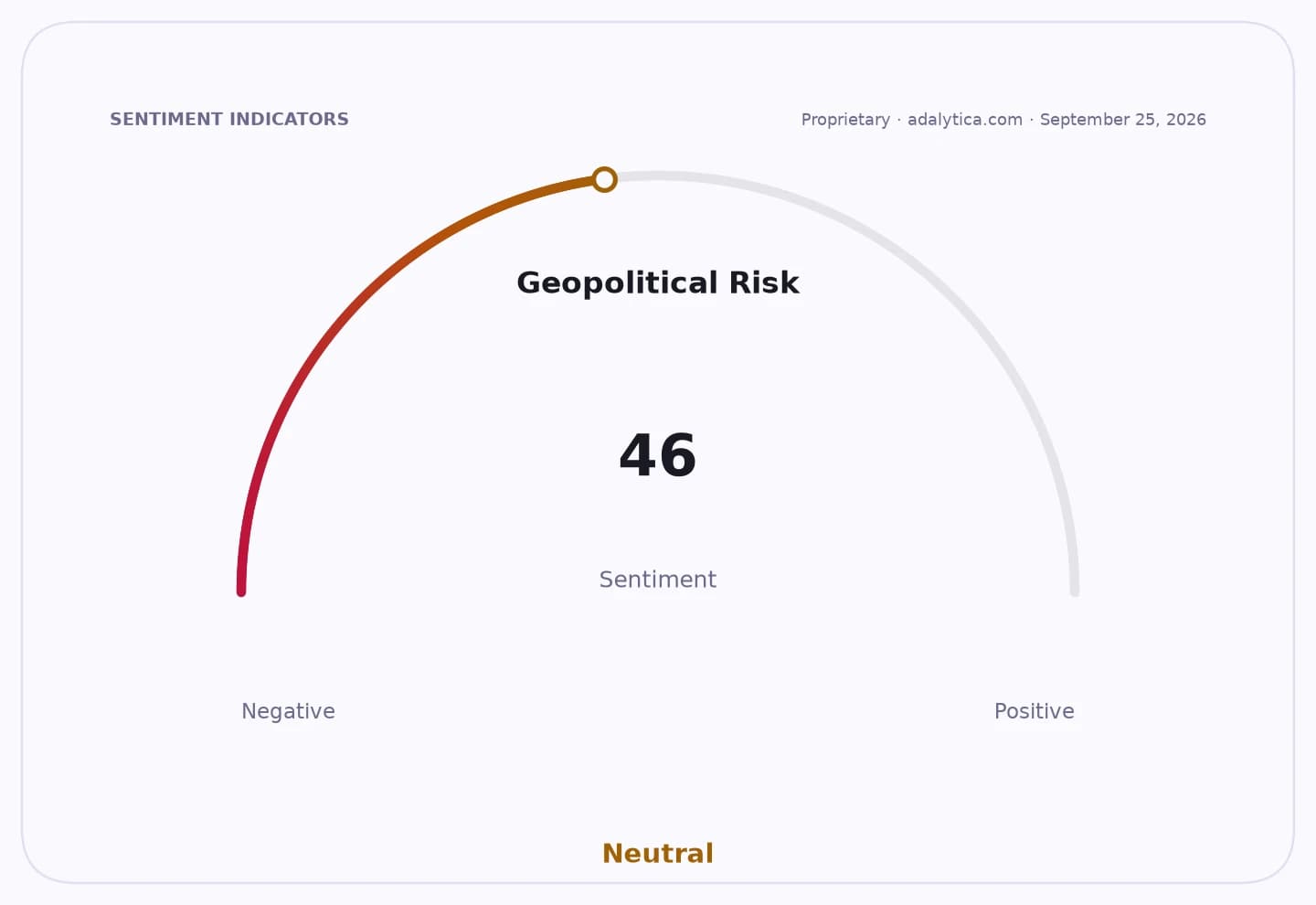
Sentiment IndicatorsⓘProprietary · adalytica.com · September 22, 2026
This is a snapshot — live sentiment, awareness and momentum for 130+ markets update continuously in the dashboard.Open AlphaPulse
Politico reported that a cargo containing F-35 parts, including the cockpit canopy with stealth technology, was sent from Australia to the U.S. for repairs but was rerouted to Hong Kong and has since gone missing. The route has intensified concerns that U.S. and allied military technology could be exposed to Chinese access, even inadvertently, at a time of already fraught U.S.-China relations.
Lockheed Martin, which builds the F-35, declined to comment on security grounds but said it follows all Pentagon rules on transporting aircraft parts and handles every shipment with “the utmost care.” The company’s assurances do little to quiet investor concerns because any compromise to the F-35 supply chain could lead to tighter oversight, delays and added costs across a program that is already among the most expensive in defense.
The F-35 is central to allied airpower planning, with 19 countries now ordering the jet, including Britain, Israel, the Netherlands and Switzerland. Germany only just received its first F-35, underscoring how wide the program’s footprint has become and how a security breach could reverberate beyond the U.S. across NATO and partner fleets.
For investors, the immediate risk is less about one missing shipment than about the possibility of more aggressive enforcement and costlier compliance obligations for defense contractors and their suppliers. The episode also reinforces the broader market theme that U.S.-China tensions remain a structural overhang for aerospace, semiconductors and other strategic technology names.
Shares tied to advanced technology and defense supply chains have been trading against a backdrop of heightened geopolitical anxiety, with conventional technical indicators on semiconductor-related funds such as the SOXX reflecting a rebound from earlier weakness. Sentiment gauges tracked by Adalytica also show sharply elevated concern around U.S.-China relations and China policy direction, suggesting traders are already pricing in a more restrictive environment.
The next catalyst is the congressional inquiry and any sign that the Pentagon or contractors tighten transport and chain-of-custody rules. Any confirmation that the cargo was compromised could widen the fallout to other classified programs and add another layer of friction between Washington and Beijing.
| Entity | Gains | Losses |
|---|---|---|
| Lockheed Martin | ▲tighter oversight narrative | ▼shipment scrutiny |
| Pentagon / U.S. allies | ▲pressure for stronger controls | ▼risk of exposure |
| China | ▲intelligence advantage if verified | ▼diplomatic backlash |
| Defense suppliers | ▲compliance demand | ▼higher logistics costs |