Deloitte’s decision to axe about 200 consultants in Sydney is the clearest sign yet that Australia’s consulting slowdown is moving from cautious hiring freezes into outright restructuring, with the pain now spreading across firms that had been positioned to benefit from digital, cloud and transformation spending.
Deloitte cuts 200 Sydney consultants
The cuts matter because consulting is often one of the earliest corporate sectors to feel a pullback in business confidence. When clients delay projects, trim discretionary spending or demand more for less, advisory firms lose high-margin work quickly. That can ripple through the wider economy by slowing wage growth in professional services, reducing contractor demand and tempering spending in Sydney’s office market and services supply chain.

The move also underscores the squeeze facing global consultancies as they try to balance weaker demand with heavier investment in artificial intelligence. Accenture, IBM and DXC all show a sector under pressure to prove that AI can lift productivity without simply cannibalising billable hours. Accenture’s latest filing warned that AI can reduce or replace some of its historical services, while IBM said consulting demand is being shaped by clients trying to boost productivity through AI and manage risk at the same time. That tension is now showing up in headcount.
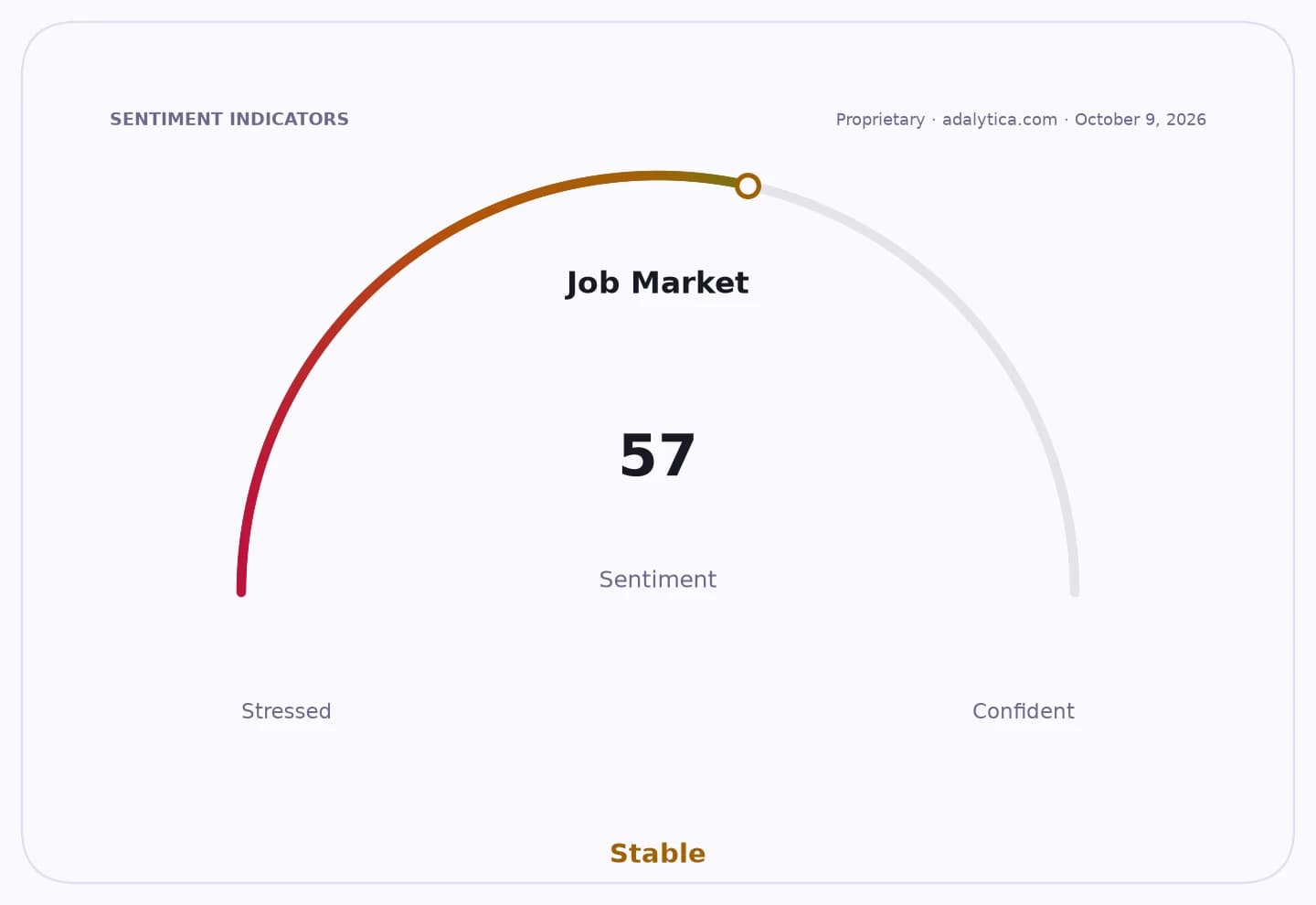
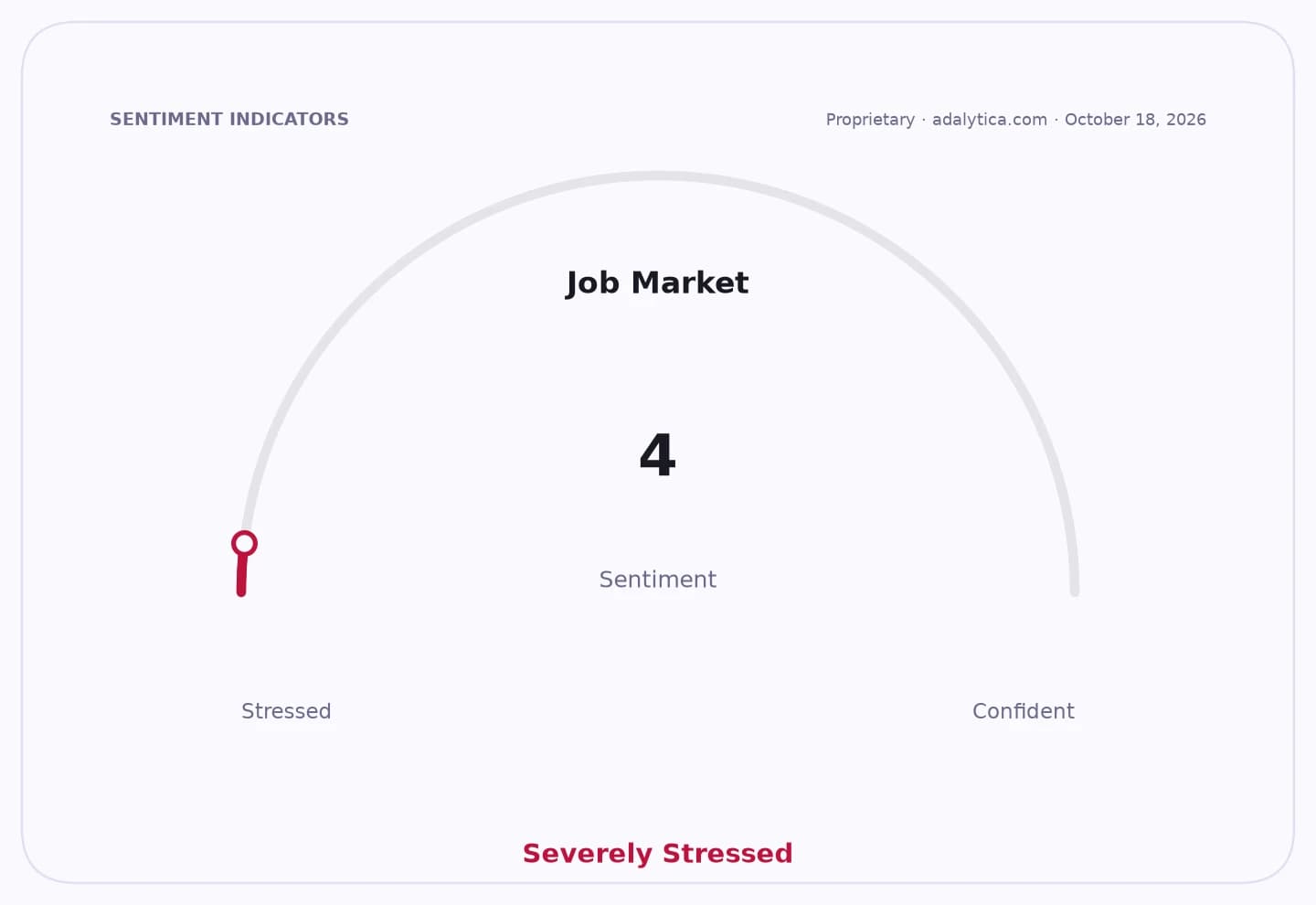
Market signals are broadly consistent with that backdrop. Adalytica’s Job Market Sentiment gauge is in “Extreme Fear,” while S&P 500 trade signals also show fear, suggesting investors are increasingly cautious about labour demand and corporate spending intentions. In that setting, job cuts at a firm like Deloitte are less about a single office and more about whether the consulting cycle is turning down after a long expansion.
For investors, the question is whether this is a temporary reset or the start of a broader margin correction across professional services. Bullish investors will argue that consulting firms are protecting profitability and repositioning for AI-led work, which could support earnings later. The bear case is that if clients are still cutting discretionary projects, revenue growth will soften before any productivity gains arrive.
The immediate implication is that peers with heavier exposure to discretionary consulting, systems integration and public-sector advisory work may face more scrutiny on staffing and margins. It also raises the stakes for quarterly commentary on deal pipelines, utilisation rates and pricing power.
If the slowdown deepens, the next catalyst will be whether other large consultancies follow with redundancies, showing that the weakness is cyclical rather than company-specific.
| Entity | Gains | Losses |
|---|---|---|
| Deloitte | ▲Lower payroll costs | ▼Brand and morale |
| Rival consultants | ▲Market share from exits | ▼Sector confidence |
| Clients | ▲More pricing leverage | ▼Service capacity |
| Sydney labour market | ▲Little immediate gain | ▼Professional jobs |