The UK labour market is showing the first signs of a pickup in hiring, but employers say the recovery is still too fragile to trigger a broad-based rebound in investment or jobs.
UK labour market placements rise to four-year high
Permanent placements rose for a second straight month to a four-year high of 50.9 in September, while temporary billings also climbed to 50.9, according to KPMG and the Recruitment & Employment Confederation. Any reading above 50 indicates expansion, making the latest print a modest but meaningful shift after a long slowdown in demand.
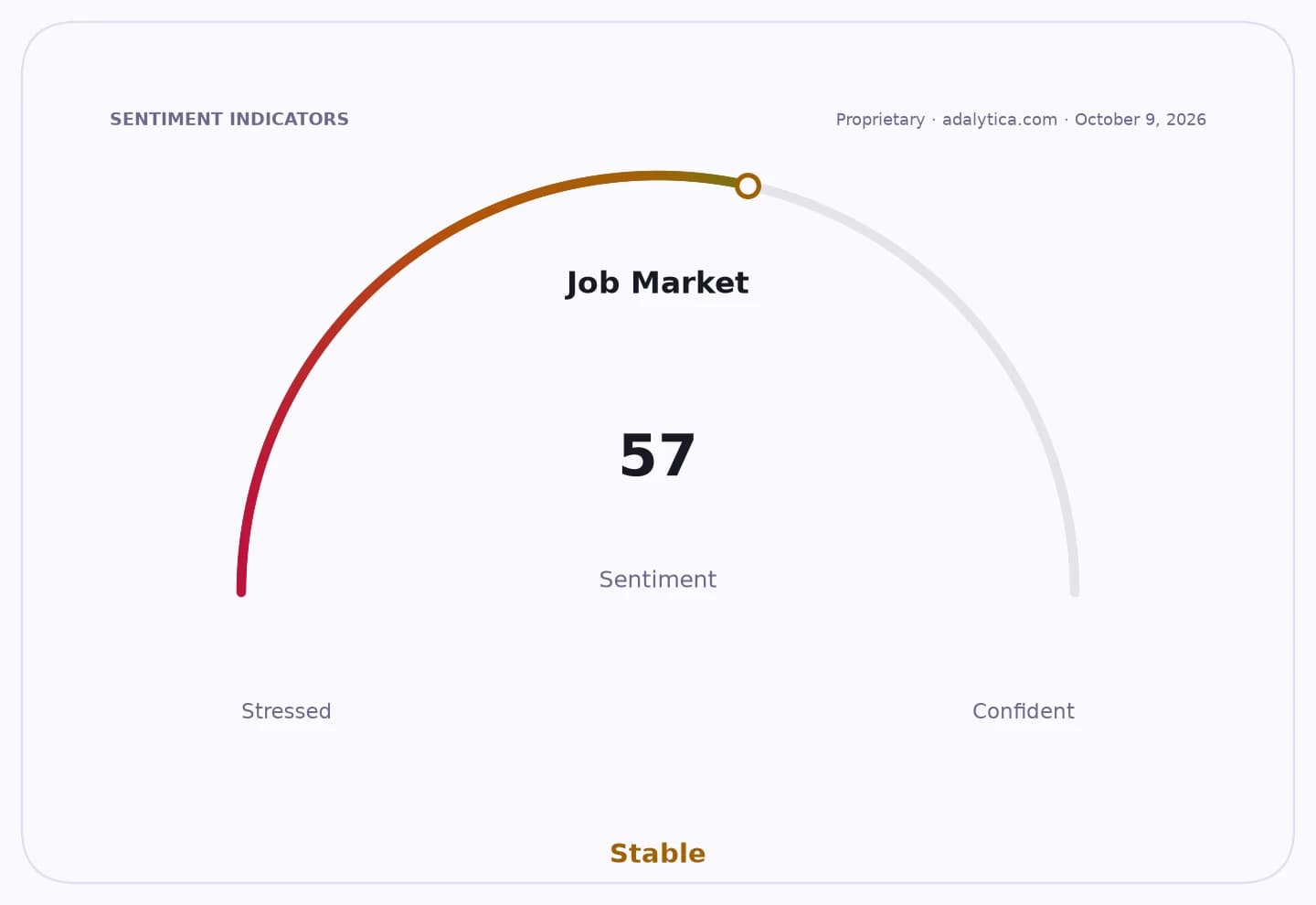
Sentiment IndicatorsⓘProprietary · adalytica.com · October 9, 2026
This is a snapshot — live sentiment, awareness and momentum for 130+ markets update continuously in the dashboard.Open AlphaPulse
That matters because the jobs market has been one of the clearest pressure points for the UK economy as higher borrowing costs, weak confidence and elevated business uncertainty kept firms cautious. Overall demand for workers still fell in September, but the pace of decline was the slowest since August 2024, and permanent private-sector vacancies increased for the first time in more than two years.
KPMG UK chief executive Jon Holt said the market was “starting to flicker back to life,” while warning it “remains a fragile recovery.” He pointed to uncertainty around energy prices and higher borrowing costs, and said businesses want the government’s budget later this month to deliver tax clarity and conditions that support investment.
For investors, the report supports the view that the UK is not yet in a labour-market downturn severe enough to force emergency policy action, but it is also far from a clean recovery. A deeper pool of available workers, with the staff availability index falling to 57.2 from 60.6, suggests employers still have room to hire without immediate wage pressure, even as the North of England saw the strongest rise in candidate supply.
The political backdrop is adding to the stakes. John Healey’s inaugural budget on 28 October is now the key event for companies waiting to see whether fiscal policy helps or hurts hiring plans, especially with economists saying his fiscal headroom could have been cut sharply by the Iran war and with the government facing pressure from spending commitments and talk of possible tax rises.
If the budget reassures business, the recent lift in permanent recruitment could become the start of a more durable turn. If it disappoints, the latest gains may prove to be little more than a pause in a weak labour market.
| Entity | Gains | Losses |
|---|---|---|
| Employers seeking clarity | ▲Better hiring conditions | ▼Policy uncertainty |
| Jobseekers / candidates | ▲More vacancies and placements | ▼Slower wage bargaining power |
| UK economy | ▲Early sign of stabilisation | ▼Still-fragile growth outlook |
| Treasury / government | ▲Chance to boost confidence with budget | ▼Credibility if taxes rise or cuts deepen |