Employers are still reluctant to commit to large hiring sprees, and that is pushing recruiting into cheaper, faster formats such as Galaxus’ job “speed dating” events, where candidates build paper towers instead of submitting polished CVs. The shift matters because it shows how a soft labor market is changing the economics of recruitment: companies want to hire, but not at the cost, time and risk of traditional screening in an uncertain economy.
Galaxus Job Speed Dating Amid Weak Hiring
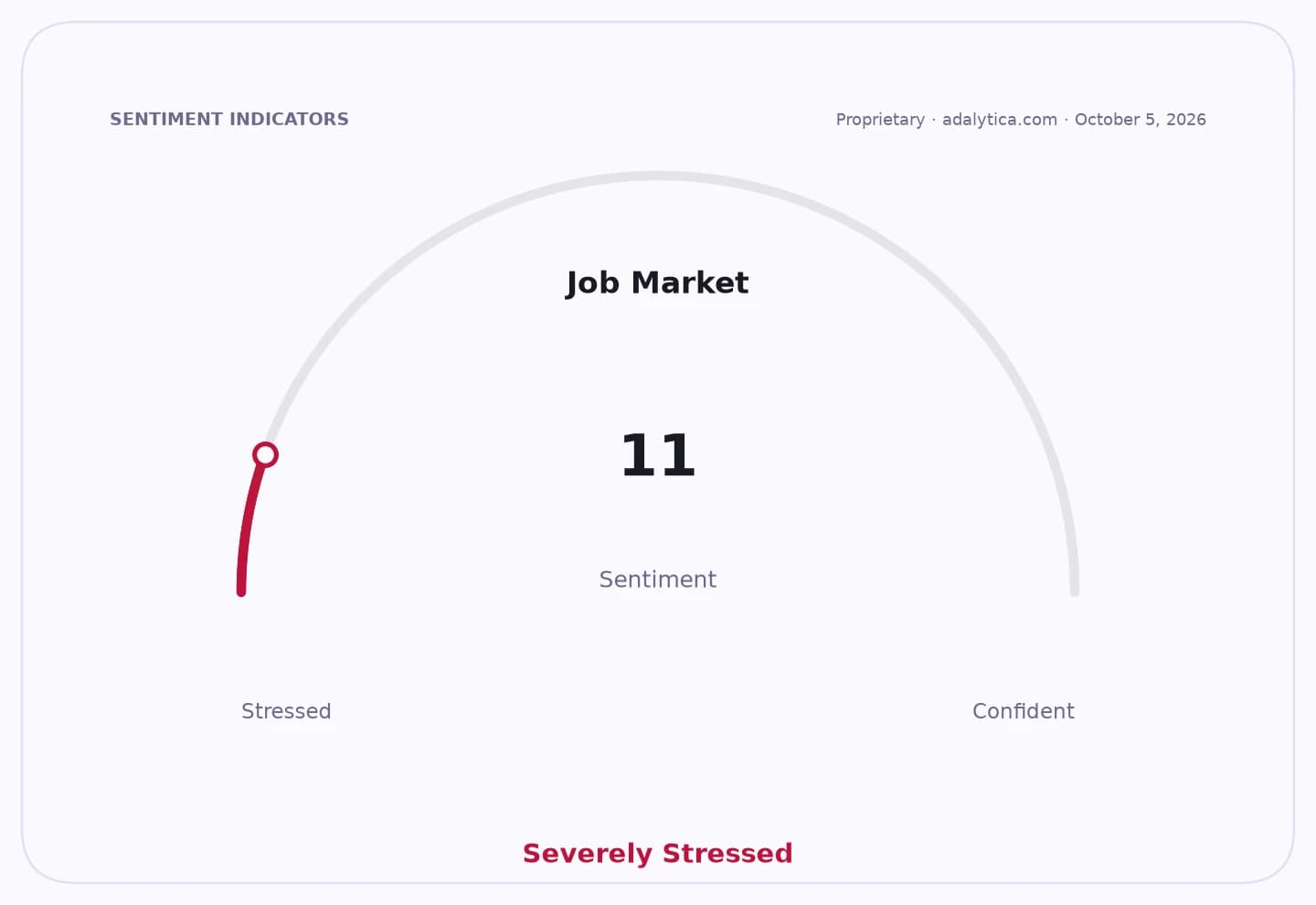
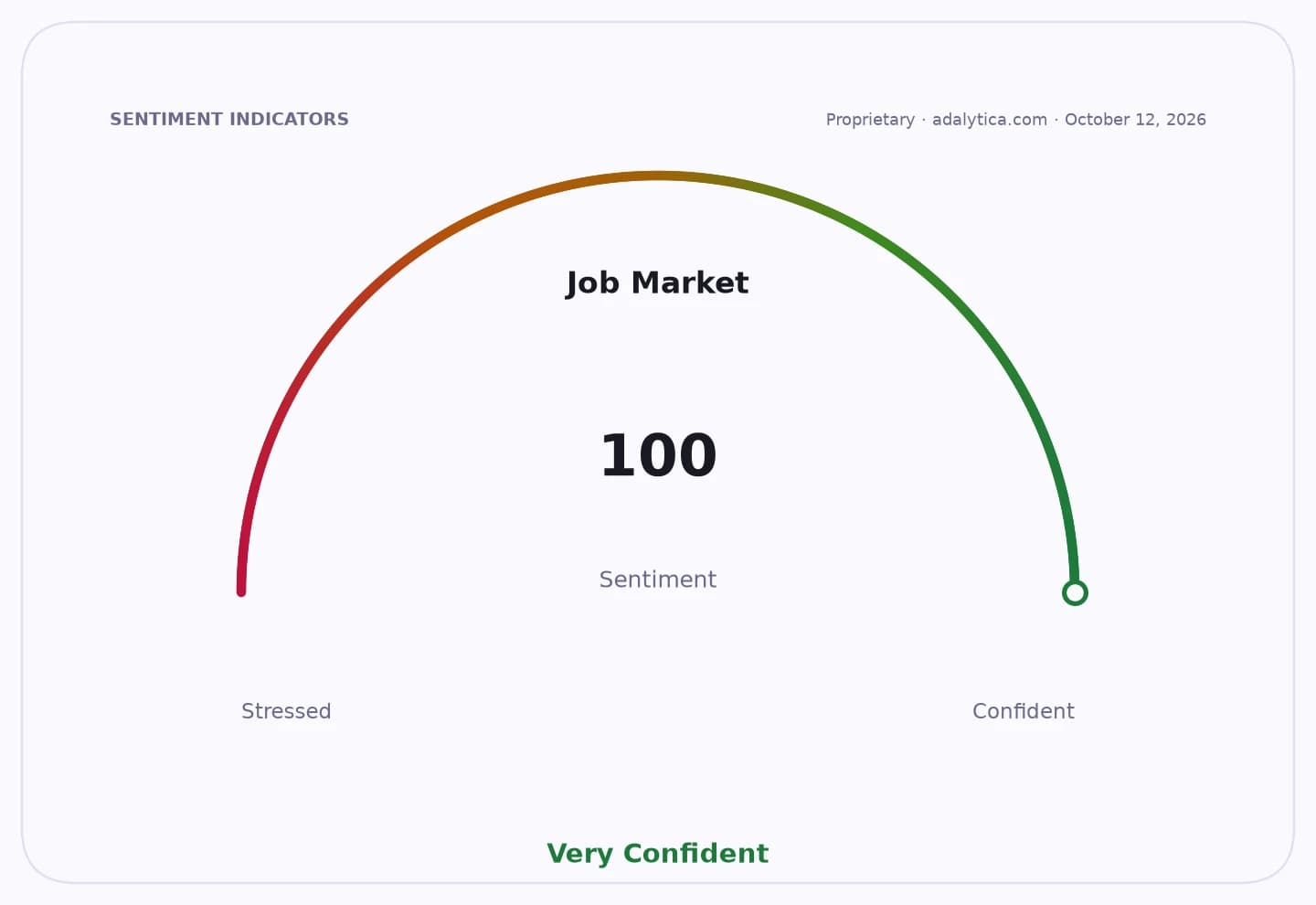
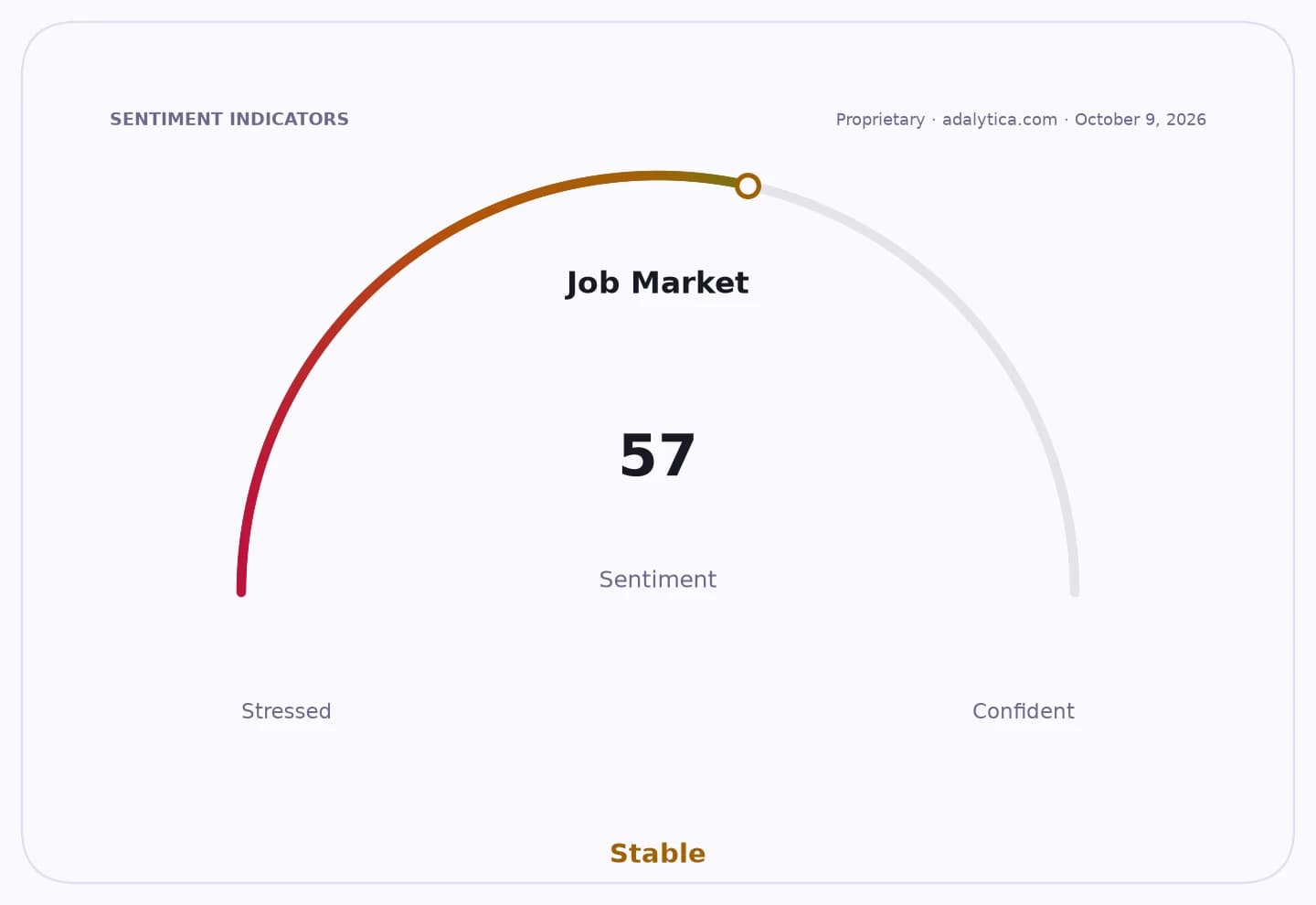
The immediate backdrop is a labor market that is cooling rather than collapsing. Recent US data point to fewer layoffs, but not to a meaningful rebound in hiring, especially heading into the holiday season. Adalytica’s JOB gauge, which tracks job-market sentiment, sits at 11, in “Extreme Fear,” even as awareness remains high, suggesting the market is watching labor trends closely but seeing little evidence of renewed confidence. That combination usually favors flexible staffing, temporary placements and low-commitment hiring channels over expensive permanent recruitment drives.
For retailers and consumer-facing employers, the economics are straightforward. When demand visibility is weak, managers try to reduce the cost of finding workers and shorten the time between application and offer. A format like Galaxus’ casting-style recruitment can widen the funnel and surface soft skills, teamwork and communication more quickly than a resume-heavy process. It also appeals to candidates who may be discouraged by automated filters and long application cycles. In a market where payroll growth is subdued, those lower-friction methods can become a competitive advantage.
Investors should read the trend as more than an HR gimmick. It is a sign that labor remains a constraint on growth even as layoffs ease. Companies still need staff for peak periods, warehouses, stores and service operations, but they are trying to preserve margins by avoiding overhiring. That tension matters for consumer stocks, logistics operators and employers with high turnover, where recruitment efficiency can affect both service levels and operating income. Amazon, for example, has repeatedly flagged the challenge of hiring and retaining enough personnel to meet operational needs, underscoring how labor availability remains central to execution even for scale players.
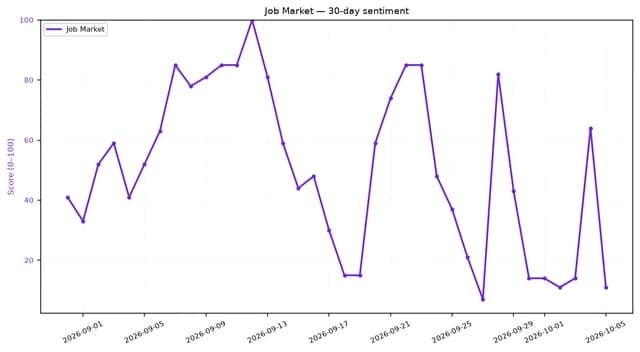
The broader narrative is that a cautious economy is changing the way firms compete for workers. Instead of paying up for talent in a tight market, employers are experimenting with faster, more informal selection processes to keep hiring active without locking in fixed costs too quickly. If holiday demand strengthens, recruitment could firm up from here; if it does not, the spread of “job speed dating” and similar methods is likely to continue as companies prioritize flexibility over scale.
| Entity | Gains | Losses |
|---|---|---|
| Galaxus | ▲Faster recruitment | ▼Traditional CV screening |
| Employers | ▲Lower hiring costs | ▼Rigid staffing models |
| Job seekers | ▲Easier access | ▼Applicants with weak soft skills |
| Staffing firms | ▲Demand for flexible hiring | ▼Permanent hiring pipelines |