The hiring market is already entering its seasonal peak in September and October, giving job seekers a brief window before the market typically slows again into the winter holidays and early February.
Job Market Seasonal Hiring Peaks in September and October

That matters because the labor market is not moving in a straight line: it is being shaped by the school-year graduation cycle, the return of summer workers, and employers building permanent teams ahead of holiday production and year-end service demand. In practice, that makes early autumn one of the most active periods for recruiting, onboarding and wage competition across broad parts of the economy.
Sentiment IndicatorsⓘProprietary · adalytica.com · September 28, 2026
This is a snapshot — live sentiment, awareness and momentum for 130+ markets update continuously in the dashboard.Open AlphaPulse
For workers, the implication is straightforward. The best chance of landing an offer often comes before the market “falls asleep” in February, when hiring budgets, decision-making and vacancy backfill can slow materially. For employers, the pressure is to secure talent now rather than risk understaffing during the busiest weeks of the year, when absenteeism rises and operational mistakes become more costly.
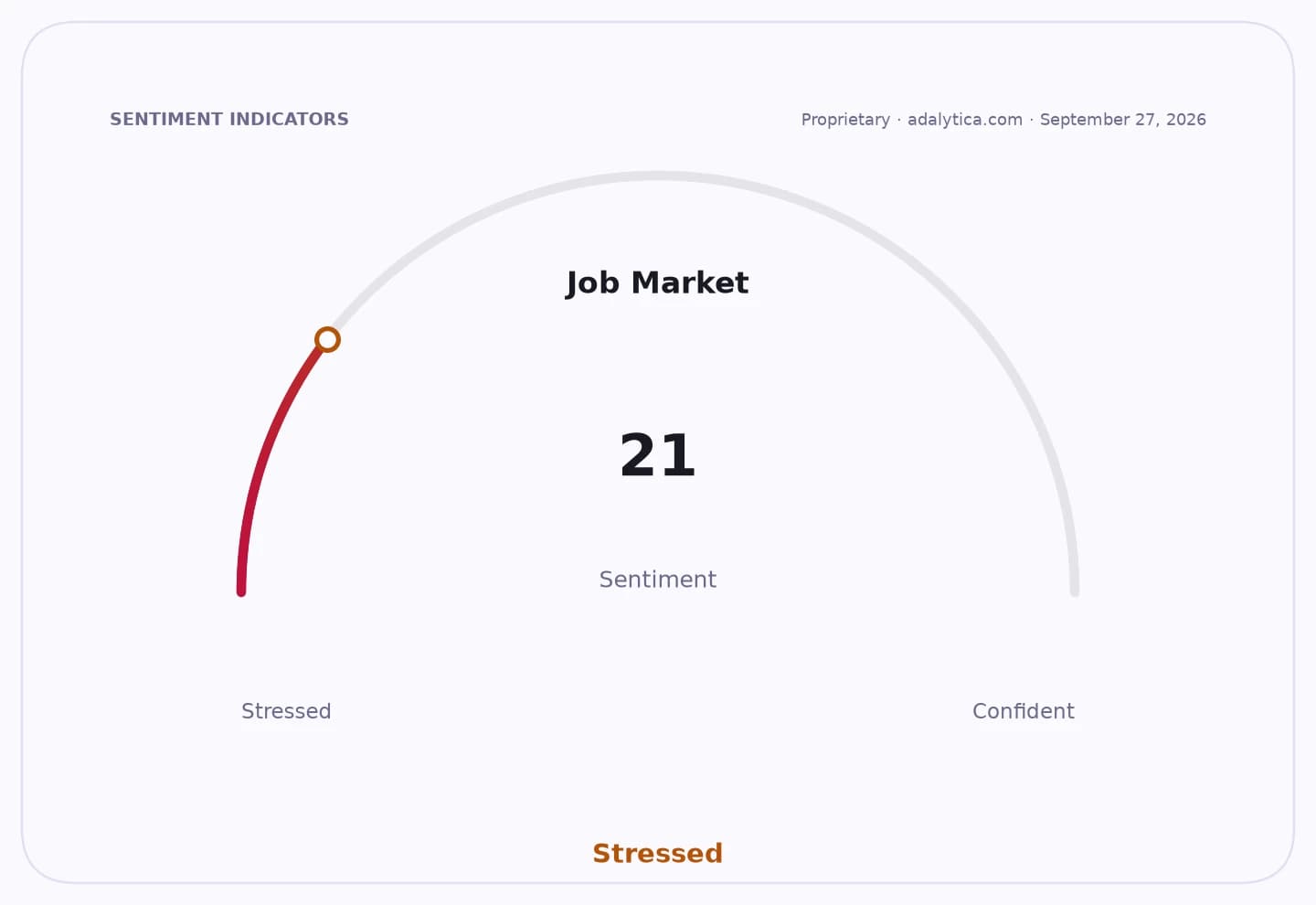
Adalytica’s Job Market Sentiment gauge currently sits at 82, in “Greed,” while its Payrolls Sentiment is still only 17, or “Fear.” That split suggests hiring appetite is improving even as the broader labor backdrop remains cautious. Consumer Confidence Recession Sentiment, meanwhile, is at 86 in “Extreme Greed,” indicating households may be more willing to spend into the season, which can reinforce the need for firms to staff up sooner.
The seasonal pattern also has macro significance. A stronger autumn hiring cycle can support consumption into the holidays, but it can also tighten labor supply in entry-level and temporary roles, pushing wages higher in pockets of the economy. If companies overhire, they risk carrying excess labor costs into the slower winter stretch; if they wait too long, they face scrambling for workers and higher churn.
For investors, the story is less about one data point than timing. Retailers, logistics firms, consumer services companies and other labor-intensive businesses typically feel this cycle first, because staffing levels feed directly into margins and execution during the fourth quarter. A robust September-to-November hiring wave can help revenue capture, but it can also compress profitability if wage growth outruns productivity.
The key risk is that this year’s early hiring burst may not translate into durable labor demand. If companies are merely front-loading recruitment to meet seasonal tasks, February’s slowdown could arrive quickly and expose weak underlying employment growth. If, however, firms keep hiring through the autumn, it would point to a firmer economy than the cautious payroll sentiment suggests.
For now, the message for job seekers and investors is the same: the window is open, but it may not stay that way for long.
| Entity | Gains | Losses |
|---|---|---|
| Job seekers | ▲More openings now | ▼Weaker demand in February |
| Employers | ▲Better holiday staffing | ▼Higher wage and turnover costs |
| Retail and logistics firms | ▲Seasonal capacity boost | ▼Margin pressure from labor costs |
| Conservative employers | ▲Easier to wait and watch | ▼Risk of missing peak hiring window |