Democrats are pushing their 2026 House strategy deep into Republican territory because even losing there can still help them win the chamber.
Democrats Expand 2026 House Map in Red Districts
The party’s decision to add 14 districts to its target list this week, including Tennessee’s newly redrawn 9th Congressional District, is less about expecting an upset than about forcing Republicans to defend seats they would normally ignore. That matters economically to campaigns because it can redirect advertising, staff time and donor dollars away from a handful of true swing districts, where control of the House will be decided, and it matters politically because it gives Democrats a way to widen the map at a moment of voter anger over prices and Trump-era policies.
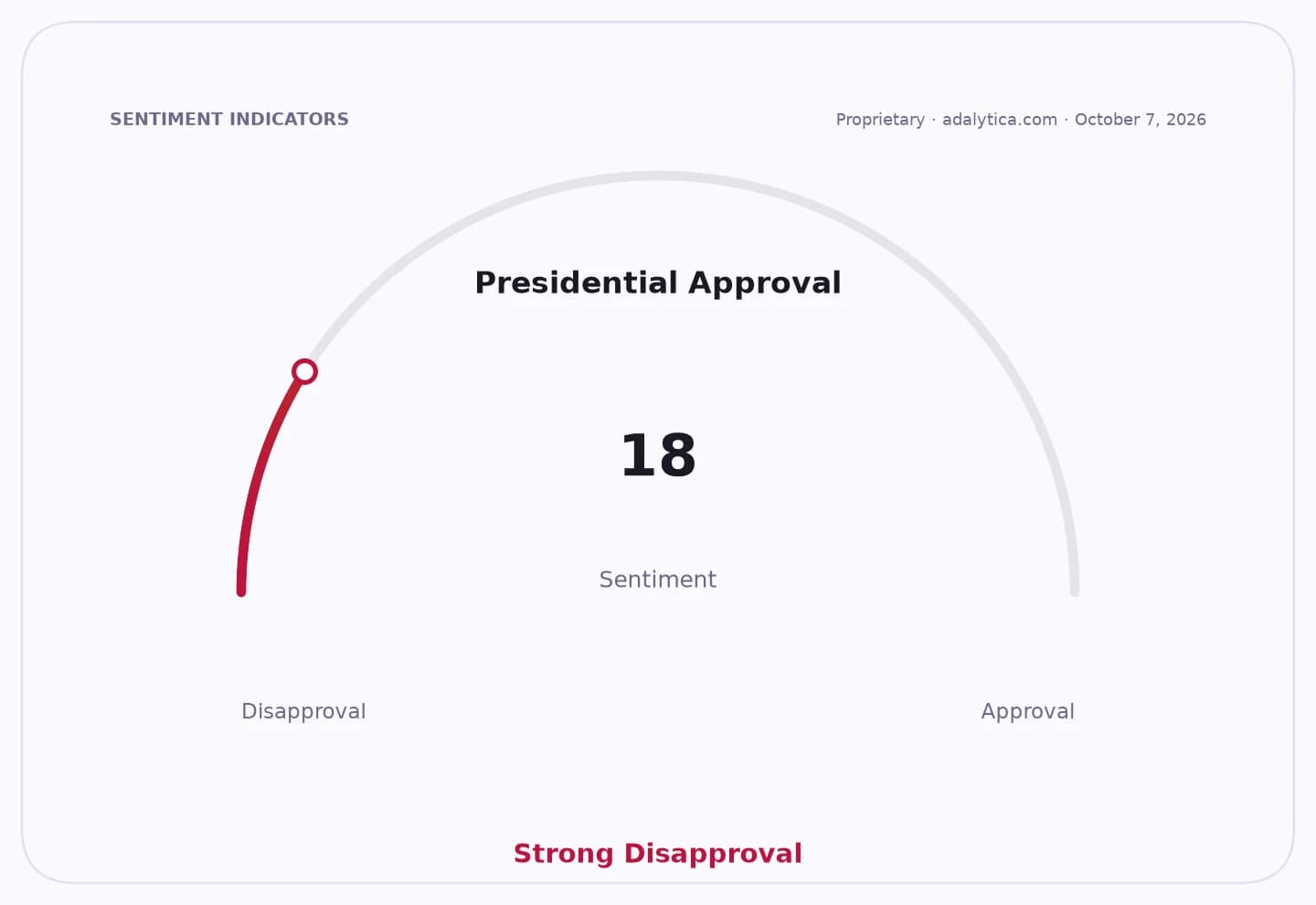
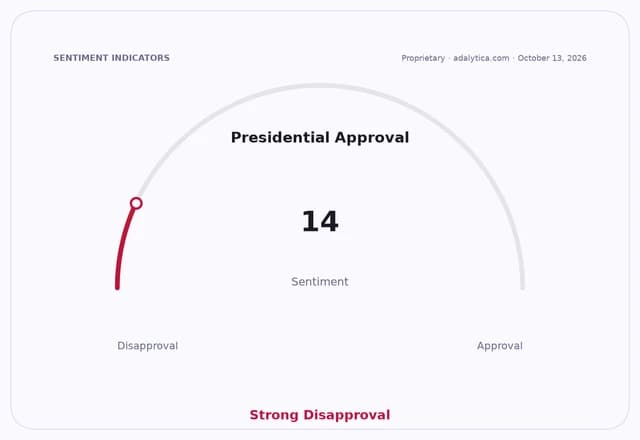
Sentiment IndicatorsⓘProprietary · adalytica.com · October 13, 2026
This is a snapshot — live sentiment, awareness and momentum for 130+ markets update continuously in the dashboard.Open AlphaPulse
The Democratic Congressional Campaign Committee now says it is targeting 66 Republican-held seats, a sharper signal that the party wants to contest not just toss-up suburbs but also rural and exurban districts that Donald Trump carried by double digits, in some cases by as much as 24 points. In practice, that expansion can change the flow of money. Getting on the target list gives campaigns access to national party staff and tools, but just as important, it is a fundraising cue to small-dollar donors and outside groups that a race may be worth underwriting. Two Democratic campaigns in Republican districts told Reuters their fundraising accelerated after being added.
Republicans say the strategy is a bluff. The National Republican Congressional Committee argues Democrats are “stretching their map a mile wide and an inch deep,” and analysts have been skeptical about the chances in districts rated safely Republican by Cook Political Report. Still, there are already signs the GOP is treating some of these seats as real threats. A billionaire-backed Republican PAC spent nearly $750,000 on digital ads in Nevada’s 2nd District, one of the newly added targets, suggesting Republicans may be willing to spend early to avoid surprises later.
The economic logic for Democrats is straightforward: if they cannot win in places like Tennessee’s 9th, they can still make Republicans pay to hold them. That is particularly relevant in a cycle where the House majority looks set to hinge on a relatively small pool of about 50 competitive races out of 435. Democrats need a net gain of four seats to retake the chamber, so every dollar Republicans divert to defensive spending is a dollar they cannot use in districts that could actually decide control.
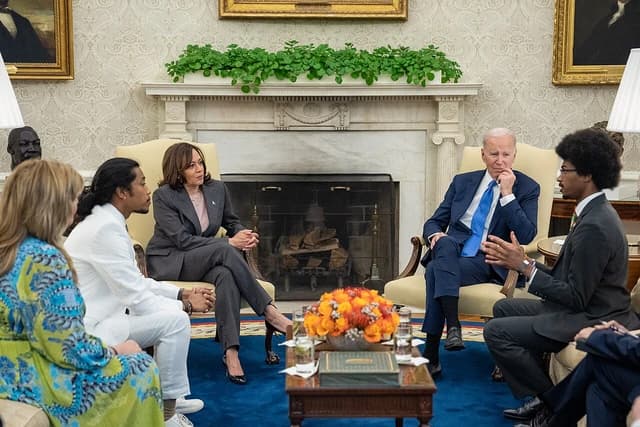
Tennessee’s 9th illustrates the politics behind the money. State Republicans redrew Memphis into three districts this year, turning the old majority-Black urban seat into a sprawling rural district stretching more than 200 miles across western Tennessee. On paper, that made the seat far safer for the GOP, and Trump won the new version by more than 21 points in 2024. Yet Democrat Justin Pearson, a 31-year-old state legislator with national name recognition after his expulsion over a gun-violence protest, says he is finding some traction among independents and Republicans worried about the cost of living.
That broader message is what gives the strategy some plausibility. Democrats are betting that high prices, fuel costs and farm-sector pain from tariffs can soften Republican margins even in deeply conservative areas. If that holds, it could improve turnout, widen the field of credible candidates and unlock donor money that tends to sit out low-probability contests. If it does not, the party risks spending time and cash in races it cannot win while Republicans keep their focus on the handful of suburban seats that matter most.
Investor relevance is indirect but real. Campaign spending is not a market catalyst in itself, but the scale and direction of political money can affect media, digital advertising and consulting outlays, while the underlying voter dissatisfaction driving these races can inform expectations for taxes, farm policy, tariffs and regulatory priorities after the midterms. The deeper story is that both parties are already behaving as if inflation, trade friction and voter fatigue with the status quo could reshape the map well before Election Day.
The next test is not whether Democrats can flip a Trump +20 district. It is whether this expanded battlefield produces measurable Republican defensive spending and a fundraising lift for Democrats in the districts that actually control the House.
| Entity | Gains | Losses |
|---|---|---|
| Democratic campaigns | ▲More donor attention | ▼More dispersed resources |
| Republican incumbents | ▲Safe-seat advantage in red districts | ▼Forced defensive spending |
| GOP outside groups | ▲Early warning on threats | ▼Smaller cushion in swing seats |
| House Democrats | ▲Broader path to majority | ▼Higher odds of wasting cash on long shots |