Dior’s Christmas campaign has become a test of whether luxury houses can sell hand-made exclusivity while facing accusations their own advertising may be partly machine-made.
Dior Christmas Ad Faces AI Use Questions
The immediate issue is not whether “Christian Dior’s Night in Color” was generated by artificial intelligence, but that the brand’s silence has allowed that question to dominate the conversation around a campaign meant to reinforce Dior’s most valuable asset: the perception of human craftsmanship, time and scarcity. In luxury, the marketing is part of the product. If consumers start to suspect a house is using automation to package an artisanal dream, the brand premium can fray.
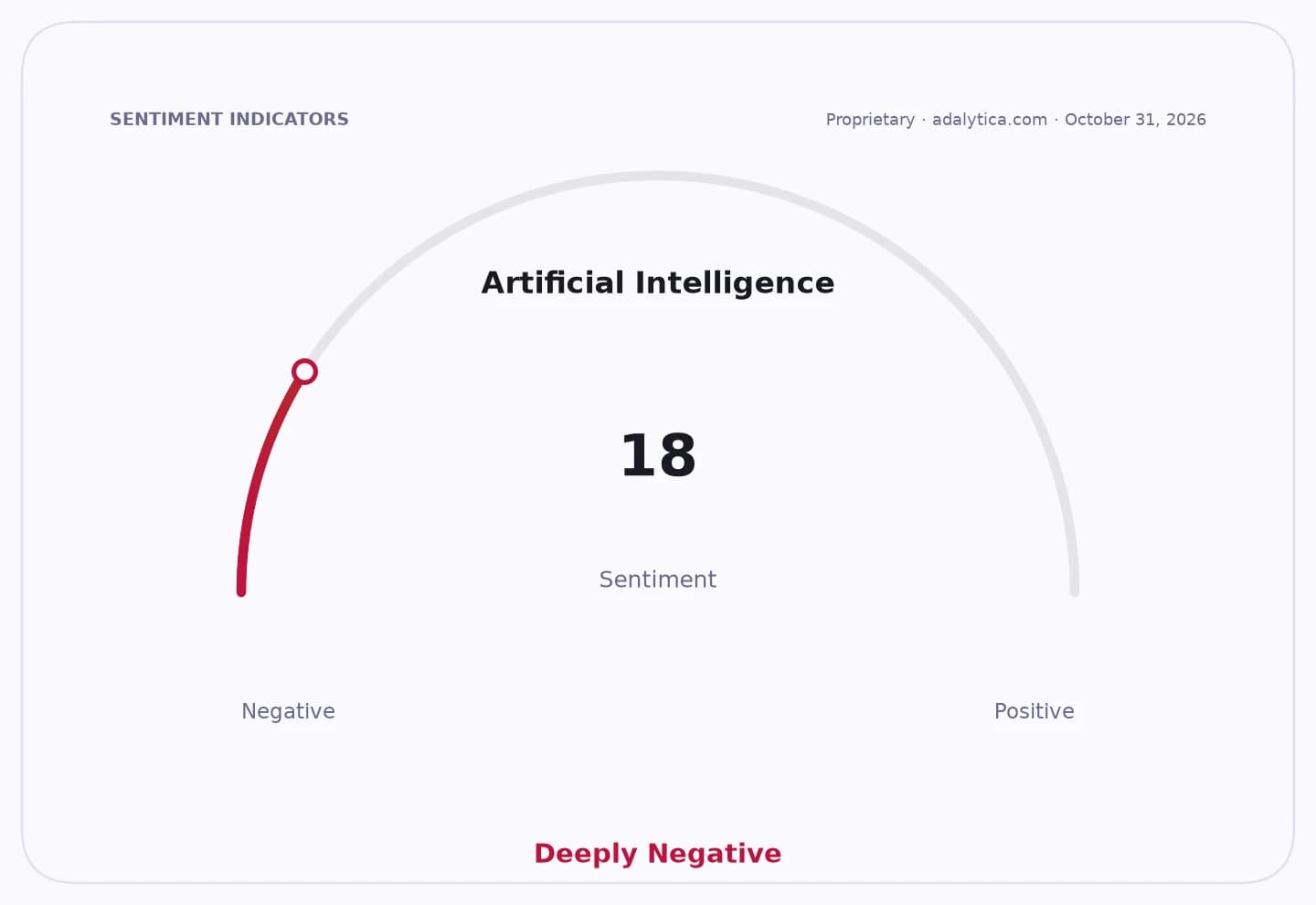
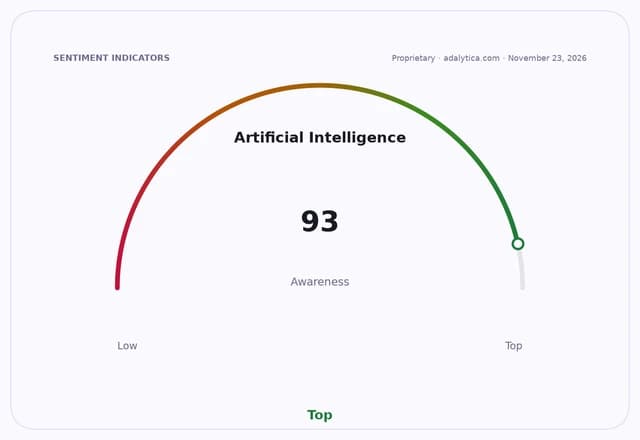
Sentiment Indicators
The film features Rihanna, Robert Pattinson and Josh O’Connor voicing animated characters in a hand-drawn story directed by Sylvain Chomet, according to Dior. Yet social media users and trade publication Women’s Wear Daily have pointed to distorted hands, uneven lettering and awkward transitions as possible signs of generative AI. Dior has not publicly addressed the criticism, while producer Aton Soumache and Chomet told Variety the production used traditional 2D animation with an automated interpolation system in some transitions, not generative AI.
That distinction matters because the market for luxury goods is under pressure from consumers demanding visible justification for high prices. Dior’s brand depends on convincing buyers that what they are paying for is not just logo recognition, but atelier skill, labor intensity and French savoir-faire. In that context, the suspicion of AI use is more than a social media skirmish; it cuts to the core of a business model built on perceived authenticity.
The controversy also lands at a sensitive moment for the broader luxury sector. Rival Prada has leaned into the same “made by hand” message in its own holiday campaign, titled “Drawing Prada: Animated by Hand,” while Levi’s is advertising labor-intensive handcrafted animation as proof of effort. That shows major brands are increasingly using production method itself as a status signal. Time, not speed, is being sold as the luxury.
For investors, the stakes are reputational but also commercial. Dior sits inside LVMH, whose shares have had a weak run in recent months. LVMH’s U.S.-listed shares fell to $82.87 on Nov. 20 from $85.52 two days earlier, and remain far below a 2026 peak above $130. The stock’s 50-day moving average at $88.60 is above the latest close, while the 200-day average at $105.15 points to a broader downtrend. The technical picture suggests investors are already wary of the group’s growth and margin trajectory, making any blow to brand equity more consequential.
The AI debate also intersects with a wider backlash against synthetic media. In an environment where regulators, tech investors and consumers are increasingly skeptical of AI claims, a luxury house accused of using machine assistance in a hand-crafted campaign risks looking out of step with the values it sells. That is especially true if the brand appears evasive: in luxury, silence can read as uncertainty rather than restraint.
The bullish case is that the controversy may fade once Dior clarifies the production process, and the campaign’s star power still gives it reach. The bearish case is that repeated accusations around AI could weaken the emotional premium Dior sells, particularly if consumers begin to associate luxury advertising with the same automation that mass-market brands use to cut costs.
For now, the episode is a reminder that in luxury, trust is not an abstraction. It is part of the asset base. And in a market increasingly preoccupied with artificial intelligence, the brands that can prove the human hand behind the image may have the strongest pricing power.
| Entity | Gains | Losses |
|---|---|---|
| Dior | ▲Campaign attention if clarified well | ▼Brand trust if AI doubts persist |
| LVMH shareholders | ▲Little, unless controversy fades quickly | ▼Sentiment if Dior reputation weakens |
| Rival luxury houses | ▲Chance to emphasize authentic craftsmanship | ▼Pressure to defend their own production claims |
| AI-ad skeptics / consumers | ▲Validation of authenticity concerns | ▼None if Dior proves traditional production |