Peter Chan’s defense of the feature film comes as Hollywood and streaming investors confront a deeper shift: the battle for audience time is moving toward ultra-short vertical dramas and AI-assisted production, not just bigger budgets and tentpole releases.
Disney, Netflix Face Shift to Short-Form Video

The acclaimed Asian director’s remarks at the Singapore International Film Festival cut to the heart of a market investors are still underestimating. Chan said he would use AI as a filmmaking tool, but “definitely not AIGC,” or AI-generated content, and argued that two-hour movies will survive even as young viewers drift toward short-form and vertical dramas. That matters because the economics of film and television depend on scarce attention, and attention is fragmenting faster than studio models are adapting.
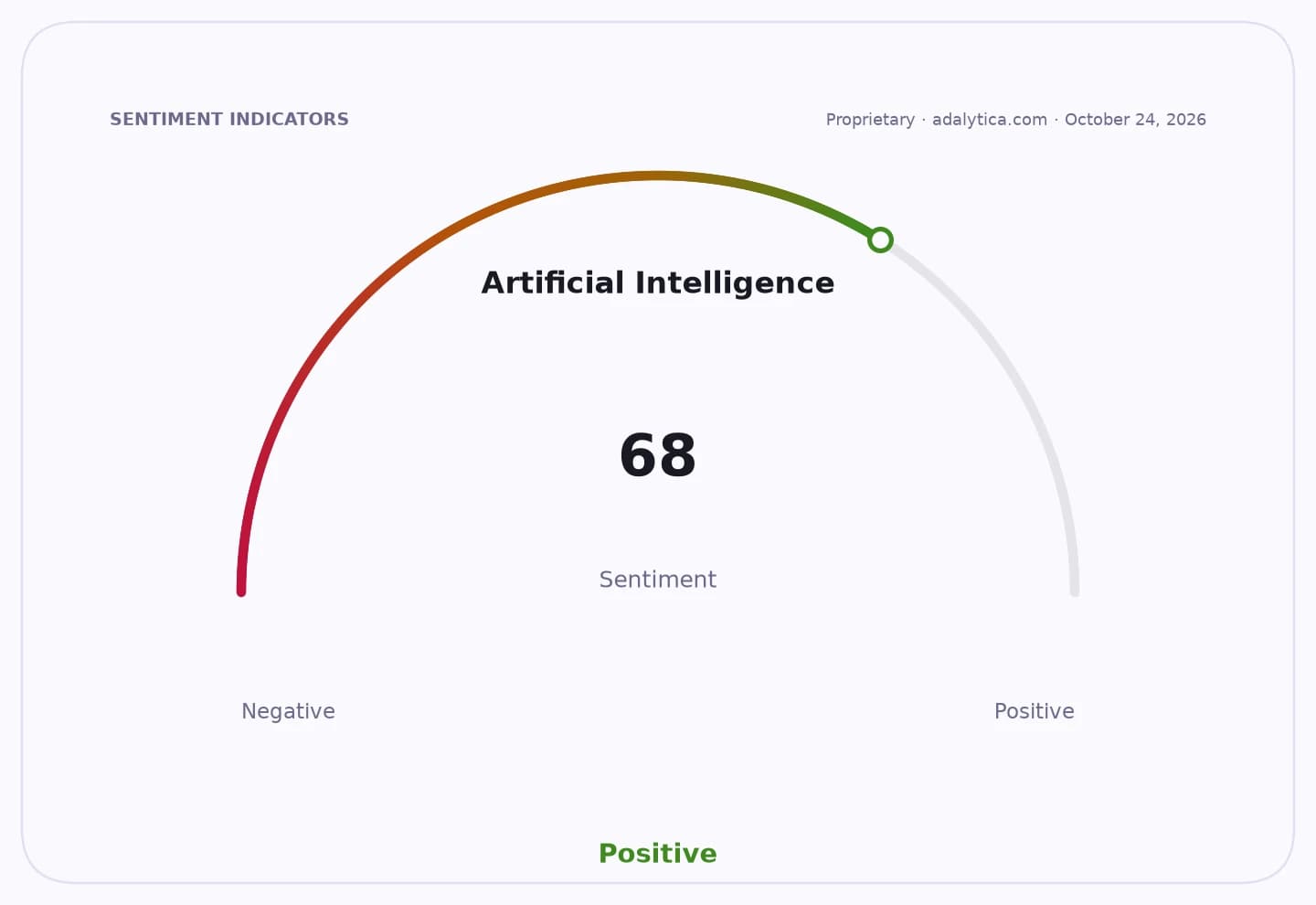
Sentiment Indicators
For the big media companies, that fragmentation raises the stakes for every content decision. Disney, Netflix and their rivals are still spending heavily on premium programming to defend subscriptions, advertising and licensing revenue, but the next growth pool may sit outside the traditional feature-film playbook. Vertical dramas, podcasts and short-form video are proving that audiences will consume entertainment at both extremes: extremely short or very long. Chan’s point is that cinema is not dying so much as being squeezed into a narrower, more selective role.
That creates a clear investable divide. Premium film brands may remain durable cultural assets, but the market underestimates how much production discipline and format flexibility will matter. AI can help reduce costs, speed post-production and improve visual effects, but Chan’s warning is that machines cannot replace the human judgment that gives movies their commercial value. In other words, AI is more likely to be a margin tool than a substitute for creative IP.
The message lands at a sensitive moment for the sector. Netflix shares have been volatile, with the stock recently sliding to around $61.78, far below its 50-day moving average of about $73.03 and its 200-day average near $81.73. Disney has held up better, trading around $110.92 and above both its 50-day and 200-day moving averages, but the company still depends on a mix of theatrical, streaming and park cash flows that is exposed to shifts in consumer attention. If short-form content keeps pulling younger viewers away from traditional moviegoing, studios will need either lower-cost formats or stronger franchises to protect returns.
The broader AI backdrop only sharpens the argument. Microsoft’s strong results have reinforced the view that AI is already lifting cloud and software economics, while China has pushed ahead with a fully AI-generated feature film, even as ticket sales have been weak. That split is important: AI is accelerating production experimentation, but audiences are not automatically rewarding novelty. For investors, that is the signal. The winners are likely to be platforms and studios that use AI to make content cheaper and faster, while preserving the human-made stories people still pay for.
Chan’s conclusion is the right one for capital allocators: the market is not heading toward the death of movies, but toward a shakeout in who can still make them profitably. The best-positioned companies will own the IP, the distribution and the production tools that can flex across formats. That makes this less a story about film versus AI than a story about which media businesses can use AI without becoming disposable content factories. If you want exposure, focus on the owners of premium franchises and the infrastructure behind content production, not the hype around fully automated storytelling.
| Entity | Gains | Losses |
|---|---|---|
| Disney | ▲Premium IP resilience | ▼Short-form attention shift |
| Netflix | ▲Format flexibility | ▼Feature-film economics |
| AI production tools | ▲Lower costs, faster output | ▼Traditional labor-heavy workflows |
| Vertical-drama platforms | ▲More audience time | ▼Theatrical feature films |