The dollar slipped for a second session as the sweeping US election result pushed investors into riskier assets, drove Treasury yields lower and knocked oil prices, with sterling rising ahead of a Bank of England decision expected to deliver another rate hike.
Dollar Falls After US Election, Sterling Rises
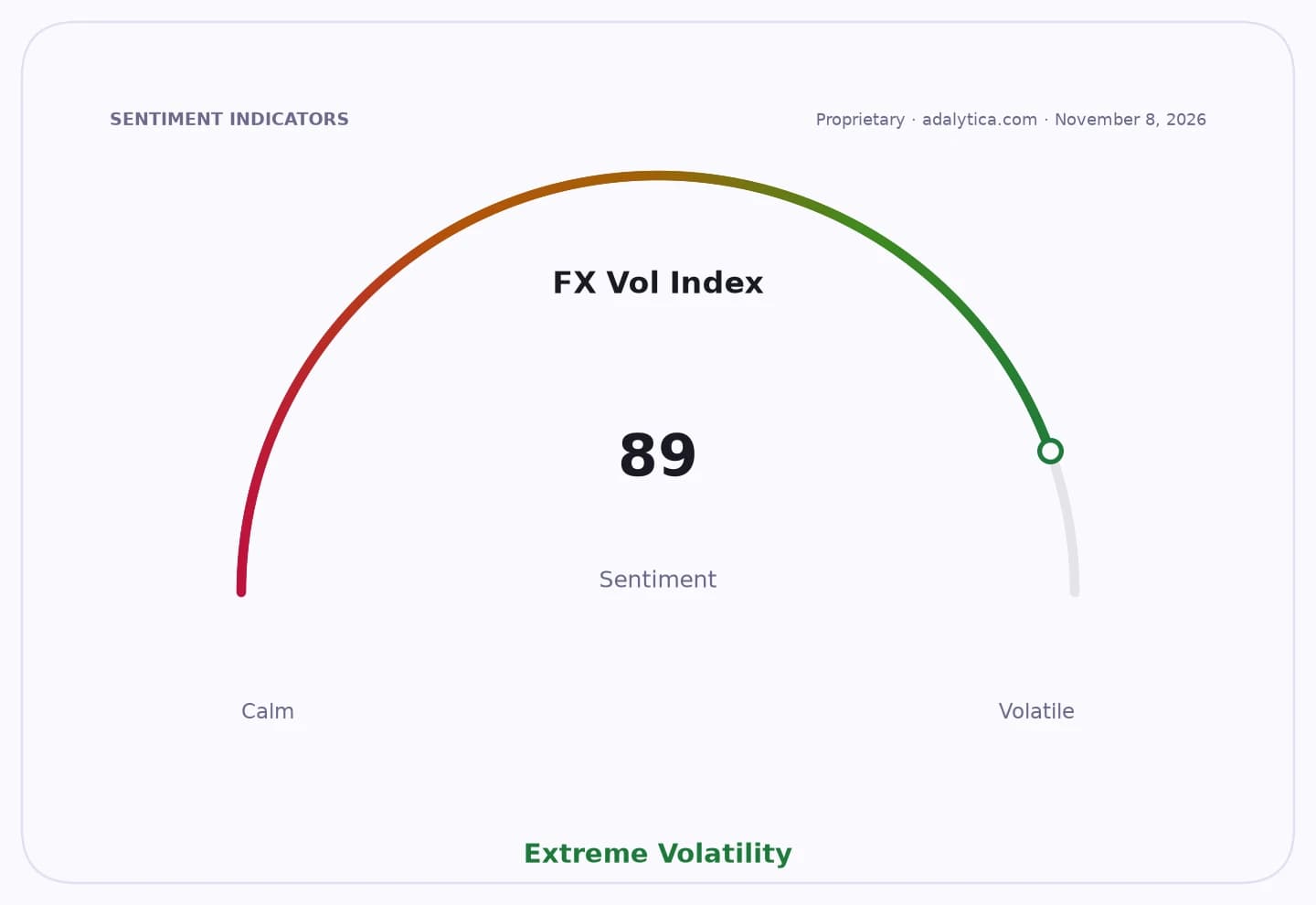
FX Vol Index
The greenback’s retreat underscores how quickly political outcomes can reset market positioning, even when the medium-term Fed outlook stays intact. A softer dollar tends to support global risk appetite, ease financial conditions outside the US and lift commodity and equity-linked currencies.
Sentiment Indicators
The dollar index fell 0.25% to 101.22 after sliding 0.34% on Wednesday. The euro rose 0.32% to $1.1263, while the yen gained 0.35% to 157.84 per dollar after Bank of Japan minutes reinforced bets the central bank will keep tightening.
Markets viewed the Democratic sweep of the Senate and House as reducing the odds of the kind of aggressive US policy agenda that had supported safe-haven demand, including tariffs and wider geopolitical escalation. The move lower in oil prices also helped risk sentiment, traders said, by easing inflation pressure and reinforcing the drop in yields.
Even so, the Federal Reserve remains the key macro driver for the dollar. Fed funds futures still price an 80.7% chance of at least a 25-basis-point rate increase in December, up from 77.4% the previous day, and the next test comes from Thursday’s jobless claims and Friday’s payrolls report after ADP showed stronger-than-expected private hiring in October.
Sterling rose 0.14% to $1.349, its highest level since Sept. 14, as traders positioned for the Bank of England to raise rates again to fight inflation stoked by energy costs. The BoE is also likely to push back against expectations for several more hikes next year.
The yen’s advance followed BOJ minutes from September, when policymakers lifted rates to a 31-year high of 1.25%, with some board members signalling a faster pace of tightening. Markets now broadly expect another hike in December.
The broader tone was firmer across risk-sensitive currencies, with the Australian dollar and New Zealand dollar both gaining. Bitcoin and ether also edged higher, reinforcing the view that the election result has briefly tilted markets toward risk assets rather than dollar safety.
| Entity | Gains | Losses |
|---|---|---|
| Sterling buyers | ▲Firmer BoE hike bets | ▼Dollar strength |
| Yen bulls | ▲BOJ tightening expectations | ▼Dollar-backed carry trades |
| Equity and risk asset traders | ▲Softer yields, better sentiment | ▼Safe-haven positioning |
| Dollar longs | ▲— | ▼Post-election risk-on rotation |