The U.S. dollar started Tuesday, Nov. 24, near RD$60 in the Dominican Republic, underscoring how tightly the peso is now being managed around a level that matters for imports, remittances and corporate cash flow.
Dominican peso trades near RD$60 per dollar
The Banco Central de la República Dominicana said the official reference for the dollar, based on Monday’s close, stood at RD$59.7375 for buying and RD$60.2230 for selling. That spread is more than a technical footnote: it is the real cost hurdle for households, businesses and traders moving between pesos and dollars, and it shapes the margin financial institutions earn on foreign-exchange transactions.
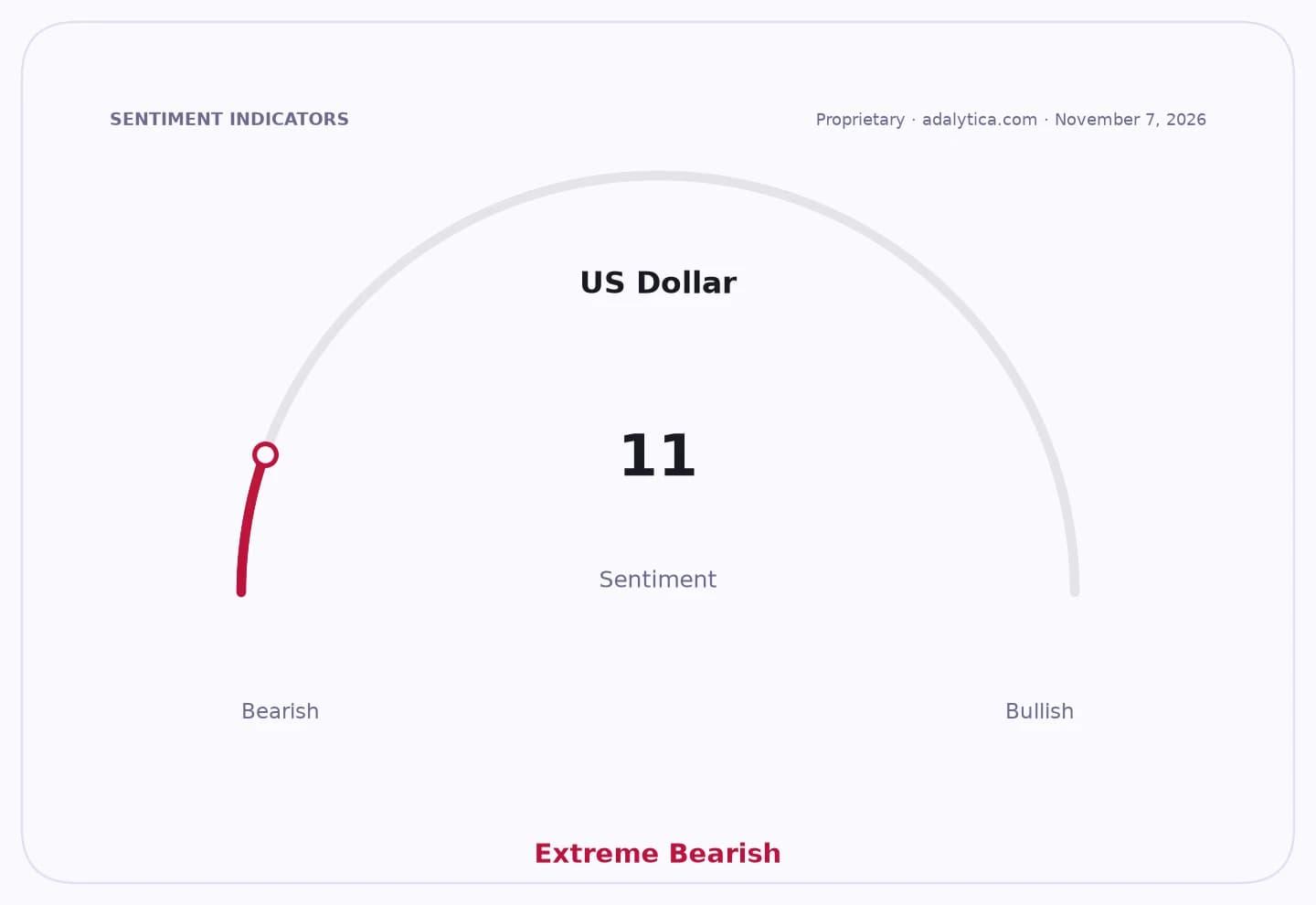
Sentiment Indicators
For the Dominican economy, the exchange rate is one of the most important daily prices because the country relies heavily on imported goods, foreign-currency receipts and remittance flows. A weaker peso raises the local-currency cost of imported fuel, food, machinery and other inputs, while a stronger dollar increases the peso value of remittances sent home by Dominicans abroad. The effect on inflation is not automatic, but sustained moves in the exchange rate can feed through to consumer prices if companies pass on higher costs.
The latest reference suggests the peso is trading close to the psychologically important 60-to-1 level, a zone that investors, importers and consumers are watching for signs of pressure or stabilization. For companies with dollar liabilities or revenues, small shifts around that threshold can alter margins, working-capital needs and hedging decisions. For households, it changes how far wage income goes when converted into goods priced off international markets.
The official rate also serves as a benchmark rather than a fixed retail price. Commercial banks and exchange houses can quote different levels depending on liquidity, commissions and timing, which is why the buy-sell gap matters almost as much as the headline rate itself. That spread can widen when demand for dollars is strong or market conditions are less liquid.
The broader backdrop is a global dollar market that remains sensitive to U.S. interest-rate expectations and risk appetite. When the dollar strengthens internationally, emerging and frontier currencies often face additional pressure, especially in economies with meaningful import bills and external financing needs. For the Dominican Republic, that makes the central bank reference rate a closely watched indicator of whether local currency conditions are easing or tightening.
For investors, the key question is not just where the peso is today, but whether it is drifting into a new range that could affect inflation, earnings and policy. A stable exchange rate near current levels would reduce near-term volatility for importers and domestic borrowers. A further rise in the dollar, by contrast, would reinforce cost pressure and could lead market participants to expect a firmer central-bank response if depreciation accelerates.
| Entity | Gains | Losses |
|---|---|---|
| Dominican exporters receiving dollars | ▲Higher peso revenues | ▼Higher local costs |
| Importers and retailers | ▲None | ▼Higher import bills |
| Households receiving remittances | ▲More pesos per dollar | ▼Imported goods cost more |
| Banks and exchange houses | ▲Wider FX spread | ▼None |