Dream Industrial REIT’s strong third-quarter results point to a still-resilient industrial property market, even as broader commercial real estate sentiment has turned sharply more cautious.
Dream Industrial REIT posts strong third-quarter results
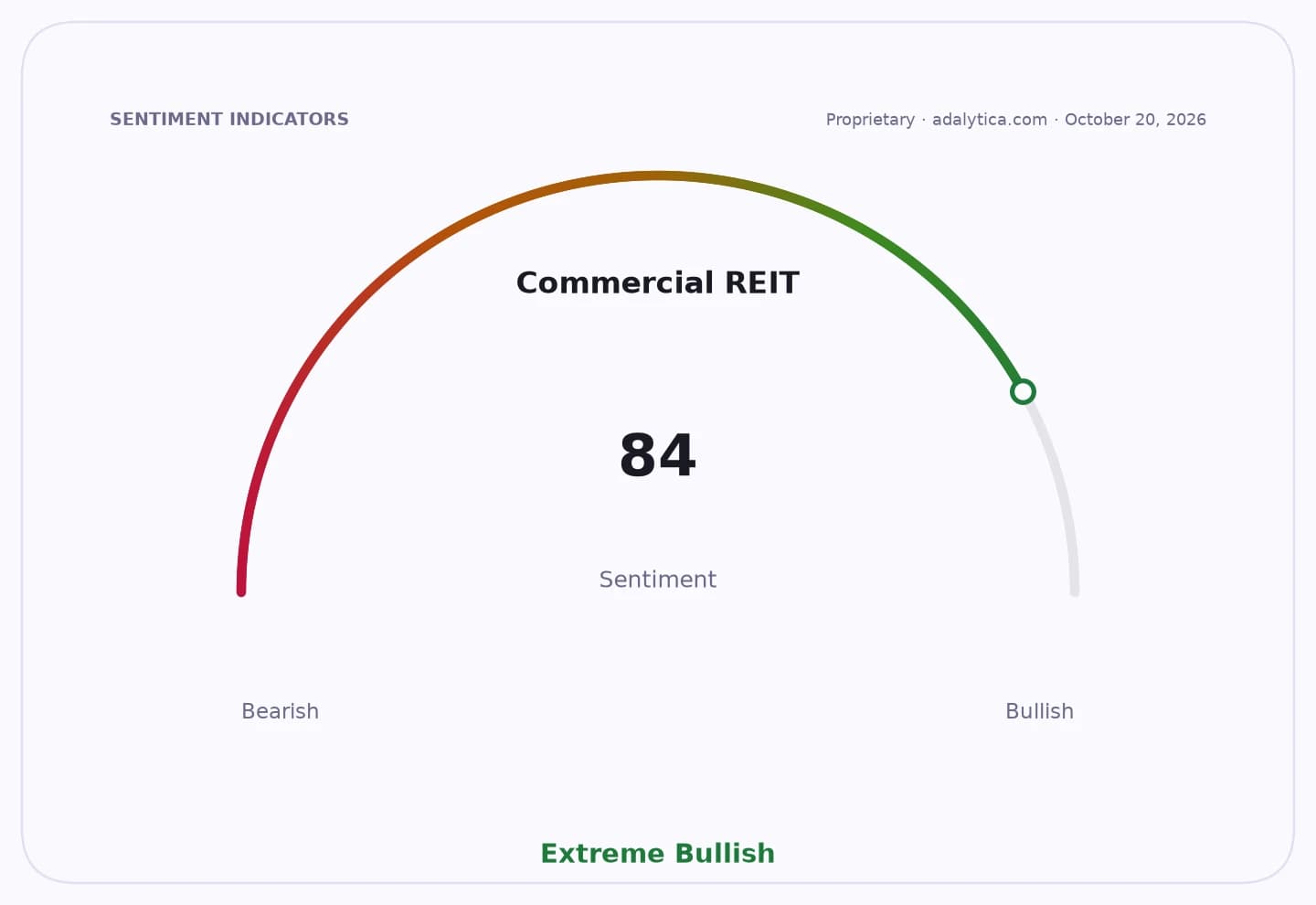
The Canadian warehouse and logistics landlord’s latest update matters because industrial REITs are one of the clearest real-time gauges of supply-chain demand, tenant health and rent pricing power. In a market where commercial property investors are growing more defensive — Adalytica’s commercial REIT sentiment gauge is sitting in “Extreme Fear” — a strong quarter from a pure-play industrial owner suggests that well-located logistics assets are still attracting tenant demand and supporting stable cash flow.
That resilience is economically important. Industrial real estate has been one of the strongest segments of commercial property over the past few years, helped by e-commerce growth, inventory rebalancing and the need for modern distribution space. For owners such as Dream Industrial, sustained occupancy and rent growth can offset higher financing costs and slower transaction activity. It also helps explain why industrial assets have often traded at stronger valuations than office or some retail property classes, where vacancy and refinancing pressure remain heavier.
For investors, the message is more nuanced. Strong results support the bull case that industrial REITs can continue to deliver reliable distributions and defend asset values through a slower growth backdrop. But the bear case is that the sector is no longer getting the same benefit of the doubt it enjoyed during the post-pandemic logistics boom. The sharp swings in the broader REIT market, together with mixed technical signals in peers such as Prologis and Terreno Realty, suggest investors are increasingly discriminating between high-quality industrial portfolios and the rest of the commercial property universe.
The next test is whether Dream Industrial can keep translating operational strength into funding flexibility and net asset value stability if capital markets stay cautious. If occupancy, leasing spreads and balance-sheet discipline hold up, industrial REITs should remain a relative refuge within real estate. If demand slows or financing costs stay elevated, even the sector’s strongest names may find it harder to sustain recent performance.
| Entity | Gains | Losses |
|---|---|---|
| Dream Industrial REIT | ▲Stronger cash flow and investor confidence | ▼Less room for error if rates stay high |
| Industrial REIT holders | ▲Defensive income appeal | ▼Volatility if valuations compress |
| Commercial property short sellers | ▲Less support for bearish thesis | ▼Strong operating results undermine the trade |
| Broader REIT sector | ▲Sign of selective resilience | ▼Office and weaker property types lag further |