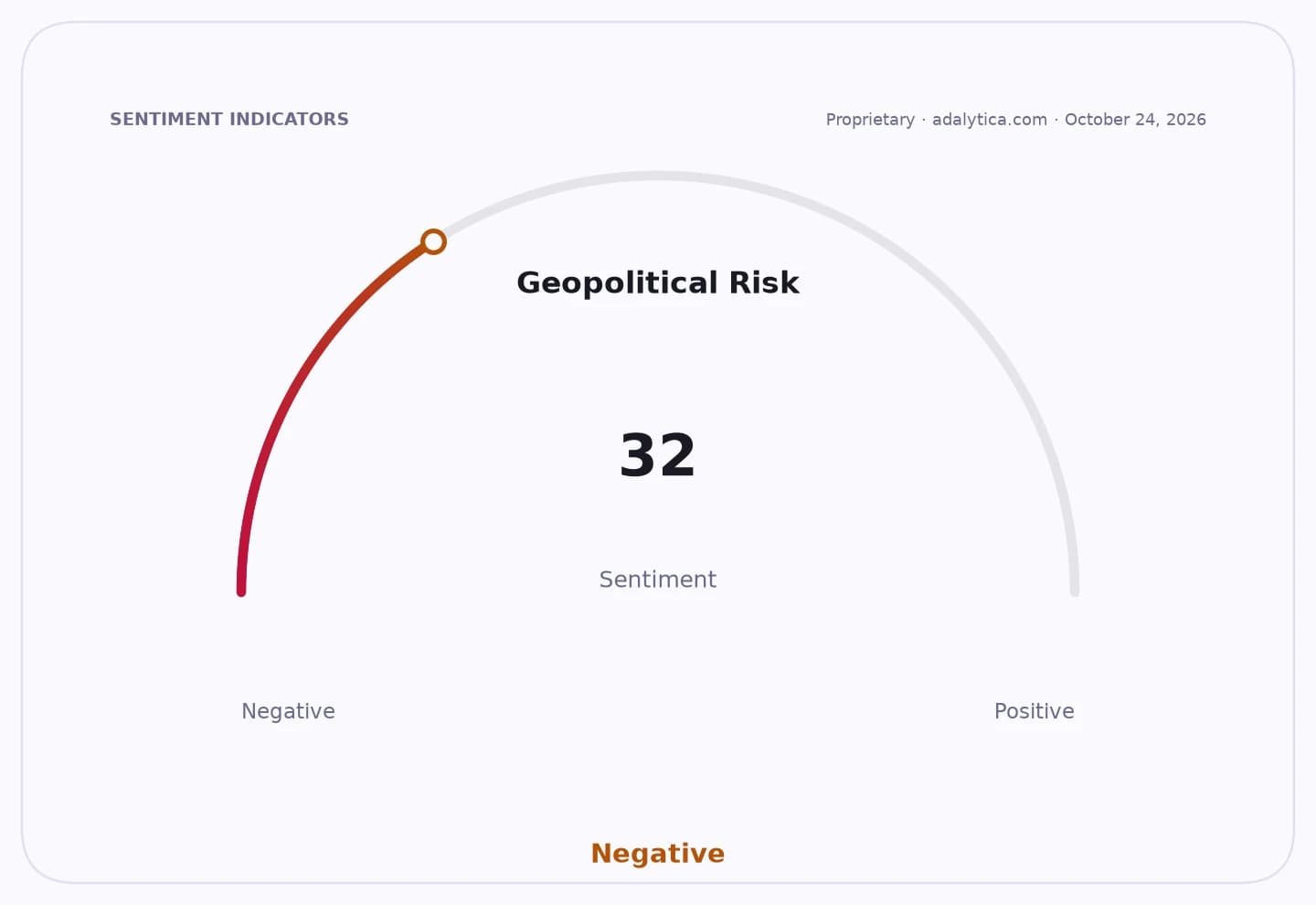
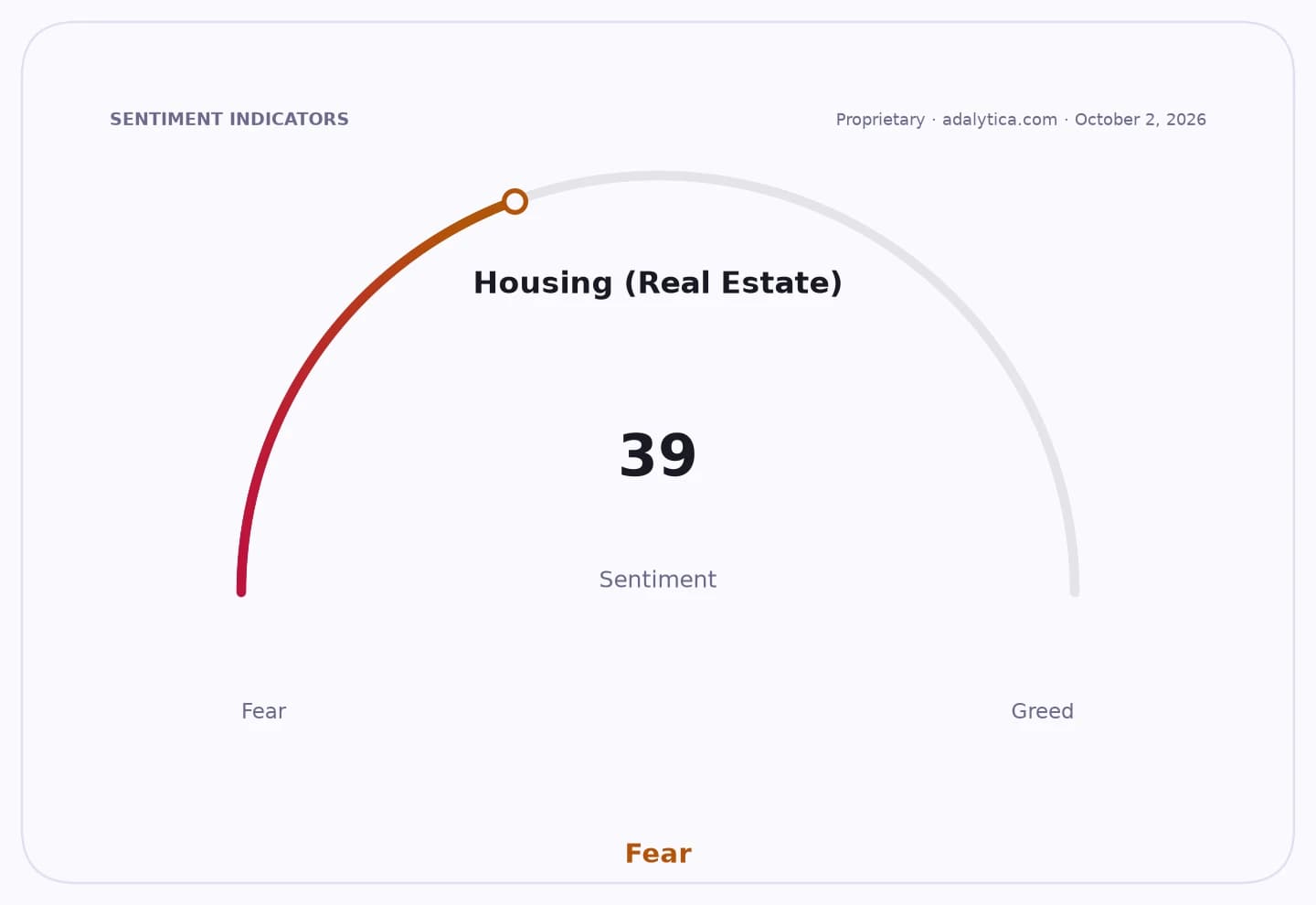
Dubai’s ultra-prime property market just hit a speed bump that matters far beyond trophy homes: sales of residences priced above $10 million fell 34% in the third quarter as regional conflict dented buyer confidence, a reminder that even one of the world’s most resilient luxury housing booms can slow when geopolitics gets in the way.
Dubai luxury home sales fall 34% in Q3
That matters because Dubai’s high-end housing market has been one of the clearest beneficiaries of global wealth flows, drawing in buyers from Europe, Asia and the Middle East who want safety, lifestyle and capital preservation. When that demand softens, it can ripple through developers, brokers, construction activity and the broader ecosystem of premium services tied to high-net-worth migration.
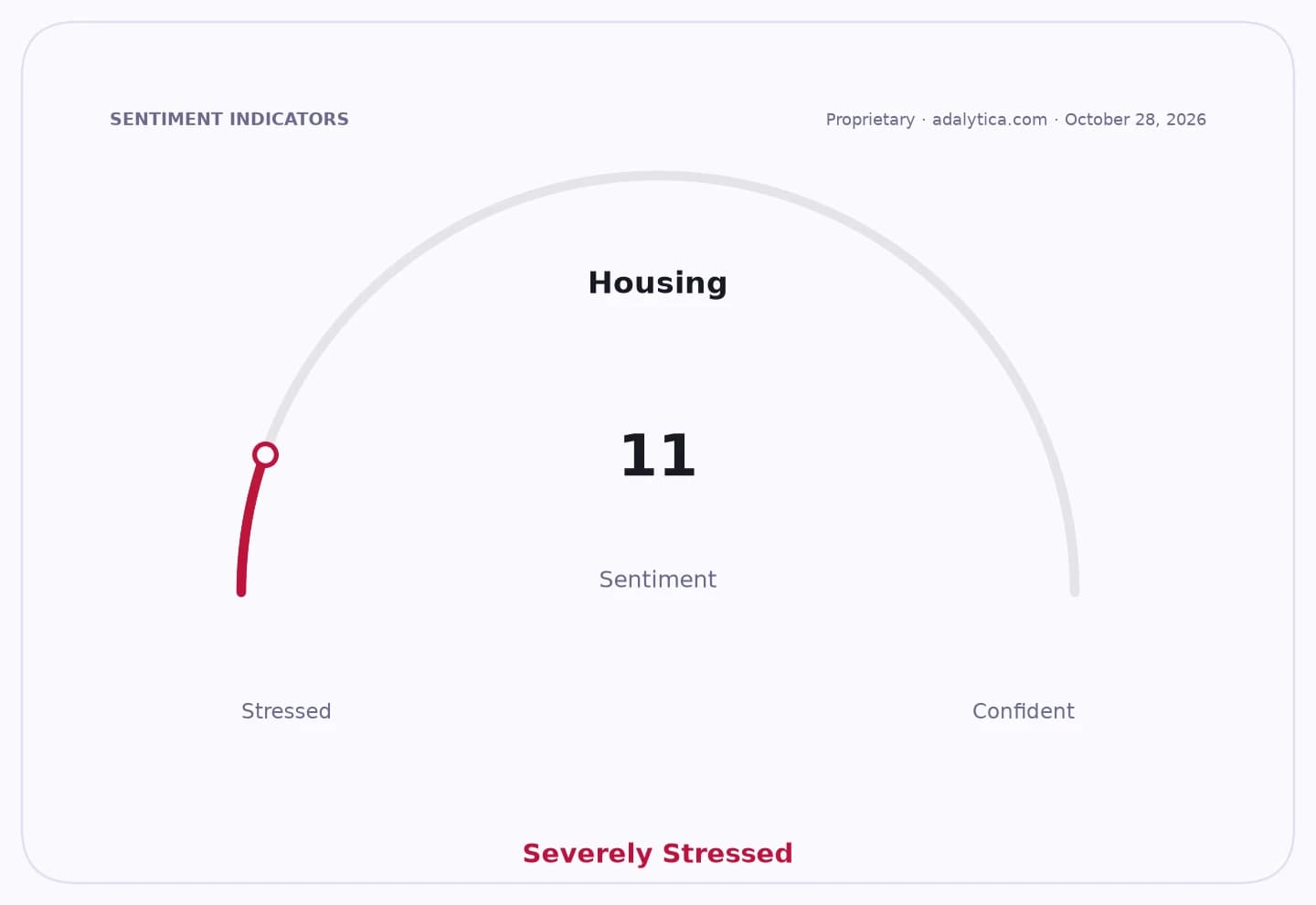
Sentiment IndicatorsⓘProprietary · adalytica.com · October 28, 2026
This is a snapshot — live sentiment, awareness and momentum for 130+ markets update continuously in the dashboard.Open AlphaPulse
Knight Frank said Dubai recorded 86 luxury transactions worth $1.57 billion from July through September, down from 131 deals in the second quarter. Even so, the nine-month tally reached $6.67 billion, which shows the market is cooling from a very high base rather than collapsing. For long-term investors, that distinction matters: a slower quarter does not erase the structural appeal of Dubai’s tax-friendly, internationally connected property market, but it does suggest the pace of price gains and deal flow may be harder to sustain.
The setback comes as buyers become more cautious about the regional outlook, and that caution can show up first in the most discretionary corner of the market. Ultra-luxury homes are often the first assets to be delayed when confidence wobbles, especially in markets where many purchases are cash-driven and sentiment-sensitive rather than mortgage-led.
For investors, the question is less whether Dubai remains attractive than whether valuations have gotten ahead of the near-term fundamentals. The emirate still benefits from population growth, a strong brand with global wealthy buyers and an established reputation as a regional safe haven. But if geopolitical stress lingers, the top end of the market may need time to digest its recent surge.
That makes this an important watchlist story for property developers, landlords and real estate-linked businesses with exposure to Dubai’s premium segment. The long-term case is still intact, but the next leg higher may be slower, more selective and more dependent on a stabilizing regional backdrop. For patient investors, that argues for discipline, not dismissal.
| Entity | Gains | Losses |
|---|---|---|
| Dubai luxury buyers | ▲More negotiating power | ▼Less urgency to buy |
| Dubai developers | ▲Slower demand risk management | ▼Softer ultra-prime sales |
| Existing homeowners | ▲Resilient long-term market | ▼Short-term price momentum |
| Geopolitical stability | ▲Rebound in confidence | ▼Demand uncertainty |