Saudi Arabia’s real estate market is drawing a major regional developer, with Arada planning projects worth $13.3 billion as prices continue to edge higher and investment interest broadens across the kingdom.
Arada Plans $13.3 Billion Saudi Real Estate Projects
The scale of the commitment underscores how Saudi Arabia’s property boom is moving beyond headline megaprojects into a deeper pipeline of residential, commercial and mixed-use development. A 1.2% rise in the Saudi real estate price index in the third quarter points to a market that is still expanding, even as global risk appetite remains fragile and investors are more selective about where they deploy capital.
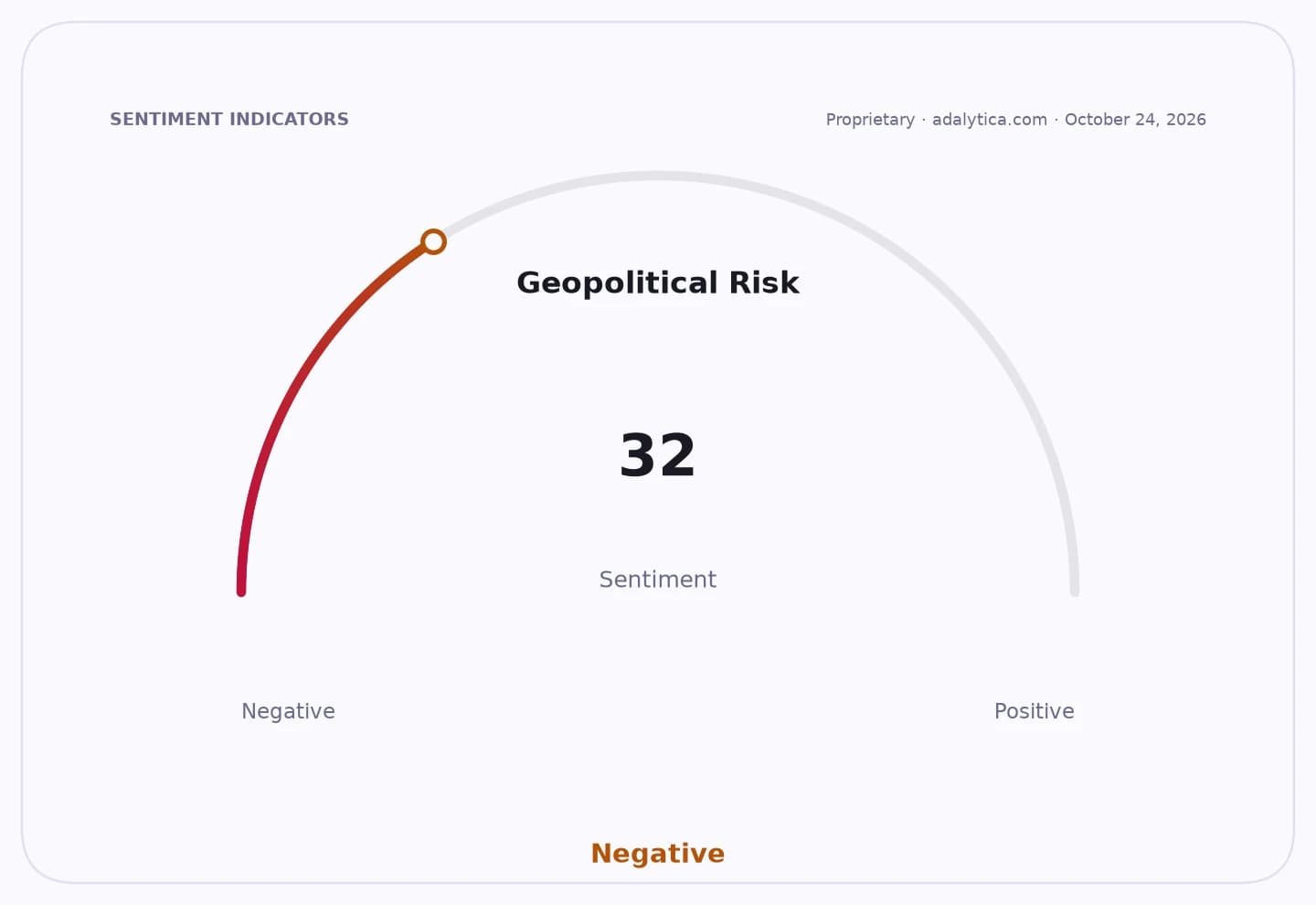
Sentiment IndicatorsⓘProprietary · adalytica.com · October 24, 2026
This is a snapshot — live sentiment, awareness and momentum for 130+ markets update continuously in the dashboard.Open AlphaPulse
For Arada, the bet is on Saudi Arabia’s combination of population growth, housing demand and government-backed economic diversification. The kingdom has been working to improve ownership and investment frameworks, a shift that is intended to channel more private capital into the sector and accelerate development. That matters because real estate is not just a cyclical asset class in Saudi Arabia; it is central to broader efforts to reshape urban supply, attract foreign developers and support non-oil growth.
The timing is also important. Adalytica’s global stability gauge shows sentiment is neutral but awareness remains in “fear” territory, while the S&P 500 trade signal is in extreme fear, a backdrop that tends to make investors more cautious on frontier and emerging-market property exposure. Even so, the Saudi market is offering something many others are not: scale, policy support and a visible project pipeline that can absorb large capital commitments.
The bullish case for Arada is that Saudi Arabia’s development cycle is still early relative to the size of its ambitions, leaving room for well-capitalized developers to secure land, build brand recognition and capture demand from both domestic buyers and foreign investors. The bear case is familiar: rising supply, execution risk and the possibility that price growth slows if financing conditions tighten or if demand proves less durable than current plans assume.
Cross-border initiatives, including efforts to deepen Saudi-Pakistani real estate ties, suggest the kingdom is also trying to widen its investor base and diversify the sources of development capital. That could support liquidity in the sector over time, but it also raises the competitive bar for developers chasing the same prime sites and buyers.
For investors, the key question is whether Saudi Arabia’s real estate expansion can keep converting policy support and capital inflows into sustainable returns. Arada’s $13.3 billion plan suggests confidence in the answer — but it also raises the stakes for pricing, delivery and absorption across the market.
| Entity | Gains | Losses |
|---|---|---|
| Arada | ▲Growth pipeline | ▼Capital commitment risk |
| Saudi developers | ▲More demand | ▼Fiercer competition |
| Saudi economy | ▲Non-oil investment | ▼Higher supply overhang |
| Buyers and tenants | ▲More housing stock | ▼Potential price pressure |