Aramco is weighing the sale of up to five gas-fired power plants in a deal that could raise about $4 billion, a move that would give Saudi Arabia’s state oil champion fresh financial flexibility just as the kingdom leans harder on it to fund growth.
Aramco weighs sale of five gas-fired plants
For investors, the significance is bigger than the asset sale itself. This is a glimpse of how Saudi Arabia plans to finance its next phase of development: by turning mature, non-core assets into cash and redeploying the proceeds into projects tied to Vision 2030. With oil prices under pressure and the government still heavily dependent on hydrocarbon revenues, Aramco’s ability to unlock value from its balance sheet matters both for the company and for the kingdom’s fiscal room.
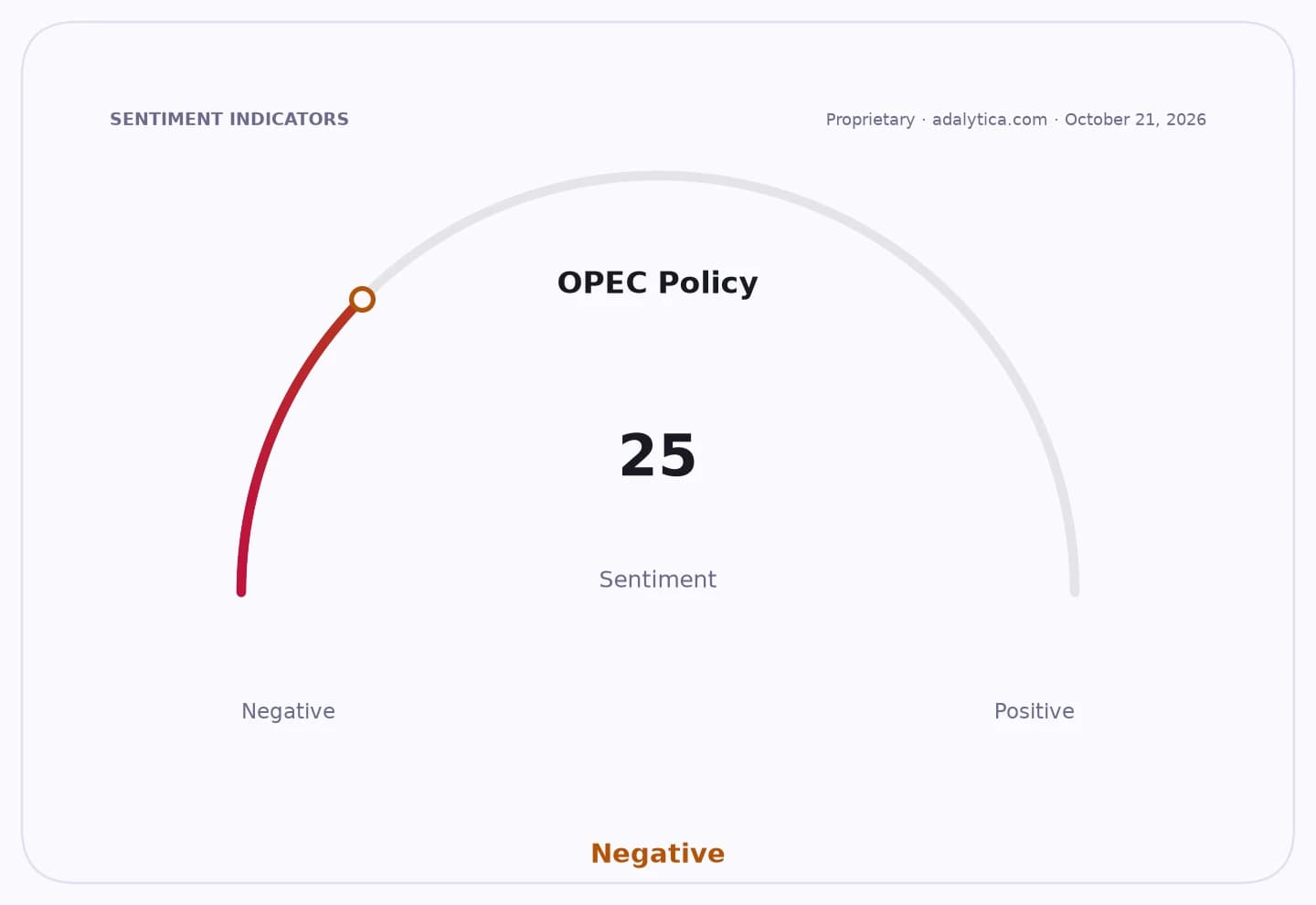
Sentiment IndicatorsⓘProprietary · adalytica.com · October 22, 2026
This is a snapshot — live sentiment, awareness and momentum for 130+ markets update continuously in the dashboard.Open AlphaPulse
The plants are part of a broader portfolio Aramco could rationalize. Reuters has reported the company owns or co-owns about 18 power stations in Saudi Arabia, giving it plenty of room to recycle capital without changing its core role as the country’s most important cash engine. Local utility buyers are said to be interested, which fits a wider pattern: domestic institutions and strategic investors are increasingly being tapped to absorb assets the state no longer needs to keep on its books.
That matters because Saudi Arabia is trying to do two things at once. It wants Aramco to keep paying dividends and supporting the budget, but it also wants the company to behave more like a modern energy and industrial platform, with capital flowing to higher-return opportunities. Aramco already cut its dividend by roughly a third this year and sold $5 billion of bonds in May, both signs that management is trying to preserve financial strength while meeting national priorities.
The economic logic is straightforward. If Aramco can sell a utility asset for roughly $4 billion and pair that with other disposals or financing, it can help fund new energy, infrastructure and industrial projects without leaning quite so heavily on crude income. That is important at a time when oil still accounts for a large share of Saudi state revenue and the kingdom faces the heavy bill for projects such as Expo 2030, the 2034 World Cup, Neom and The Line.
For shareholders, the appeal is the same as it is for any capital-intensive company: better capital allocation. Mature power plants are useful, but they are not the kind of assets that typically drive the long-term upside investors want from Aramco. Selling lower-growth infrastructure and using the proceeds to strengthen the balance sheet or fund more strategic investments could improve returns over time, especially if management keeps pruning assets that do not sit at the center of the company’s energy future.
There is also a broader market story here. Saudi Arabia is signaling that its blue-chip companies can be part of the financing solution for the country’s transformation, not just passive dividend payers. That should interest long-term investors who track the kingdom’s opening to private capital, infrastructure investment and more diversified energy spending. It also helps explain why the asset sale, while not transformative on its own, fits into a much larger shift in how the Saudi economy is being funded.
The timeline is still unclear, and not every announced sale turns into a completed transaction. But the direction is telling. Aramco is looking to do what strong companies do when they want to stay resilient through a lower-oil-price cycle: sell what is no longer essential, protect the core, and keep capital moving toward the next decade’s opportunities.
| Entity | Gains | Losses |
|---|---|---|
| Aramco | ▲More cash flexibility | ▼Some asset ownership |
| Saudi government | ▲Extra funding capacity | ▼Less reliance on oil income |
| Local utility buyers | ▲Strategic assets | ▼Higher capital outlay |
| Long-term shareholders | ▲Leaner capital allocation | ▼Near-term asset base |