Saudi Arabia’s TASI index ended Monday lower as broad selling hit 200 listed companies, underscoring how quickly risk appetite can fade even in a market supported by firm oil prices and geopolitical tension in the Gulf.
TASI Falls 0.65% as Broad Selling Hits Saudi Stocks
The benchmark slipped 0.65% to 10,123.62, shedding 66.15 points as red dominated most sectors and the decline spread beyond a handful of laggards. That matters because TASI is not moving in isolation: it is the main read-through on domestic liquidity, investor confidence and the market’s ability to absorb volatility in a region where energy security is once again in focus.
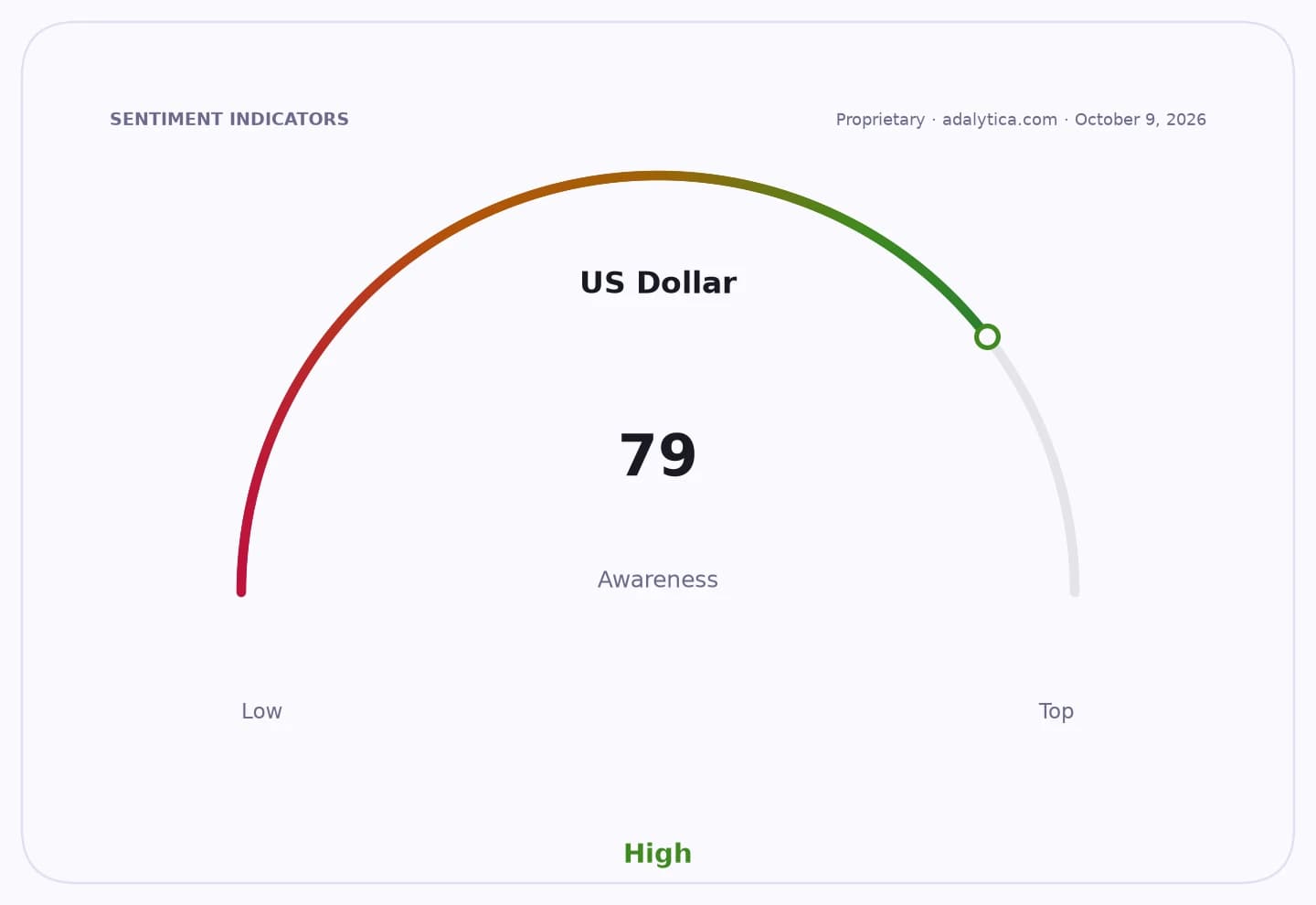
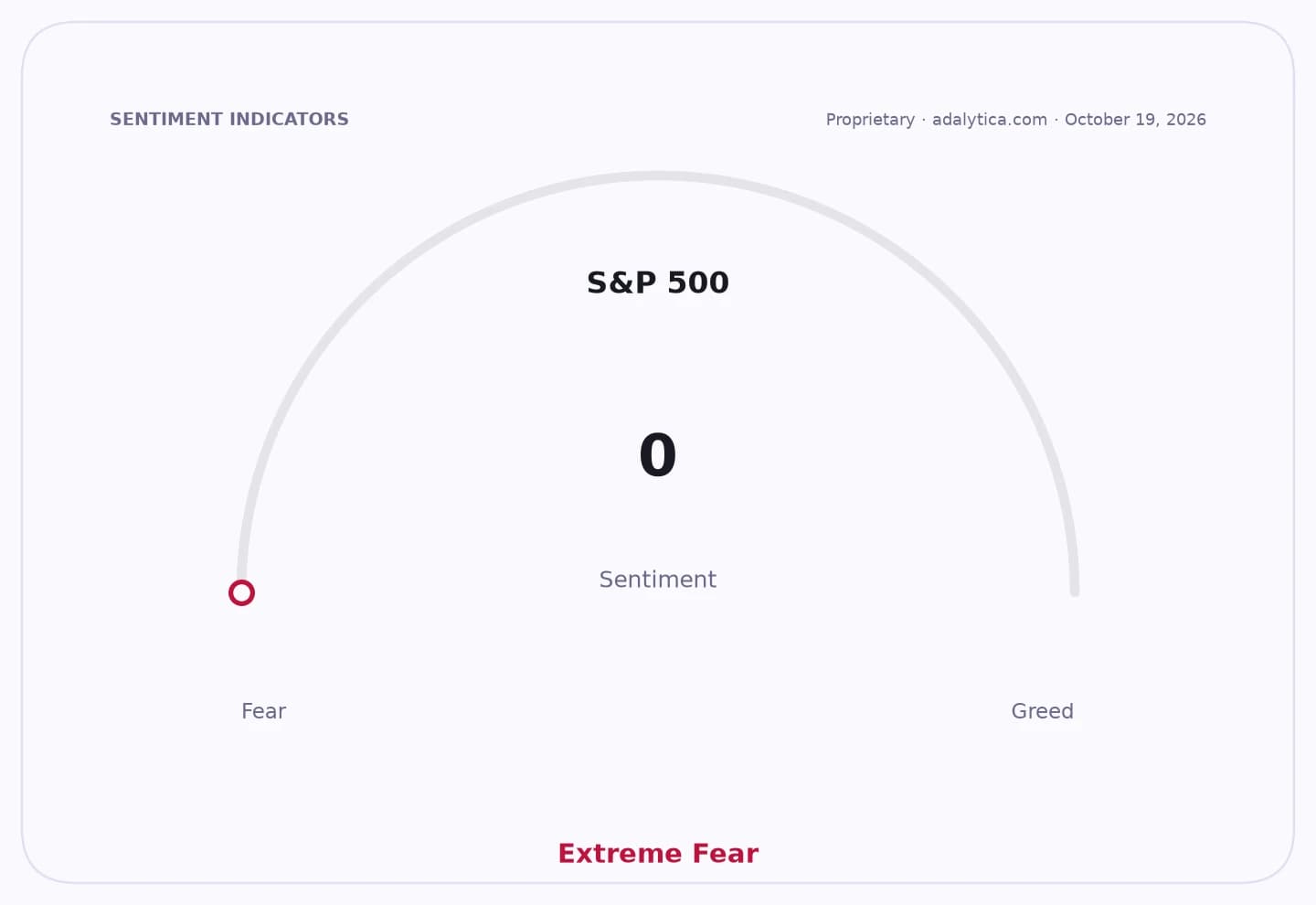
Sentiment IndicatorsⓘProprietary · adalytica.com · October 23, 2026
This is a snapshot — live sentiment, awareness and momentum for 130+ markets update continuously in the dashboard.Open AlphaPulse
The weakness was led by media and entertainment, which fell 3.88%, followed by insurance down 2.41% and commercial and professional services off 2.34%. The banking sector, a key market driver, also lost 0.97%, while telecoms dropped 0.81%. Even the more defensive or index-heavy names offered little support, with materials and energy both edging lower.
In total, 200 stocks closed in the red against 63 gainers, a clear sign that Monday’s move was broad-based rather than a rotation within a single industry. Among the biggest losers were National Industries Co. for Steel, down 9.94%, Amlak International off 7.4% and Arabian Company for Agricultural and Industrial Investment, lower by 5.37%. On the upside, Bahrain-based Bahr Al Arab rose 9.87%, while Advanced Petrochemical gained 5.79% and Sipchem added 3.22%.
Trading activity was solid, with 303.16 million shares changing hands for 3.63 billion riyals. Alinma was the most traded stock by volume, while Al Rajhi Bank led by value, highlighting that investors were still active even as they reduced exposure across the market.
For investors, the key point is not just that TASI fell, but that the decline came despite a backdrop that should usually support Saudi risk assets: stronger crude, persistent regional tensions and continued attention on energy flows through the Gulf. If oil remains elevated after renewed attacks on Saudi facilities and ports, the market’s larger issue may be valuation discipline and a preference for cash-generative heavyweights over cyclical and smaller-cap names.
That creates a familiar split in positioning. Banks and large-cap defensives remain the market’s core liquidity trade, while weaker industrial, insurance and consumer-linked names are more vulnerable if risk sentiment stays fragile. The message from Monday is that Saudi equities need fresh catalysts to regain momentum, and until they get them, investors are likely to keep rewarding quality balance sheets and punishing speculative pockets first.
| Entity | Gains | Losses |
|---|---|---|
| TASI blue chips | ▲Relative support | ▼Market breadth |
| Banks | ▲Liquidity leadership | ▼Index upside |
| Oil-sensitive Saudi economy | ▲Higher revenue backdrop | ▼Risk-off sentiment |
| Weak cyclical stocks | ▲Limited bid support | ▼Heavy selling pressure |