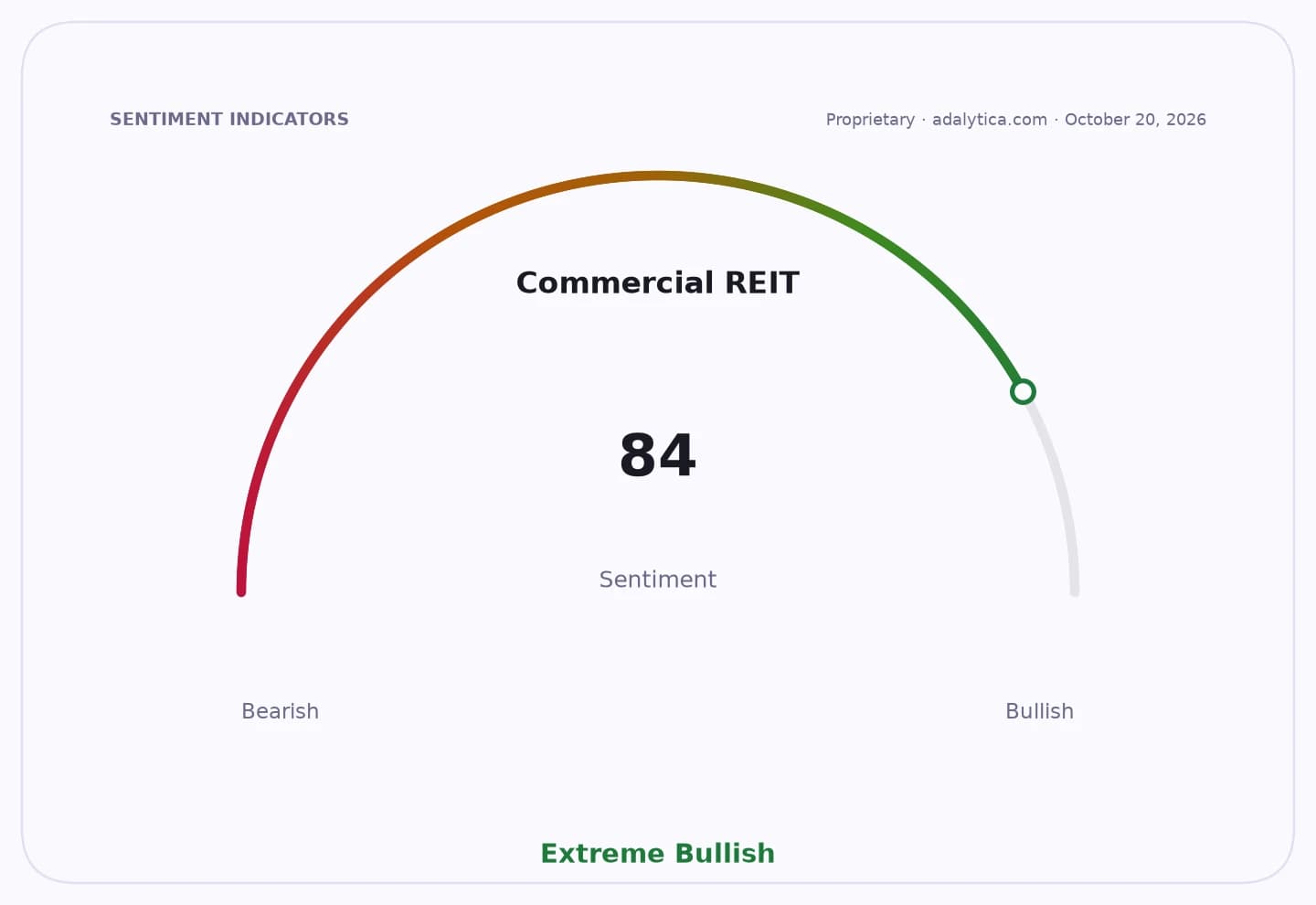
Easterly Government Properties’ latest move is not about company-specific distress so much as a valuation reset in a higher-rate market: Guinness FP Foresight Global Real Infrastructure Fund slashed its stake to 0.50% from 1.68% as U.S. Treasury yields climbed and pressured long-duration property assets.
Easterly Government Properties stake cut by fund
Commercial REIT
The fund said it trimmed the position after a period of strong performance and to manage exposure to rising yields, a signal that even government-tenant office REITs are less attractive when bond returns move higher. The shift matters because REITs like Easterly are priced partly on the stability of their rent streams, and that stability loses some appeal when the risk-free rate rises fast enough to compete with dividend yields.
Sentiment Indicators
Easterly, which owns properties leased primarily to U.S. government agencies, closed at about $21.49 on Nov. 19 with a market value of roughly $1.12 billion. Its shares have traded between $20.56 and $25.96 over the past 52 weeks and were down 5.25% over the prior month, reflecting the broader squeeze on yield-sensitive real estate.
That backdrop is exactly what the fund highlighted in its quarterly letter. The U.S. 10-year Treasury yield rose from 4.44% at the end of June to 5.29% by Sept. 30, a move that weighed on utilities, renewable energy and digital infrastructure stocks, and tightened financing conditions across the sector. Higher borrowing costs also raise the hurdle rate for future acquisitions and capital spending, which matters for REITs that depend on steady access to debt markets.
Easterly’s own filings show the business remains centered on federal tenants, but that does not insulate it from rate-driven revaluation. The stock has been oscillating around its 50-day and 200-day moving averages, while recent price action has turned softer, with the RSI falling toward oversold territory and the MACD pointing lower — a technical backdrop that mirrors the broader pressure on commercial property valuations.
For investors, the stake reduction suggests active managers are still rotating away from rate-sensitive real assets even when the underlying cash flows remain intact. The key question now is whether Treasury yields stabilize enough to restore demand for REIT income, or whether more funds follow Guinness and keep trimming exposure ahead of the next bout of macro volatility.
| Entity | Gains | Losses |
|---|---|---|
| Guinness FP Foresight Fund | ▲Lower rate sensitivity | ▼Less exposure to DEA upside |
| Easterly Government Properties | ▲Long-term holders if yields fall | ▼Demand from income funds |
| Treasury bondholders | ▲Higher relative appeal | ▼REIT valuations |
| REIT investors | ▲Better entry points on pullbacks | ▼Near-term price pressure |