Canadian Net Real Estate Investment Trust said third-quarter funds from operations rose 5% to $0.172 per unit, underscoring that acquisition-led growth and higher rents are still supporting cash flow even as property valuations do most of the heavy lifting in reported earnings.
Canadian Net REIT Q3 FFO rises 5% on acquisitions

The trust reported FFO of $3.54 million, up from $3.38 million a year earlier, while rental income climbed 3.3% to $7.14 million and net operating income increased 1.9% to $5.15 million. Net income attributable to unitholders surged to $9.36 million from $2.86 million, though that gain was mainly tied to a $5.84 million fair-value increase in investment properties versus a $308,554 loss a year earlier.
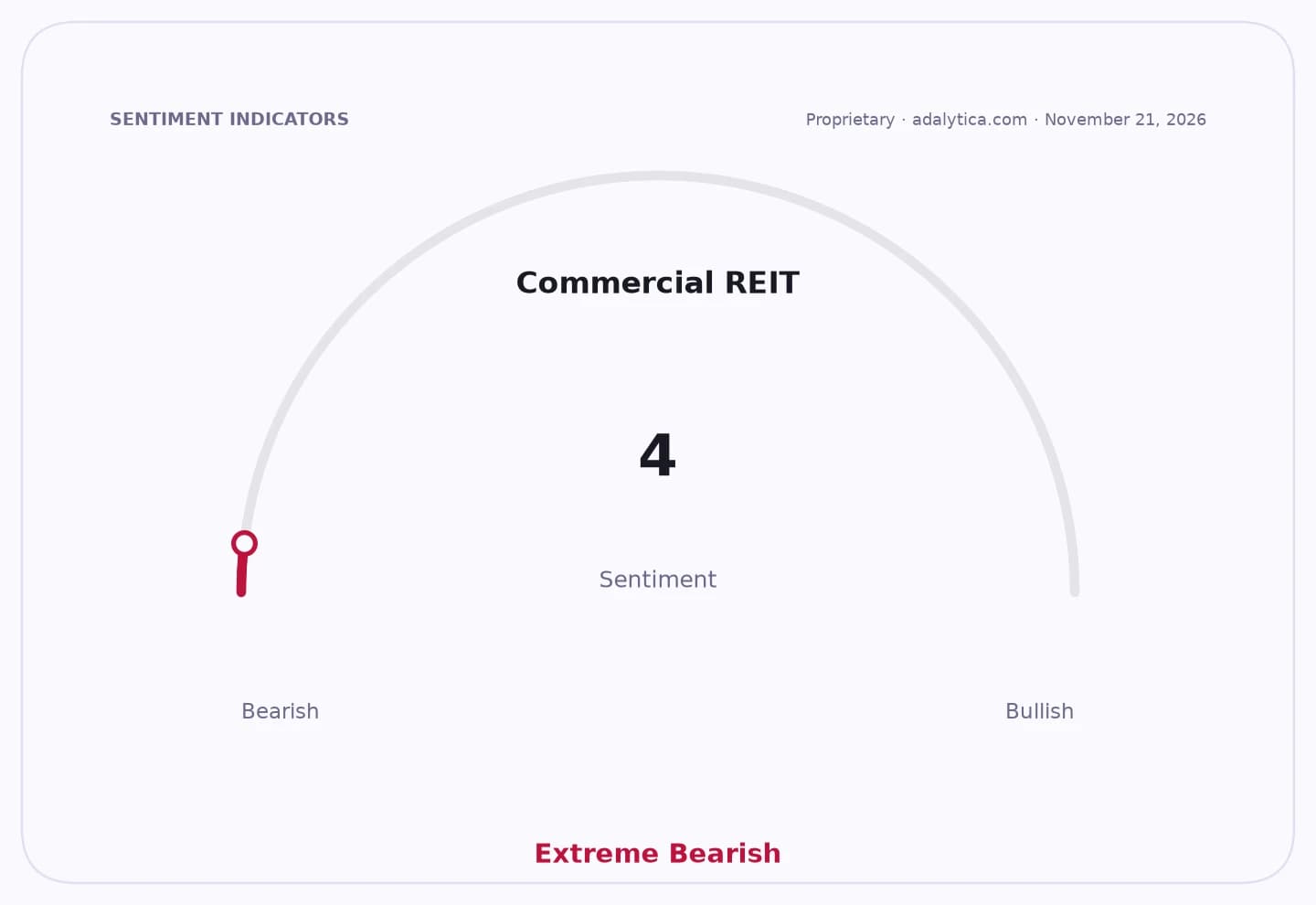
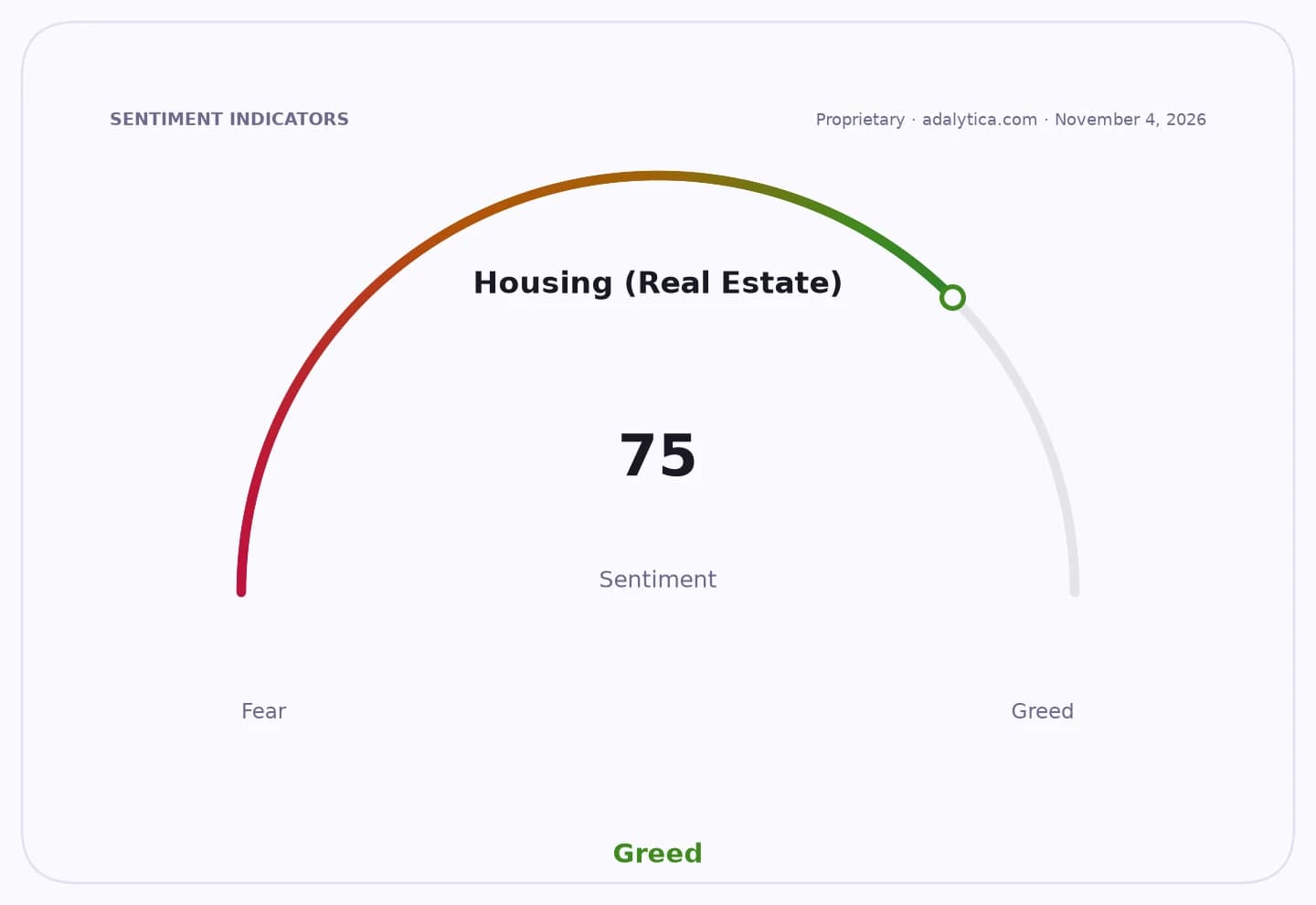
Sentiment Indicators
For investors, the key takeaway is that operating performance is improving enough to backstop distributions. Canadian Net said occupancy remained at 100% and its payout ratio was 52%, while monthly distributions of $0.03 per unit will continue through the first quarter of 2027, equivalent to an annualized $0.36 per unit.
Chief Executive Kevin Henley said the Bureau en Gros acquisition in Rivière-du-Loup contributed for its first full quarter, adding to rent growth across the existing portfolio. Over the first nine months of 2026, FFO rose 3% to $10.48 million, helped by acquisitions, rent increases and lower interest charges on credit facilities and convertible debentures, partly offset by higher mortgage renewal costs.
The results come at a time when real estate investors remain highly sensitive to financing costs and the durability of cash yields. With benchmark U.S. rates still above 5% and housing-related sentiment weak, Canadian Net’s ability to keep occupancy full and distributions steady should appeal to income-focused buyers, but the trust still faces the usual REIT test of maintaining growth as debt is refinanced.
| Entity | Gains | Losses |
|---|---|---|
| Canadian Net REIT | ▲Higher FFO, steady distributions | ▼Higher mortgage renewal costs |
| Income investors | ▲Ongoing $0.03 monthly payout | ▼Limited upside if valuation gains fade |
| Existing tenants/assets | ▲Full occupancy supports stability | ▼Less room for pricing pressure relief |
| Short-duration rate-sensitive REITs | ▲Cash-flow stability stands out | ▼Financing costs remain a headwind |