First Industrial Realty Trust is showing that industrial real estate can still produce steady cash flow even as the post-pandemic rent boom fades, and that is the key reason long-term investors are still paying attention to the REIT.
First Industrial lifts FFO guidance after Q3
Housing (Real Estate)
The company lifted the midpoint of its full-year funds from operations guidance by $0.01 a share after third-quarter results, a modest increase that nevertheless matters in a sector where investors have been bracing for slower lease escalations and more uneven development returns. The message from management was not that industrial fundamentals are reaccelerating, but that the business is proving resilient enough to absorb a normalization in rent growth without sacrificing occupancy or cash generation.
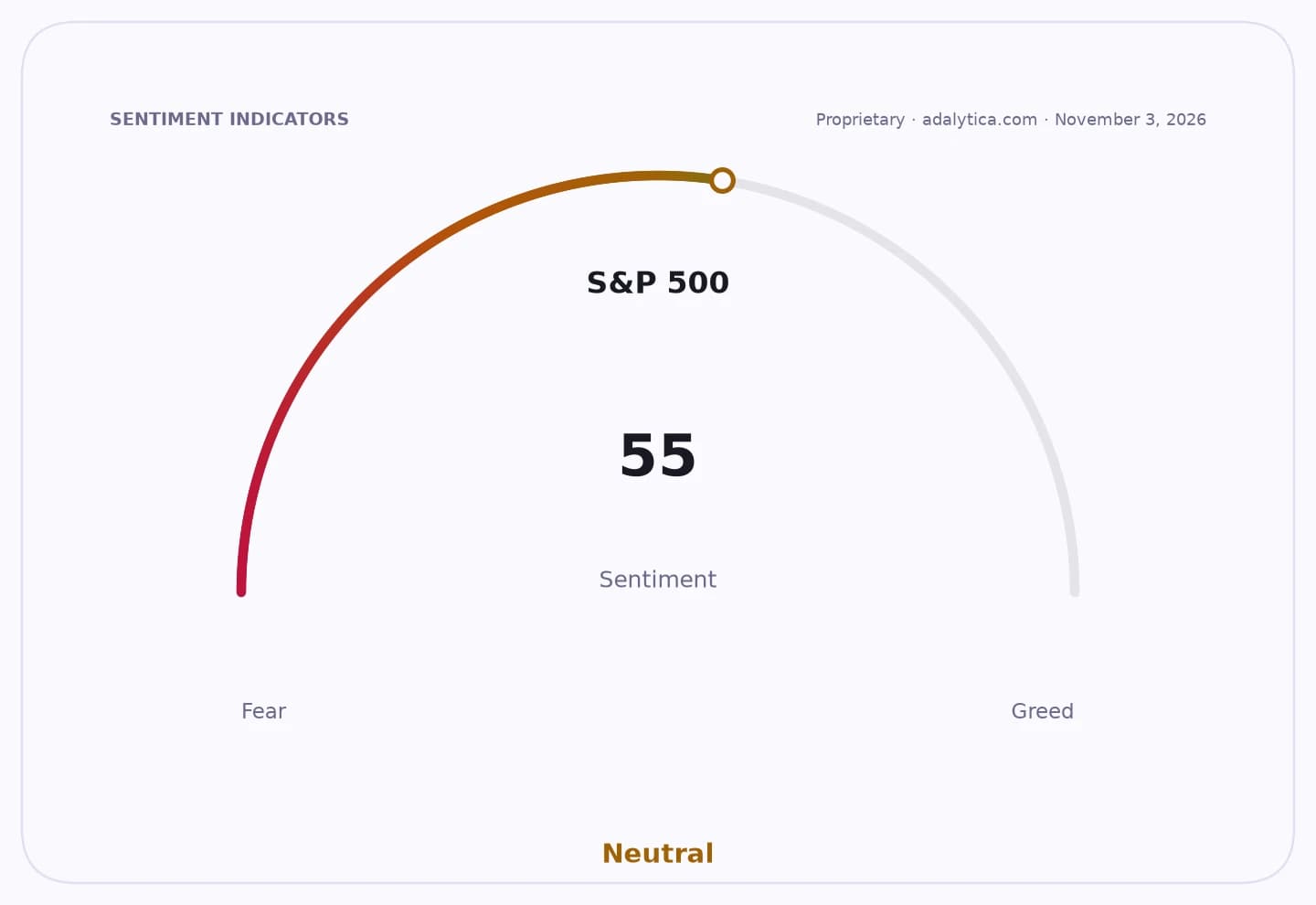
Sentiment Indicators
That is important because industrial REIT valuations now depend less on explosive rent gains and more on whether landlords can maintain durable spread growth, protect renewal pricing and keep new supply disciplined. First Industrial’s update suggests the answer remains yes, at least for high-barrier infill markets where tenants still value location and logistics efficiency.
A central takeaway from the call is that rent growth is cooling in a healthy way rather than collapsing. The company said cash rent increases on signed renewals for 2027 lease expirations were 16%, covering 45% of all leases expiring next year. That remains solid by historical standards, but it is a clear step down from the outsized increases seen when industrial demand surged after the pandemic. For investors, the significance is that the company is rolling into a more predictable phase of the cycle, where cash flow is supported by embedded contractual gains rather than one-off repricings.
The stronger signal for near-term cash flow came from operations. Core property leasing outperformed expectations in the third quarter, allowing First Industrial to push 150,000 square feet of development leasing into early 2027 while leaving its full-year occupancy forecast unchanged. In practical terms, the company is demonstrating that leasing demand in its existing portfolio is strong enough to offset timing slippage in the development pipeline. That matters because development can be a source of growth, but it can also create earnings volatility if lease-up is delayed or construction timing slips.
For industrial landlords, the balance between core leasing and development execution is now the main test of quality. Developers with overly aggressive pipelines face pressure as rent growth normalizes and capital costs remain elevated. First Industrial’s ability to preserve guidance while deferring some leasing into next year suggests its portfolio is still doing enough of the heavy lifting to keep FFO on track.
The regional picture also supports the thesis. Management said Southern California industrial demand is improving after a period of softer activity following the pandemic leasing surge. New long-term lease agreements in the Inland Empire and Los Angeles point to a rebound in one of the country’s most important logistics corridors. That matters beyond one market: Southern California remains a bellwether for warehouse demand tied to ports, consumer distribution and inventory positioning. A recovery there helps validate the idea that industrial demand has stabilized even as the market digests the supply wave from the previous cycle.
The company’s stance fits the broader industrial REIT landscape, where investors are watching whether national net absorption can continue to outpace new construction. First Industrial’s comments align with the view that the sector is moving from a rent-led growth phase into one driven more by occupancy, lease rollover management and selective development. That is less exciting, but often more investable. Steady same-property cash flow, modest mark-to-market gains and disciplined capital deployment can support dividend durability and valuation support even when growth slows.
There are risks. If lease-up slows further or if development completions keep slipping, near-term earnings growth could look flatter than the market expects. And if industrial demand softens broadly, especially in logistics-heavy coastal markets, pricing power could weaken faster than management anticipates. But for now, First Industrial’s third-quarter update argues that the REIT is navigating the normalization in a controlled way, with enough leasing momentum and balance-sheet flexibility to remain a credible long-term income compounder.
| Entity | Gains | Losses |
|---|---|---|
| First Industrial | ▲Stable FFO outlook | ▼Fewer explosive rent spikes |
| Existing tenants | ▲More moderate renewal increases | ▼Less room to delay leasing decisions |
| Long-term income investors | ▲Predictable cash flow | ▼Limited near-term growth upside |
| Industrial REIT peers with weaker leasing | ▲First Industrial’s relative strength | ▼Competitive pressure on occupancy |