Office Properties Income Trust has sold a half-empty Reston office building for $12.1 million, less than a third of its 2014 price, underscoring how far office valuations have fallen and how bankruptcy-driven sellers are still clearing assets at steep discounts.
Office Properties sells Reston office for $12.1 million
The deal for 1775 Wiehle Ave. in Reston, Virginia, closed Oct. 22 and transferred the 135,000-square-foot property to Bethesda-based Polinger Co., according to Fairfax County records. The price works out to about 30% of the $41 million First Potomac Realty Trust paid in 2014, before Office Properties — then through its acquisition of First Potomac — inherited the asset.
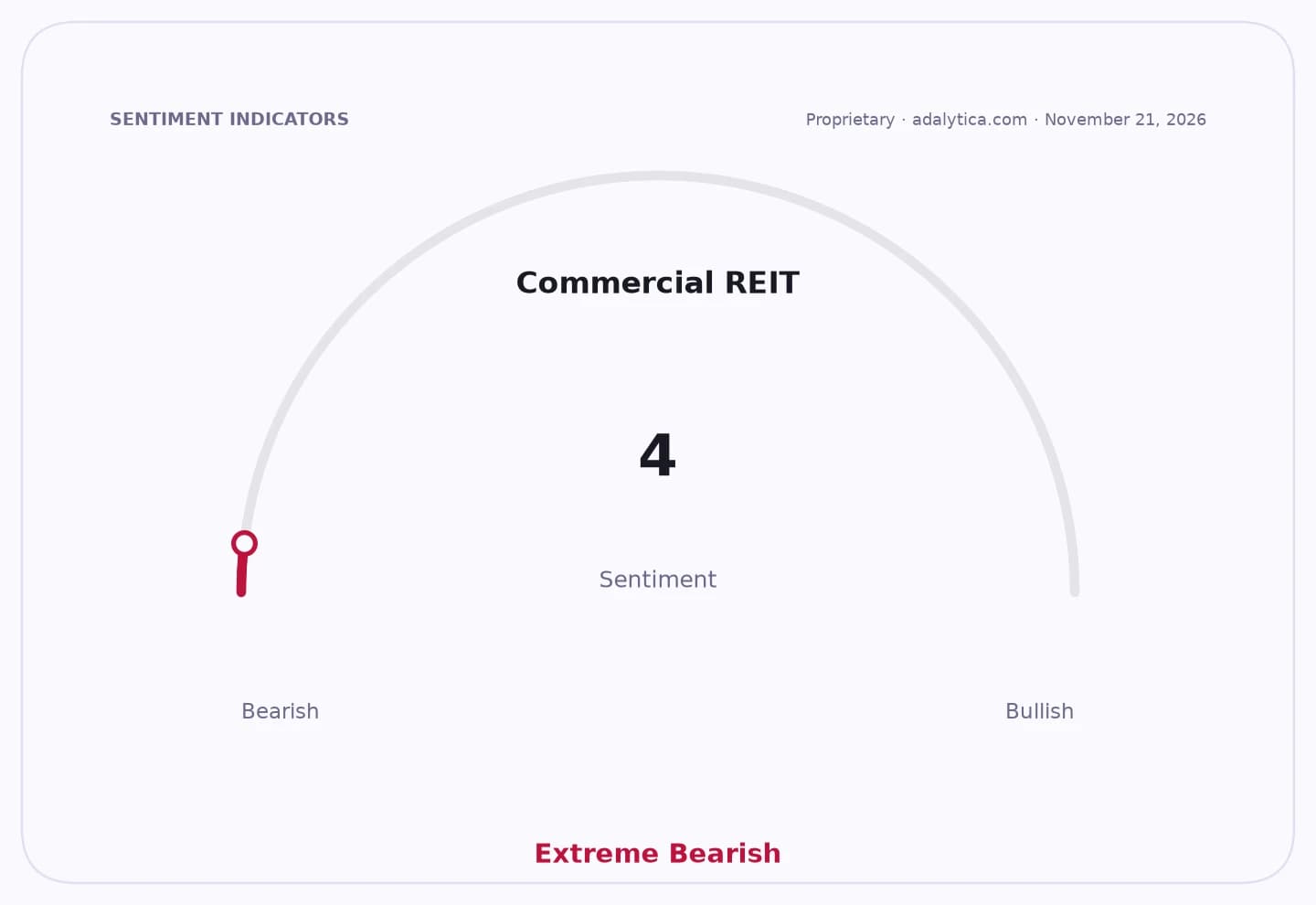
Sentiment Indicators
For Office Properties, the sale is not just another disposition but part of a forced balance-sheet repair after the REIT emerged from Chapter 11 in June. The company has been selling large chunks of its 16 million-square-foot office portfolio to pay down debt after years of post-pandemic pressure on office fundamentals, higher financing costs and falling capital values. In its restructuring, it shed $714 million of debt but still finished with about $1.7 billion outstanding.
The transaction also highlights the bifurcation inside the Washington, D.C. office market. A building that is just under 50% leased and anchored by a law firm may still attract buyers if it sits in a desirable submarket with resilient tenant demand and redevelopment pressure limiting new supply. Polinger said it sees growing interest from defense, technology, medical and government-contracting tenants in Reston, where office parks are increasingly being converted to residential use.
That is the key economic story: even in relatively better-positioned submarkets, the bid for older office stock remains weak enough that sellers in distress are crystallizing large losses rather than waiting for a market recovery. Office Properties recorded a $2.3 million impairment loss on the asset, while the broader market has been pricing office real estate off higher vacancy, tighter lending standards and the prospect that remote and hybrid work will keep a structural lid on demand.
The sale also matters for investors because it offers another read-through on listed office REIT valuations and on the pace of asset markdowns still working through the sector. Office-heavy landlords have been under strain for two years or more, and transactions like this suggest that appraised values and public-market pricing may still be catching up to reality. Shares of office REITs have rebounded unevenly as investors hunt for survivors with stronger balance sheets, but distressed dispositions remain a reminder that recovery will likely be patchy, not broad-based.
Polinger plans to invest in tenant improvements and spec suites at the building, a sign that opportunistic buyers still see value if they can buy cheaply enough and reposition the asset. That strategy has parallels with Polinger’s own recent sale of a Navy Yard office property at a price below what it paid in 2019, showing that even local operators are selectively trading down into a market where office ownership is becoming more about asset management and redevelopment optionality than passive rent collection.
For Office Properties, more sales are likely as it continues to unwind a portfolio that was built for a very different office market. For the sector, the Reston transaction is another data point that the price reset is not over, especially for older buildings with significant vacancy and limited leasing momentum.
| Entity | Gains | Losses |
|---|---|---|
| Polinger Co. | ▲Cheap entry into Reston office | ▼Near-term capital spending |
| Office Properties Income Trust | ▲Debt reduction progress | ▼Deep loss on sale |
| Reston office rivals | ▲Tighter supply over time | ▼More distressed pricing pressure |
| Existing office landlords | ▲Potential valuation reset clarity | ▼Lower comps for similar assets |