The European Central Bank is expected to leave borrowing costs unchanged at its final meeting of the year, keeping policy in a neutral zone even as investors look for clues on whether the next move could eventually be a hike rather than a cut.
ECB set to hold rates at final 2025 meeting

That matters because the ECB’s rate path now looks less like an active easing cycle and more like a prolonged pause while growth stabilizes and inflation drifts closer to target. With the deposit facility at 2.00%, refinancing operations at 2.15% and the marginal lending rate at 2.40%, the central bank has already moved into territory it judges neither stimulative nor restrictive. For bond markets, the key question is no longer whether the ECB will cut quickly, but whether resilient growth and sticky inflation keep policy on hold well into 2026.
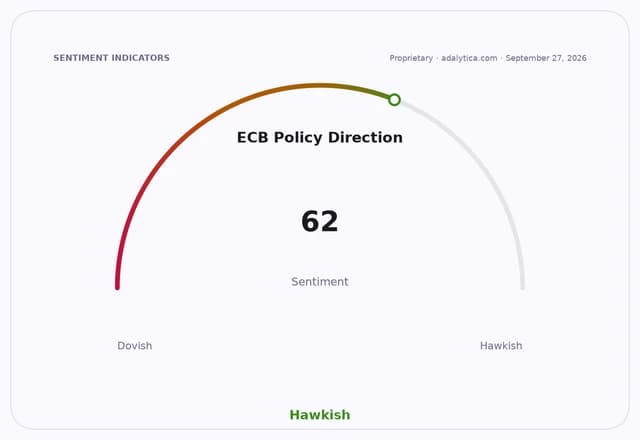
Sentiment IndicatorsⓘProprietary · adalytica.com · September 27, 2026
This is a snapshot — live sentiment, awareness and momentum for 130+ markets update continuously in the dashboard.Open AlphaPulse
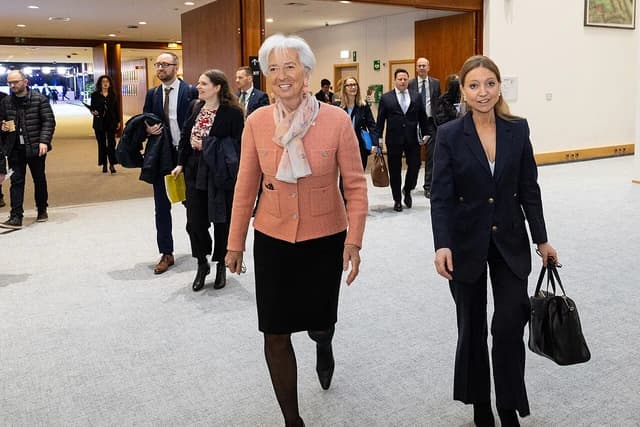
The case for inaction is straightforward. Economists expect Christine Lagarde to repeat that policy is in a “good position,” while likely upgrading growth projections. Roman Ziruk at Ebury said he sees a fourth consecutive hold, with the ECB potentially signaling that any next move could be higher, though not imminently. Michael Krautzberger at Allianz Global Investors said rate cuts in 2026 look unlikely unless the euro area is hit by a fresh external shock, such as trade disruption from the United States or renewed financial volatility.
For investors, that shifts the trade from front-end easing to curve positioning and currency sensitivity. Short-dated euro rates are less likely to reprice sharply lower if the ECB keeps emphasizing a balanced policy stance, while government bonds remain vulnerable if officials sound more comfortable with growth. The euro has already been trading around $1.14, below its 50-day and 200-day moving averages, and the price action suggests markets remain cautious despite the prospect of a steady ECB. A more confident ECB on growth could eventually support the currency, but only if investors conclude the central bank is done cutting and may need to normalize higher later.
The broader macro backdrop explains why the ECB can afford to wait. Growth in the bloc has been recovering, and inflation is hovering close enough to target that policymakers do not need to rush. That leaves the central bank trying to preserve optionality: hold now, keep the door open for either a prolonged pause or a later hike, and avoid signaling an easing bias that might loosen financial conditions prematurely.
The main risk to that narrative is external. A renewed energy shock, a US trade policy surprise or a bout of market stress could quickly revive the case for cuts. But absent that, the ECB’s final meeting of 2025 is likely to reinforce a message investors have been resisting all year: after the tightening cycle, the euro zone may be entering a long period of policy stillness.
| Entity | Gains | Losses |
|---|---|---|
| ECB policymakers | ▲Policy flexibility | ▼Pressure to cut quickly |
| Euro-area banks | ▲Stable net interest margins | ▼Faster easing expectations |
| Euro bond holders | ▲Short-term yield stability | ▼Potentially higher-for-longer rates |
| Euro currency bulls | ▲Later-hike narrative | ▼Near-term dovish surprises |