Pablo Hernández de Cos warned that the Iran war’s hold on energy prices could keep euro-zone inflation uncomfortably high and force the European Central Bank to stay alert to further tightening risks.
ECB Warns Iran War Could Keep Euro Inflation High

The former Spanish central bank governor, now head of the Bank for International Settlements and a contender to succeed Christine Lagarde, said the jump in energy costs had not yet spilled into wages and broader prices, but the expected quick easing in oil and gas markets had not materialized. That matters because euro-area inflation is still running at roughly twice the ECB’s 2% target, leaving policymakers with little room to assume the shock will fade on its own.
Sentiment Indicators
Oil markets underscore the point. Brent has hovered near $90 a barrel in recent trading after sharp swings tied to the Middle East conflict, while West Texas Intermediate has also rebounded from late-summer weakness. A renewed energy shock would feed directly into headline inflation, delay any return to target and keep real incomes under pressure across the bloc. It would also complicate the ECB’s calculus at a time when higher borrowing costs are already squeezing growth and fiscal positions.
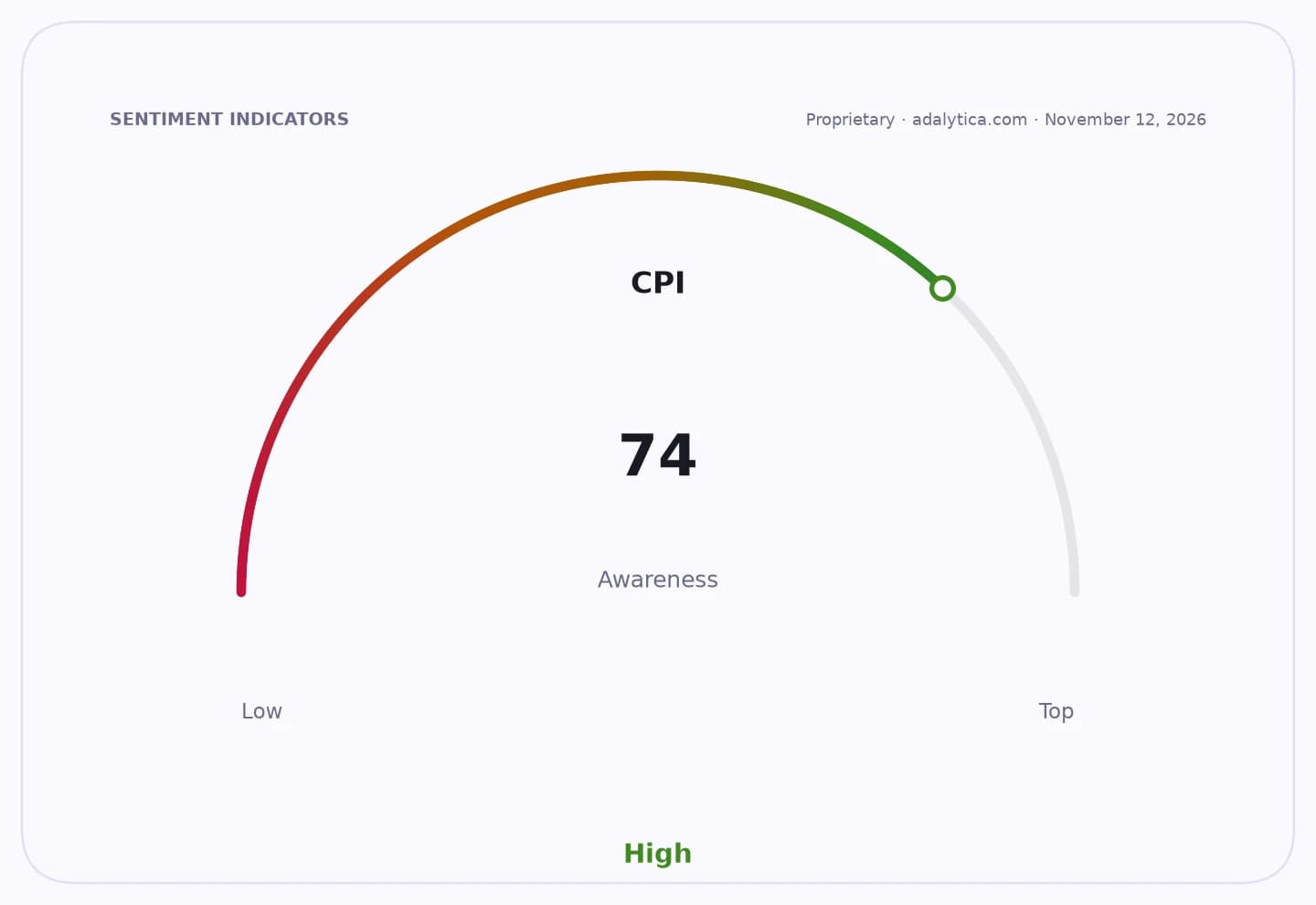
De Cos’s message is that the ECB should not react to headlines, but to evidence in the data. That keeps the focus on whether higher energy costs start to seep into services, wages and core prices — the channels that turn a temporary supply shock into a broader inflation problem. Adalytica’s CPI sentiment gauge shows awareness of inflation risks remains elevated even as conviction wobbles, reflecting how fragile confidence is in the disinflation path.
DCOILWTICO vs CPIAUCSL — macro contextadalytica.com
Explore this data interactively — full history, time series and cross-market comparisons.
The warning lands at a politically delicate moment. Europe’s most indebted governments are facing rising debt-servicing costs just as restrictive policy starts to bite, and France has emerged as a particular point of investor concern over fiscal strain. For bond markets, that combination of sticky inflation and weaker public finances raises the risk that sovereign spreads stay volatile if the ECB is forced to keep rates higher for longer.
De Cos is one of two candidates to lead the ECB, alongside former Dutch central bank chief Klaas Knot, and euro-area finance ministers are due to assess them on Monday before final decisions by European leaders later this month. His remarks suggest the next president may inherit an institution still fighting an inflation problem that is no longer just about the past energy shock, but about whether that shock reignites in a second round.
For investors, the key question is whether the Iran conflict remains a headline risk or evolves into a persistent macro input. If energy prices stabilize, the ECB can lean toward patience; if they stay elevated, markets may have to price in a longer period of tight policy, pressure on rate-sensitive assets and further strain on already fragile European sovereign credit.
| Entity | Gains | Losses |
|---|---|---|
| Oil producers | ▲Higher realized prices | ▼Demand destruction risk |
| Euro-area consumers | ▲None | ▼Higher energy bills |
| ECB hawks | ▲Stronger case for vigilance | ▼Dovish easing bets |
| Highly indebted governments | ▲None | ▼Higher debt-servicing costs |