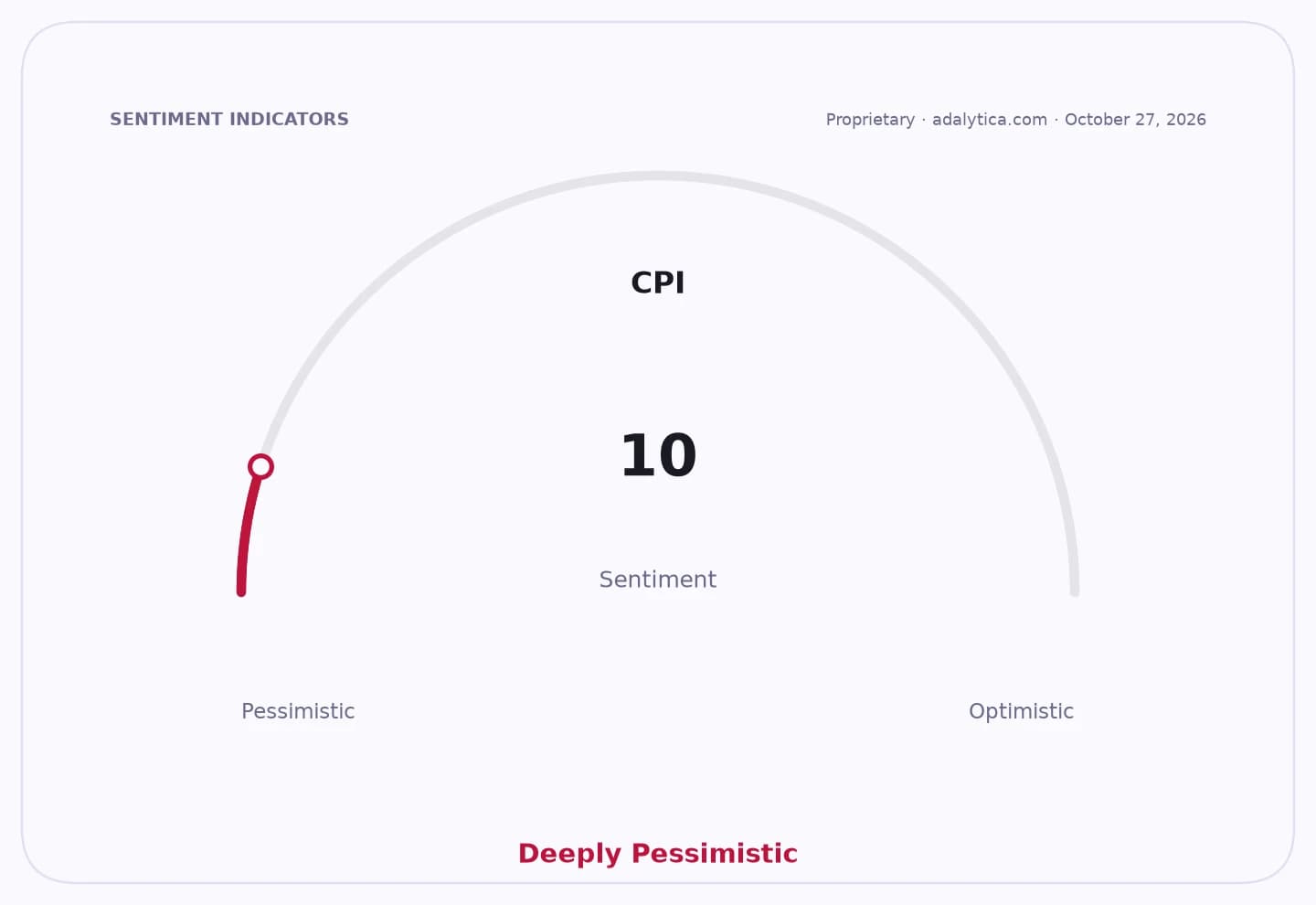
Eurozone inflation accelerated to 4.0% in October, pushing further above the European Central Bank’s 2% stability target and strengthening the case for another rate increase in December.
Eurozone inflation rises to 4.0% in October
The pickup from 3.8% in September was driven mainly by energy, where prices jumped 20.8% from a year earlier after rising 18.9% the previous month. Core inflation, excluding food and energy, held at 2.5%, suggesting the latest surge is still concentrated in a narrow part of the basket rather than spreading broadly through the economy.
Sentiment Indicators
That distinction matters for the ECB. A jump led by energy does not yet point to a full-blown demand-driven inflation spiral, but it keeps headline inflation elevated and raises the risk that higher fuel and utility costs seep into transport, services and wages with a lag. Service inflation edged up to 3.3% from 3.2%, while industrial goods excluding energy rose 1.2%, showing only limited second-round pressure so far.
Country detail points to a patchy but still forceful energy shock. Italy saw a sharp rise after regulated electricity tariffs were adjusted at the start of the quarter, while Germany and Spain softened the blow with cuts to fuel taxes. France showed signs of spillover, with higher gas and oil prices adding pressure to transport and accommodation services.
For investors, the read-through is straightforward: a hotter-than-expected October print makes an ECB tightening bias more durable and keeps euro rates supported near term, even as growth risks linger. The euro was little changed around $1.12, but eurozone equities and rate-sensitive sectors face a higher-for-longer policy backdrop if the central bank moves again at its December meeting.
Geopolitics is part of the inflation story too. The war in Ukraine and the conflict in Iran keep energy markets vulnerable, making it harder for the ECB to declare victory on prices. With headline inflation now moving further away from target and officials already sounding hawkish, the next big catalyst is the December ECB decision and any fresh energy shock before then.
| Entity | Gains | Losses |
|---|---|---|
| ECB hawks | ▲More cover for a December hike | ▼Little room to pause |
| Eurozone consumers | ▲None | ▼Real incomes, purchasing power |
| Eurozone banks | ▲Wider rate advantage, higher lending yields | ▼Risk of slower loan demand |
| Energy producers | ▲Stronger pricing power | ▼Fuel-tax relief measures |