Italy’s inflation rate rose to 4.2% in September, the highest in three years, sharpening the squeeze on households just as electricity bills are set to jump again and Rome presses Brussels for more room to support consumers.
Italy inflation hits 4.2% as energy bills jump
The spike matters because it is not being driven by one-off noise but by the parts of the consumer basket that hit families hardest: energy and fresh food. Energy prices were 22.3% higher than a year earlier, with regulated or fixed-tariff gas up 47.2% and heating oil 38.5%, while fresh produce rose 5.5% after a summer of extreme weather. For policymakers, that combination makes inflation both politically sensitive and harder to cushion through standard fiscal tools.
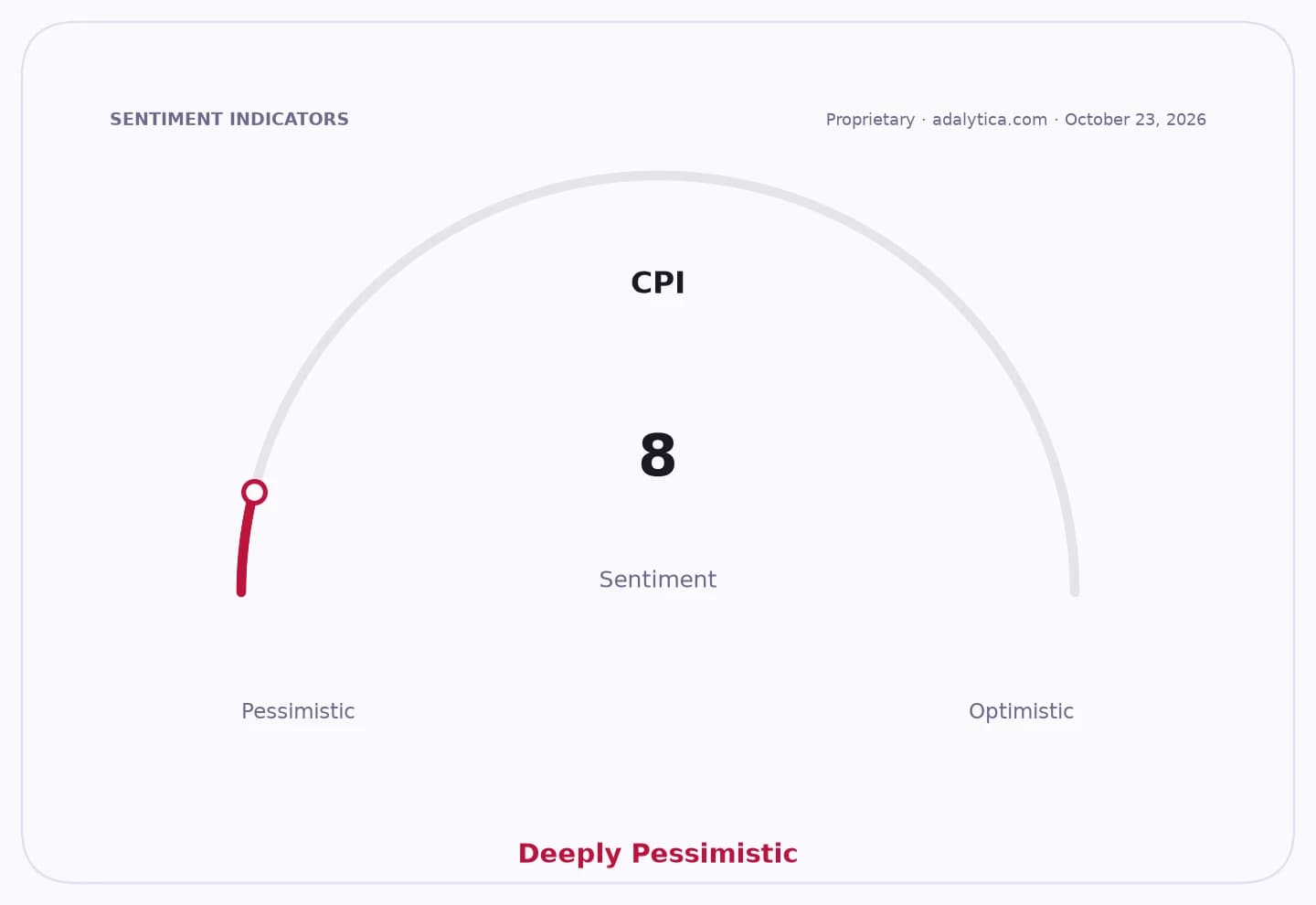
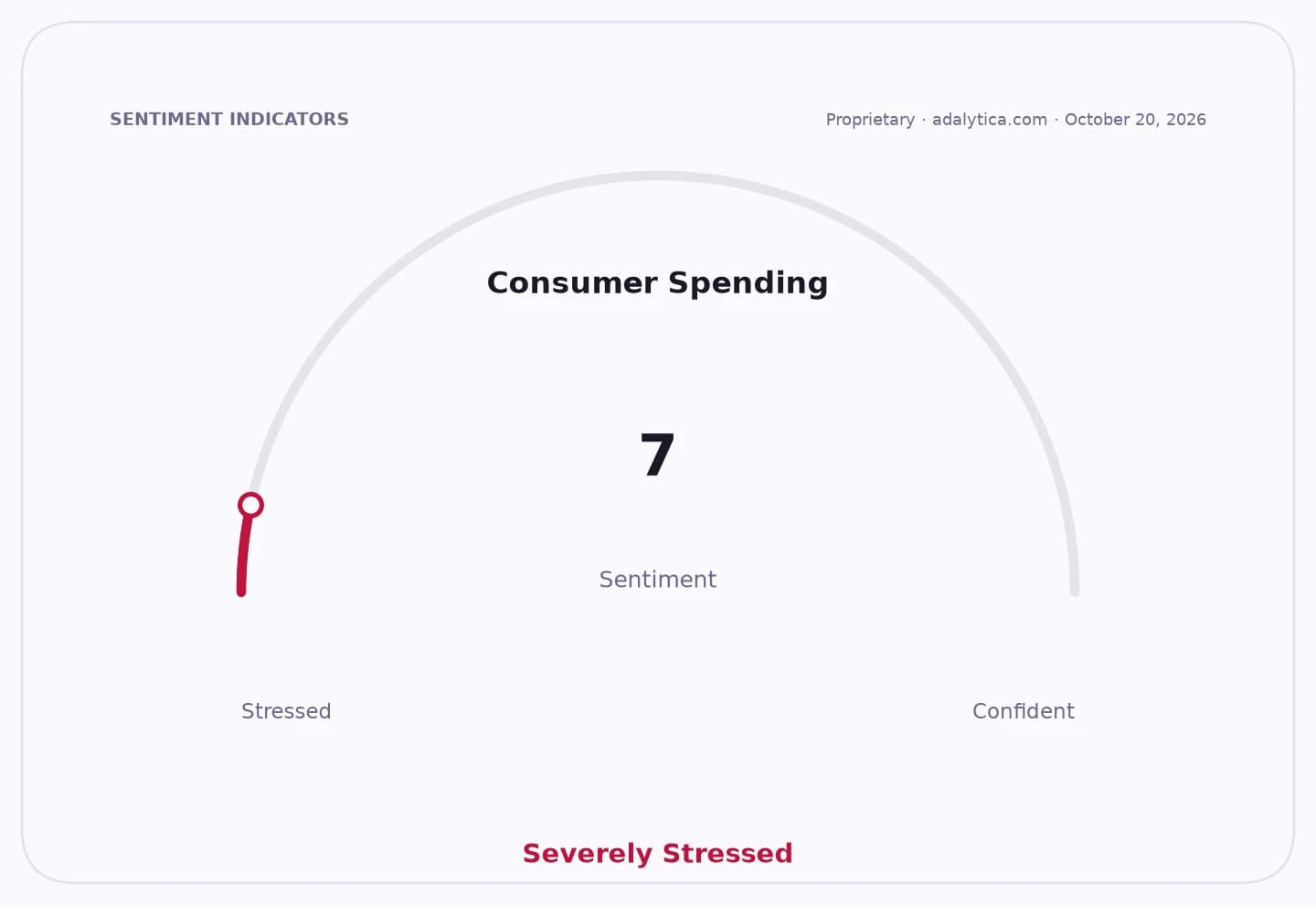
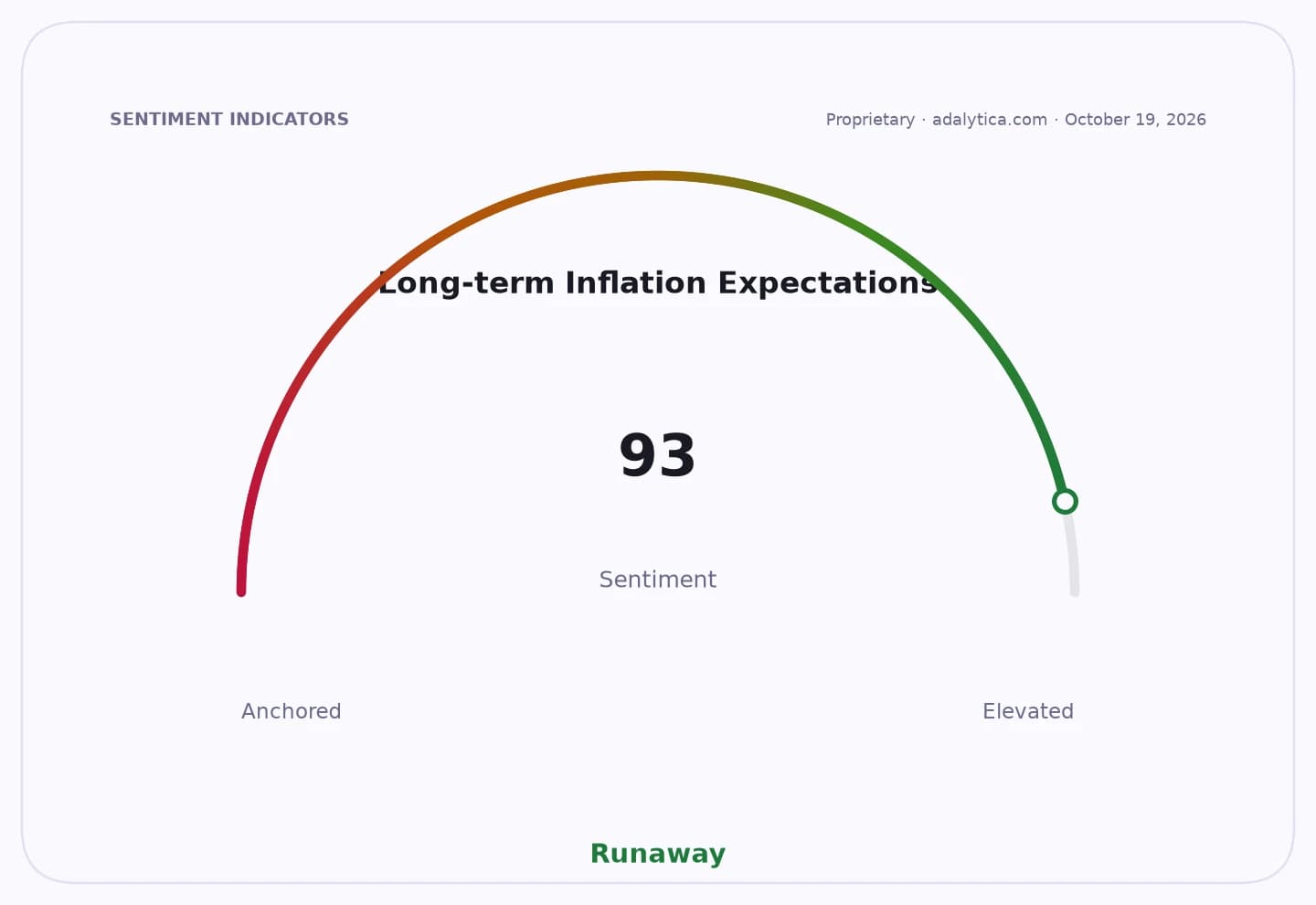
Sentiment IndicatorsⓘProprietary · adalytica.com · October 23, 2026
This is a snapshot — live sentiment, awareness and momentum for 130+ markets update continuously in the dashboard.Open AlphaPulse
The pressure is feeding directly into household budgets and into the political debate over how much space Italy has to respond. Consumer groups estimate the increase could cost a family with one child about 1,389 euros a year, and a household with two children 1,918 euros if spending patterns do not change. Prime Minister Giorgia Meloni has asked European Commission President Ursula von der Leyen for more flexibility in EU budget rules, arguing member states need extra room to support families and businesses facing high energy costs.
The timing is awkward for Italy because the inflation reading came a day after the energy regulator said electricity bills for about three million households still on the regulated tariff would rise 37.3% from Oct. 1. Italy is unusually exposed to gas price swings because gas-fired plants generate more than half of its electricity, so higher wholesale gas prices tend to pass through quickly to power costs and then into broader inflation.
That helps explain why companies are already moving to blunt the hit. Eni’s retail arm Plenitude offered a 30% discount on electricity and gas for new and existing customers who sign up by Oct. 24, while Enel and A2A have pointed to their own fixed-price offers. Eni, IP and Q8 have also capped fuel prices at the government’s request, a move that has brought pump prices down this week, according to the business ministry.
For investors, the story is less about a single month’s print than about the risk that Italy’s cost-of-living shock becomes more persistent as winter approaches. Higher energy bills can curb consumer spending, weigh on retailers and utilities exposed to regulatory intervention, and complicate the European Central Bank’s path if inflation proves sticky in the bloc’s third-largest economy. The near-term bullish case is that base effects and any policy support could ease the pressure; the bearish case is that another energy spike, or a failure to extend relief, keeps inflation elevated and households defensive into year-end.
| Entity | Gains | Losses |
|---|---|---|
| Energy suppliers | ▲Higher tariff revenue | ▼Political pressure and price caps |
| Italian households | ▲Short-term bill relief from offers/caps | ▼Higher energy and food costs |
| Rome / EU policymakers | ▲Room to shape relief measures | ▼Fiscal strain and inflation backlash |
| Consumer-staples retailers | ▲Potential volume resilience from staples demand | ▼Margin pressure from weak spending |