Inflation is again becoming a macro headache for Europe, and the market is underestimating how much the latest energy shock can squeeze households, corporate margins and policy flexibility at the same time.
Eurozone Inflation Rises on Energy Shock
Eurozone inflation accelerated to 3.8% in September, up from 3.2% in August, according to European Central Bank estimates, with energy prices surging 18.9% after the war in the Middle East disrupted liquefied natural gas output and jolted global gas markets. That is the kind of price pressure that does not stay confined to utility bills: it feeds through transport, manufacturing, food processing and ultimately consumer spending, just as governments are being asked to do more to cushion the blow.
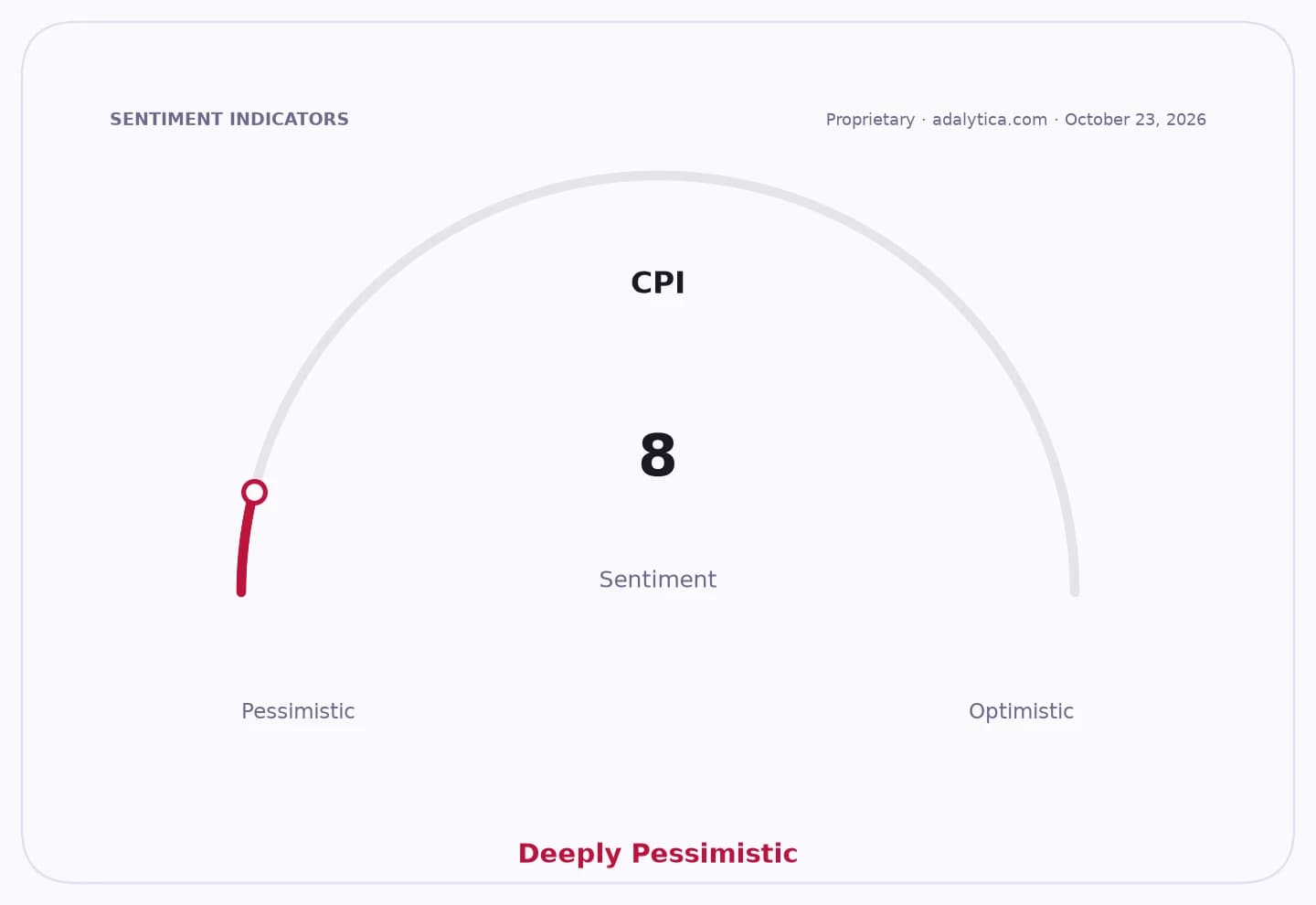
Sentiment IndicatorsⓘProprietary · adalytica.com · October 23, 2026
This is a snapshot — live sentiment, awareness and momentum for 130+ markets update continuously in the dashboard.Open AlphaPulse
The inflation burden is uneven, but broadening. Lithuania posted the highest rate at 6.1%, followed by Bulgaria at 5.6%, while Malta saw the mildest increase at 2.4%. Core household necessities are still rising, with food, alcohol and tobacco up 1.3%, services inflation at 3.2% and industrial goods at 1.1%. Housing pain is also compounding the squeeze, as Eurostat said home prices climbed 5.1% in the first quarter of 2026 from a year earlier and rents rose 3%.
That matters economically because Europe is facing a classic cost-push inflation loop. Higher energy bills raise production costs for energy-intensive industries such as manufacturing, chemicals and agriculture. Those businesses then pass on part of the increase to consumers through pricier goods and logistics, reinforcing the cost-of-living crisis that has sparked protests across the region.
It also matters to investors because the winners and losers are becoming clearer. Companies with pricing power, low energy intensity and exposure to infrastructure or efficiency spending should hold up better than cyclicals tied to consumer demand or energy-heavy production. Utilities, grid operators, insulation and energy-efficiency suppliers stand to benefit as the European Union pushes resilience measures such as AccelerateEU, while airlines, chemicals, industrials and food producers face margin pressure if fuel and power costs stay elevated.
The policy backdrop is just as important. Several member states, including Italy and Greece, have asked for more budget flexibility to support households and businesses, but Brussels has rejected that request. That leaves the ECB and national governments trying to manage a shock that is both inflationary and politically corrosive, a combination that can keep real rates restrictive for longer and delay any broad relief for consumers.
For markets, the message is straightforward: inflation is not fading cleanly in Europe, and energy is once again the key transmission channel. Investors should treat this as a multi-quarter theme, not a one-month spike, and position for continued volatility in European consumer, industrial and utility-linked assets.
| Entity | Gains | Losses |
|---|---|---|
| Energy infrastructure and efficiency stocks | ▲Higher spending, policy tailwind | ▼ |
| Utilities with regulated pricing | ▲Pass-through economics | ▼ |
| Energy-intensive manufacturers | ▲ | ▼Margin pressure |
| European households and consumers | ▲ | ▼Higher living costs |