Investor confidence in the eurozone slipped in November, with the Sentix index easing to 2.4 from 2.7 in October, a sign that still-high inflation and energy costs are eroding the case for a durable recovery.
Eurozone Sentix index slips to 2.4 in November

The reading was better than economists had expected, but it still points to a fragile economic backdrop for the 20-nation currency bloc. Sentix said hopes for a sustained rebound “received a new blow,” citing rising interest rates, elevated fuel prices and political uncertainty as the main drags on the region. The survey was taken from Nov. 5 to Nov. 7 among 1,025 investors, including 220 institutional respondents.
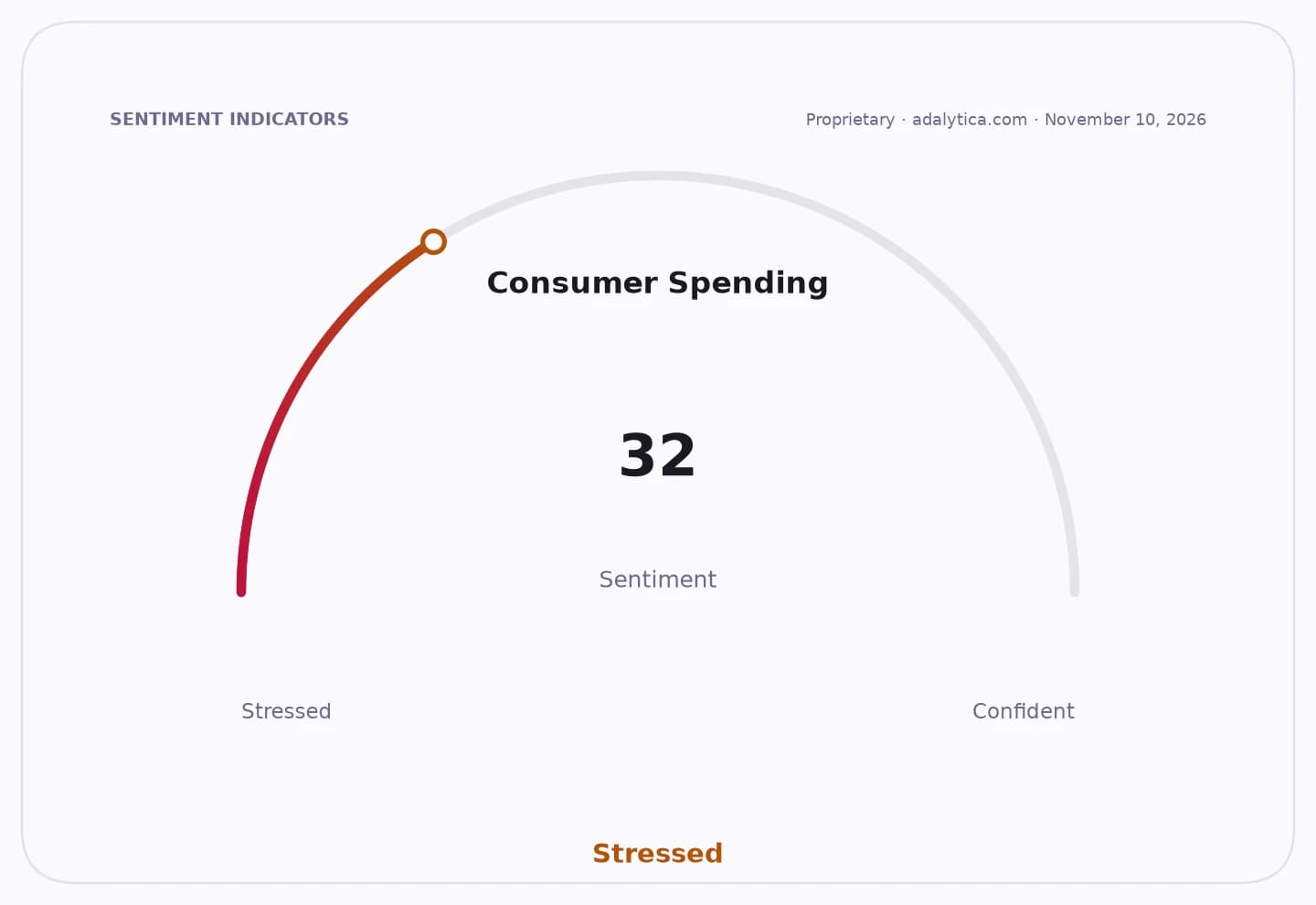
Sentiment Indicators
The detail beneath the headline is mixed. The assessment of the current economy was unchanged at minus 3.3, while expectations slipped 0.5 points to 8.3. That combination suggests investors are not yet pricing an outright downturn, but they are becoming less convinced that recent stabilization can translate into stronger growth ahead.
Inflation remains the key pressure point. Eurozone consumer prices accelerated to 4% in October, driven largely by a 20.8% surge in energy prices, underscoring how the region’s energy shock continues to feed through to households and businesses. Higher prices, together with still-restrictive borrowing costs, are squeezing consumption and investment at the same time growth momentum is already thin.
Germany offered a small offset. Sentix said the German economy showed signs of stabilizing, with its index improving 0.3 points to minus 3.3. That is far from a recovery signal, but it matters because Germany remains the bloc’s largest economy and a key barometer for industrial demand across Europe.
For investors, the message is that eurozone assets still face a tug of war between easing growth fears and persistent inflation pressure. The confidence reading was not weak enough to force a sharp repricing of recession risk, but it does reinforce the case for caution on cyclical European equities and on sectors most exposed to consumer demand and input-cost pressure. It also keeps the European Central Bank in a difficult position as policymakers balance slower growth against sticky inflation.
The next focus will be whether November’s mild dip proves temporary or marks the start of a broader loss of momentum. If energy prices stay elevated and rates remain restrictive, the region’s recovery story may continue to lose traction into year-end.
| Entity | Gains | Losses |
|---|---|---|
| Energy producers | ▲Higher pricing power | ▼Consumers and industrial users |
| ECB hawks | ▲Inflation case remains alive | ▼Growth-sensitive borrowers |
| German economy | ▲Signs of stabilization | ▼Eurozone recovery bulls |
| Eurozone equities | ▲Select defensives | ▼Cyclicals and consumer names |