Euro zone inflation will remain elevated in the coming quarters, European Central Bank President Christine Lagarde said, underscoring why the ECB is keeping its options open even as investors debate when policy can ease.
ECB Lagarde Says Euro Zone Inflation Stays Elevated

Lagarde’s warning matters because it pushes back against any quick assumption that price pressures are fading fast enough to justify an early pivot. In an interview with Japan’s Yomiuri Shimbun, she said headline inflation in the euro area was 4% in October, driven mainly by energy inflation of 20.8% from 18.9% in September, with food prices also rising. Core inflation held at 2.5%, suggesting the disinflation process is uneven rather than complete.
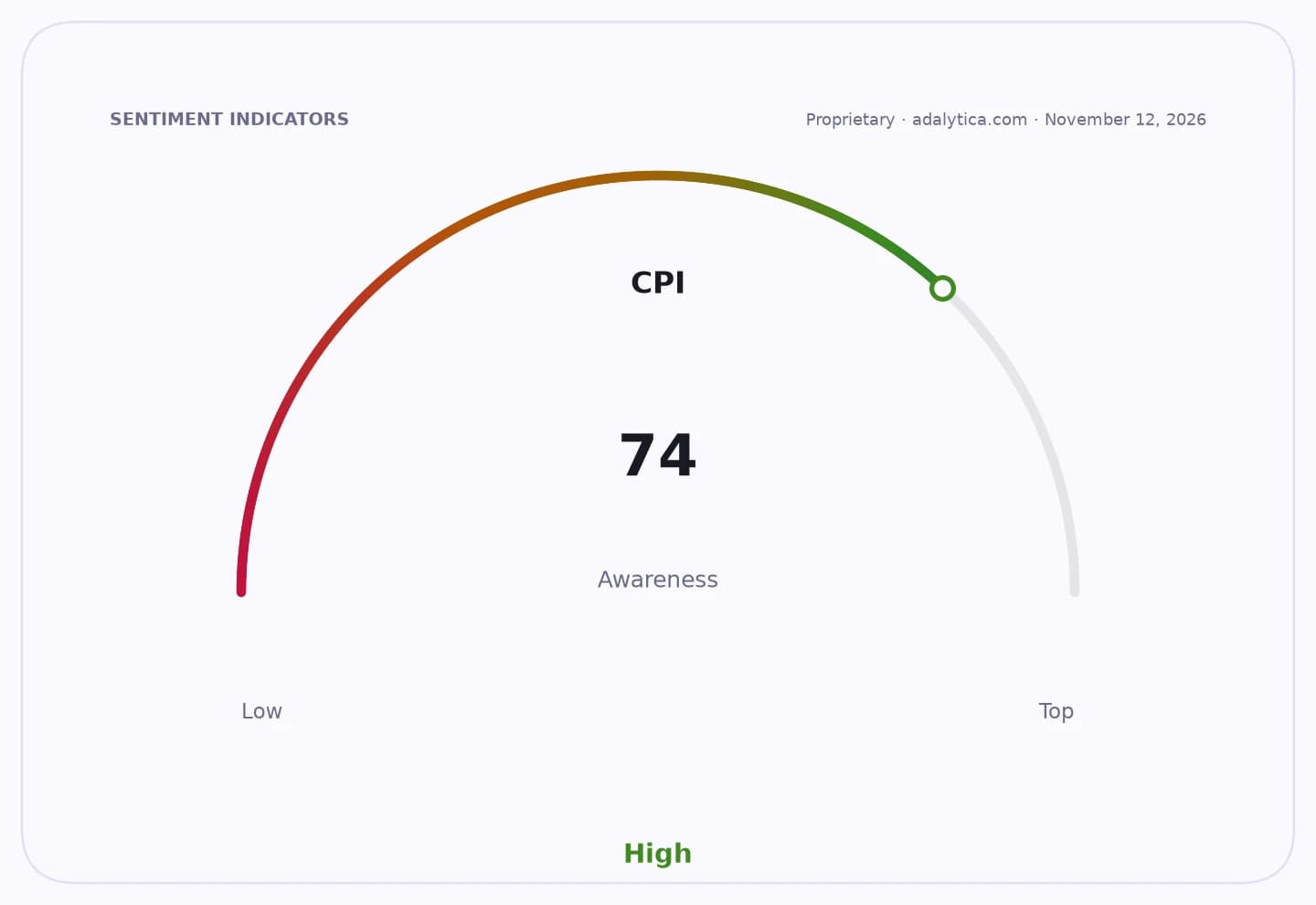
Sentiment Indicators
CPI
The message for markets is that the ECB is still prioritizing credibility on inflation over growth support. Lagarde said the central bank sees no sign yet of second-round effects beyond what is already in its forecasts, but stressed that policy decisions will remain data-dependent and not tied to a preset path for rates. That leaves the door open to further tightening if incoming numbers disappoint, while also keeping alive the possibility that the ECB pauses longer if inflation proves sticky.
For bond investors, the implication is straightforward: front-end and intermediate euro zone yields may stay sensitive to each monthly inflation print and to energy-price swings. Lagarde also framed rising long-term sovereign yields as a global phenomenon, pointing to geopolitical tensions, heavier sovereign borrowing and competition for funding from large AI-related technology spending. That makes the yield backdrop broader than the ECB alone, but it still tightens financial conditions across the region.
CPIAUCSL vs DGS10 — macro contextadalytica.com
Explore this data interactively — full history, time series and cross-market comparisons.
Her comments also serve as a reminder that fiscal policy and monetary policy are moving in the same spotlight. Lagarde urged member states to respect fiscal rules, arguing the ECB has multiple tools if financial conditions deteriorate, but not ruling anything out in advance. For equity investors, that combination — still-high inflation, persistent yields and no clear rate-cut timeline — is likely to keep pressure on rate-sensitive sectors such as utilities, real estate and highly leveraged companies, while bank margins may remain supported longer than expected.
The bull case is that core inflation is already much lower than headline inflation and the ECB is not seeing broad second-round pricing. The bear case is that energy, food and higher sovereign borrowing costs keep inflation and yields elevated for longer, forcing the ECB to stay restrictive well into next year.
What to watch next is whether energy prices continue to filter through to the broader basket and whether the ECB’s next meeting confirms Lagarde’s message that policy will remain restrictive until the inflation path is clearly back toward target.
| Entity | Gains | Losses |
|---|---|---|
| ECB hawks | ▲Policy credibility | ▼Faster easing bets |
| Euro zone banks | ▲Higher-for-longer margins | ▼Rate-cut expectations |
| Bond investors | ▲Clear guidance focus | ▼Price volatility |
| Rate-sensitive stocks | ▲— | ▼Higher discount rates |