The euro sank to a 20-year low below $0.99 after Russia said it would not resume gas deliveries to Germany, a move that raises the odds of a deeper European slowdown just as the bloc faces a punishing energy squeeze.
Euro Falls Below Parity on Russia Gas Cutoff

The common currency briefly slid as much as 0.7% to $0.9880 in early Monday trade, its weakest level since 2002, before recovering to about $0.9922. That breach of parity is more than a symbolic milestone: it reflects a market repricing of Europe’s growth, inflation and trade balance at the very moment the region is being forced to absorb higher energy costs and tighter financial conditions.
Sentiment Indicators
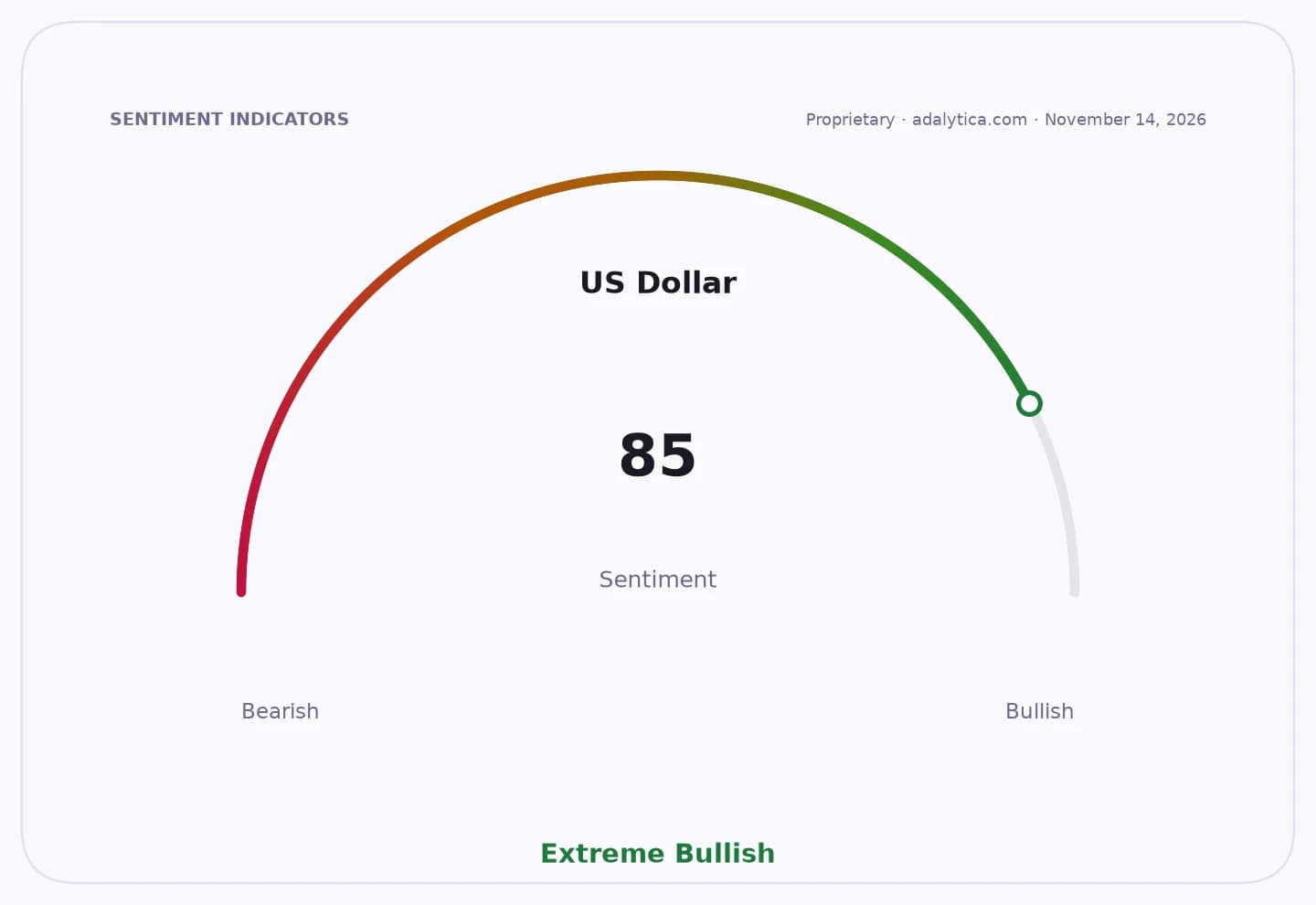
US Dollar
Investors are treating the gas cutoff as a direct hit to the eurozone’s industrial engine. Europe is far more dependent on imported energy than the United States, and the prospect of enduring shortages means a wider current-account squeeze, weaker factory output and a heavier drag on consumer spending. In that environment, the euro becomes both a barometer and a transmission mechanism for stress, amplifying imported inflation even as growth decelerates.
Goldman Sachs last week cut its three-month euro forecast to $0.97 from $0.99 and now sees the currency staying below parity with the dollar for six months, abandoning an earlier view that it would rebound to $1.02. That shift matters because foreign-exchange forecasts are not just abstract calls; they influence hedging, capital allocation and the relative appeal of European assets versus dollar-denominated alternatives.
The dollar’s strength is reinforcing the move. While the euro is being pressured by energy insecurity and recession risk, the greenback continues to benefit from the U.S. economy’s relative resilience and the appeal of dollar assets in a global risk-off backdrop. That divergence leaves European equities and credit more exposed to foreign outflows, while U.S. multinationals and energy-linked sectors stand to gain from a weaker euro and firmer dollar.
For investors, the message is that parity is no longer the ceiling but the floor the market is testing. A weaker euro can help exporters over time, but in the near term the dominant effect is imported inflation, tighter policy headaches for the European Central Bank and further pressure on households and corporates already facing an energy shock. The market is underestimating how quickly currency weakness can morph into a broader earnings and growth problem across Europe.
The trade from here is not to fade the move reflexively. Until gas flows normalize or Europe secures a clearer energy buffer, the euro remains vulnerable, and that keeps the case strong for dollar exposure, selective hedges against European downside and companies with pricing power, energy self-sufficiency or heavy U.S. revenue mix.
| Entity | Gains | Losses |
|---|---|---|
| U.S. dollar | ▲Safe-haven demand | ▼None |
| European exporters | ▲More price competitiveness | ▼Imported costs |
| Eurozone consumers | ▲None | ▼Higher inflation |
| European importers | ▲None | ▼Margin squeeze |