West Africa’s effort to create a unified seed market is running into a deeper political question: whether the region is trying to ease trade in seeds or build real agricultural sovereignty.
ECOWAS seed market faces sovereignty debate
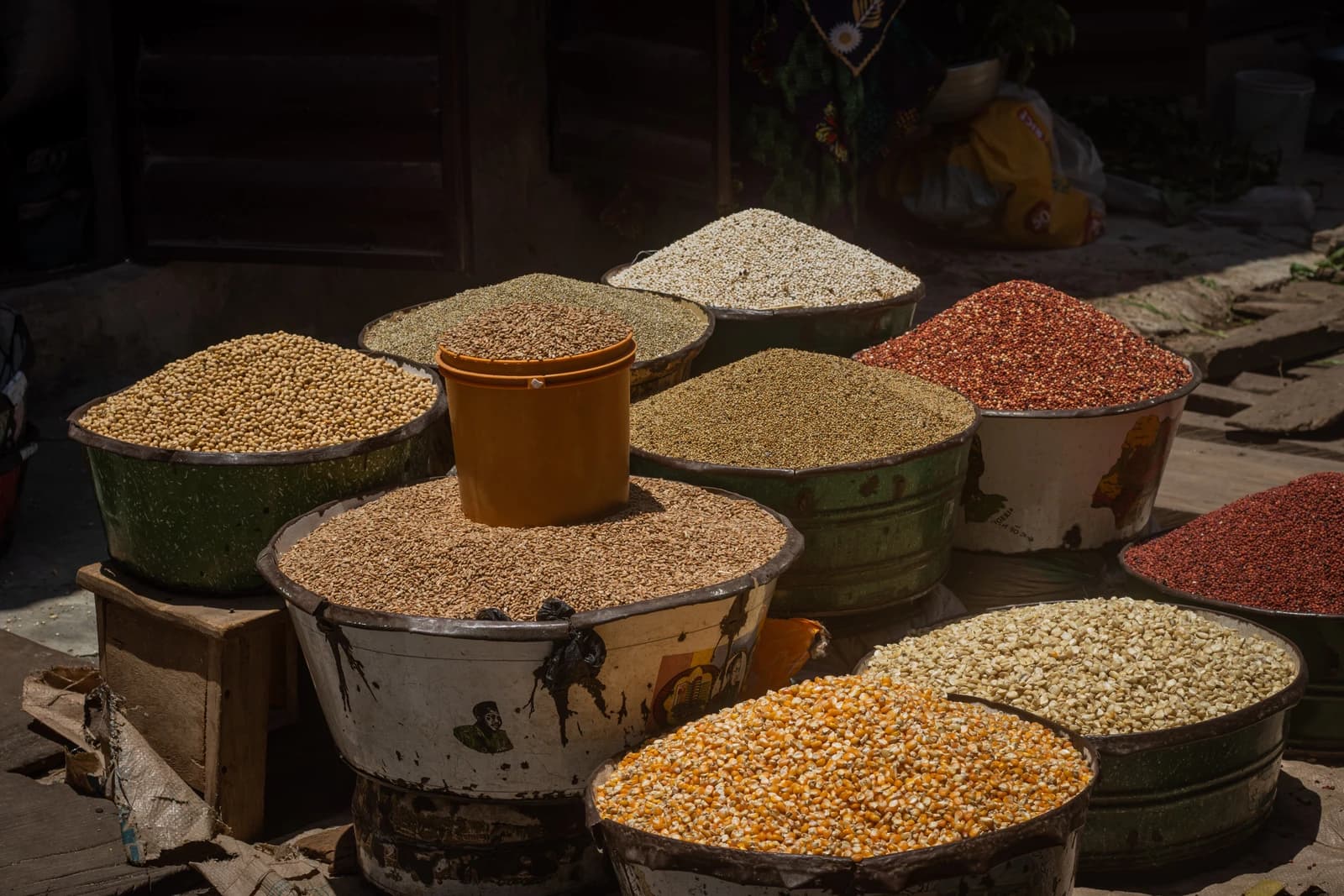
That tension matters because seeds sit at the base of food production. Whoever controls seed systems influences crop yields, farming resilience, pricing power and, ultimately, food security. In a region still heavily exposed to import dependence and supply-chain shocks, the debate is no longer just about harmonizing paperwork between states. It is about whether West African economies can reduce chronic reliance on foreign inputs and keep more value, technology and decision-making at home.
Sentiment IndicatorsⓘProprietary · adalytica.com · October 12, 2026
This is a snapshot — live sentiment, awareness and momentum for 130+ markets update continuously in the dashboard.Open AlphaPulse
The Economic Community of West African States, or ECOWAS, has had a harmonized regional framework since 2008 meant to facilitate seed production, certification, marketing and circulation. But the rules have not fully solved the practical barriers. Different national regulations and weak commercialization channels continue to slow the movement of seeds across borders, limiting the scale gains that a regional market was supposed to unlock.
For investors and agribusinesses, that means West Africa remains a market with unrealized potential. A smoother seed regime could support higher productivity in staples and commercial crops, expand demand for certified seeds and create opportunities for regional suppliers, research centers and distributors. But persistent fragmentation also raises costs, discourages private investment and keeps farmers reliant on informal or imported seed stock that is often less predictable in quality.
Prince-Israel Koya, a Ivorian political scientist cited in the Sputnik Afrique interview, framed the issue in terms of dependence versus control. He argued that a country cannot build agricultural strategy or food self-sufficiency without paying attention to the source of harvests, warning that import reliance can become “chronic dependence.” His solution is a full seed-sovereignty chain built around domestic laboratories and national agronomic research centers capable of producing first-, second- and third-generation seeds.
That argument reflects a broader shift in food policy across emerging markets, where governments are increasingly treating agricultural inputs as strategic assets rather than mere commodities. The logic is straightforward: local breeding capacity can improve adaptation to climate stress, reduce exposure to external suppliers and keep more intellectual property within the region. The drawback is that such systems require sustained public funding, scientific capacity and regulatory coordination — all of which are uneven across West Africa.
The regional framework therefore faces a choice between two models that are not mutually exclusive but are often politically in tension. One model prioritizes freer circulation of certified seeds across ECOWAS to deepen trade and lower costs. The other prioritizes sovereignty, domestic research and local production to reduce dependence. The economic challenge is to combine both without forcing farmers to choose between access and autonomy.
For now, the bottleneck is less about ambition than execution. Unless national rules align more closely and commercialization improves, the region will struggle to turn harmonized standards into a functioning seed market. If it does, West Africa could strengthen farm productivity and resilience at a time when food security remains under pressure from climate volatility, import costs and geopolitical uncertainty. If it does not, the sovereignty debate will remain rhetorical, and dependence on outside seed systems will deepen.
| Entity | Gains | Losses |
|---|---|---|
| ECOWAS regional market | ▲Larger seed trade | ▼Fragmented national rules |
| West African farmers | ▲Better seed access | ▼Higher input costs |
| Local research labs | ▲More funding and relevance | ▼Foreign seed dependence |
| Imported seed suppliers | ▲Current market access | ▼Sovereignty-driven localization |