Ecuador’s investment fund industry has swollen past $3.1 billion, a sign that households and companies are hunting for yield and liquidity in an economy where confidence in cash, banks and the local policy backdrop remains fragile.
Ecuador investment funds top $3.1 billion
That matters because in a dollarized economy, every shift out of idle deposits and into managed funds changes the plumbing of credit, savings and capital formation. Bigger funds can become a more important buyer of government paper, corporate debt and short-dated instruments, helping deepen local capital markets at a time when the country badly needs domestic financing that does not rely entirely on volatile external flows.
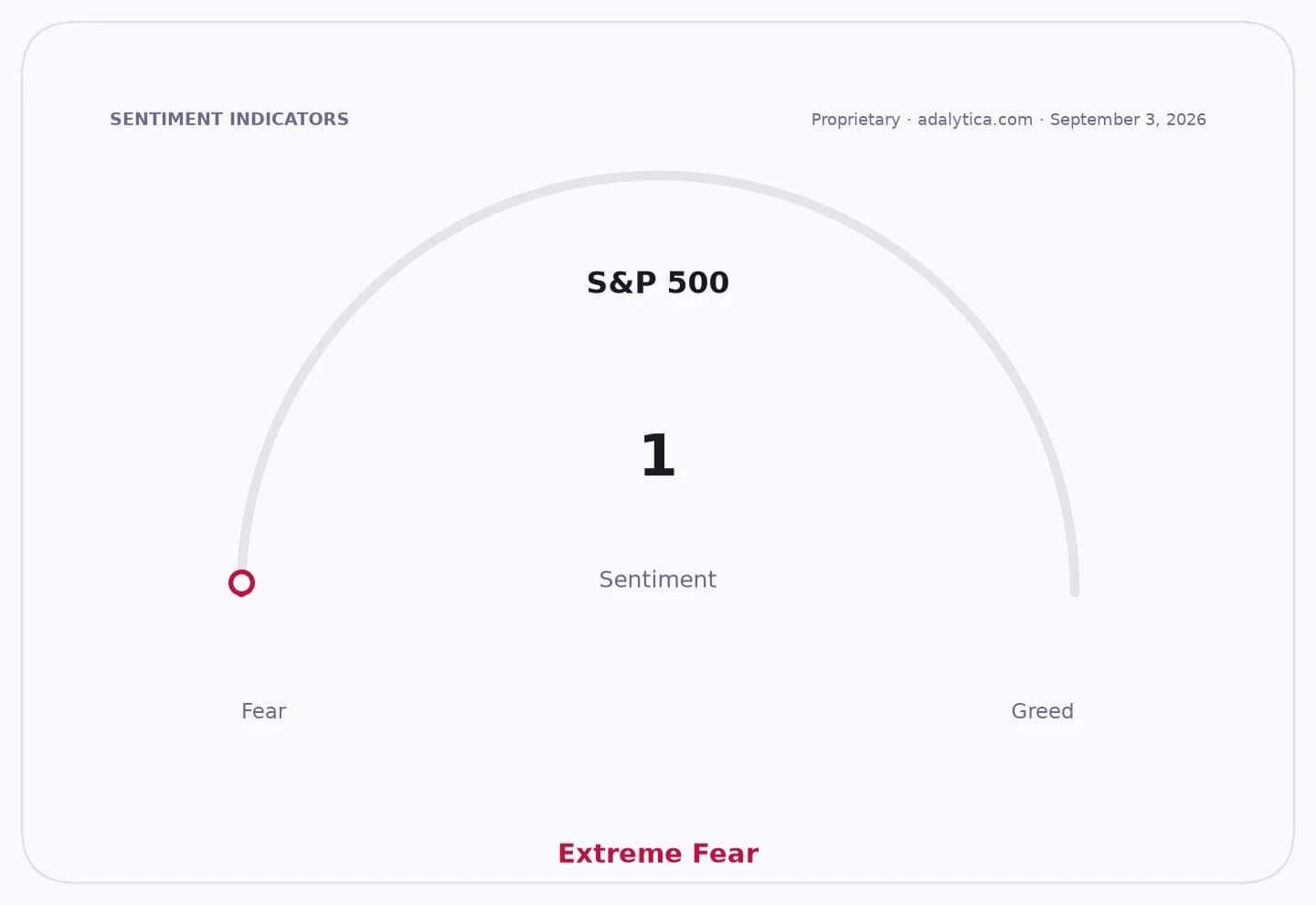
Sentiment IndicatorsⓘProprietary · adalytica.com · August 30, 2026
This is a snapshot — live sentiment, awareness and momentum for 130+ markets update continuously in the dashboard.Open AlphaPulse
The investment-fund expansion also fits a broader pattern of investors seeking shelter from uncertainty. Ecuador’s security problems and recurring social instability have raised the premium on liquid, professionally managed products that can preserve purchasing power without forcing savers into longer-dated or illiquid commitments. For asset managers, that is a structural opportunity: once clients move into funds for safety and convenience, a portion of that money tends to stick.
For investors, the takeaway is that Ecuador is not just a headline-risk market; it is also a market where stress can create underappreciated financial intermediation opportunities. The growth of funds past $3.1 billion suggests rising demand for local fixed-income exposure, cash-management products and vehicles that can capture the higher yields available in a country still grappling with risk. That is bullish for the managers with scale, distribution and the ability to package liquidity in a dollarized setting.
The move also has second-order implications for the sovereign. A deeper fund base can support local financing, but it can just as easily amplify pressure if sentiment turns and retail or institutional money rushes for the exits. In other words, the same market that is becoming more investable is also becoming more sensitive to shocks.
On balance, the rise in Ecuadorian investment funds is a sign of financial maturation inside a difficult macro story. I believe the best way to read it is not as comfort, but as a signal that the market is forcing capital into new channels — and that creates an asymmetric opportunity for fund platforms, bond issuers and dollar-denominated income strategies positioned ahead of the next wave of demand.
| Entity | Gains | Losses |
|---|---|---|
| Investment fund managers | ▲AUM growth | ▼Fee pressure eases slowly |
| Savers and corporates | ▲Better liquidity and yield | ▼Less access to idle cash |
| Ecuador sovereign debt market | ▲Deeper local demand | ▼More vulnerable to outflows |
| Banks holding deposits | ▲Potential disintermediation | ▼Deposit base may shrink |