Egypt’s planning and investment ministers used a meeting with 150 students to push a simple economic message: the fastest paths to jobs and entrepreneurship now run through artificial intelligence, cloud computing, software and renewable energy.
Egypt pushes students toward AI, cloud and renewables
The pitch matters because Egypt is trying to steer a younger workforce toward sectors that can absorb talent, attract private capital and generate exportable services at a time when labor markets remain uneven and technology is reshaping demand for skills. Officials said cloud computing is now a government priority and highlighted the country’s first data center built with private-sector participation through a European-Egyptian investment, a sign that digital infrastructure is moving from policy talk to capital deployment.
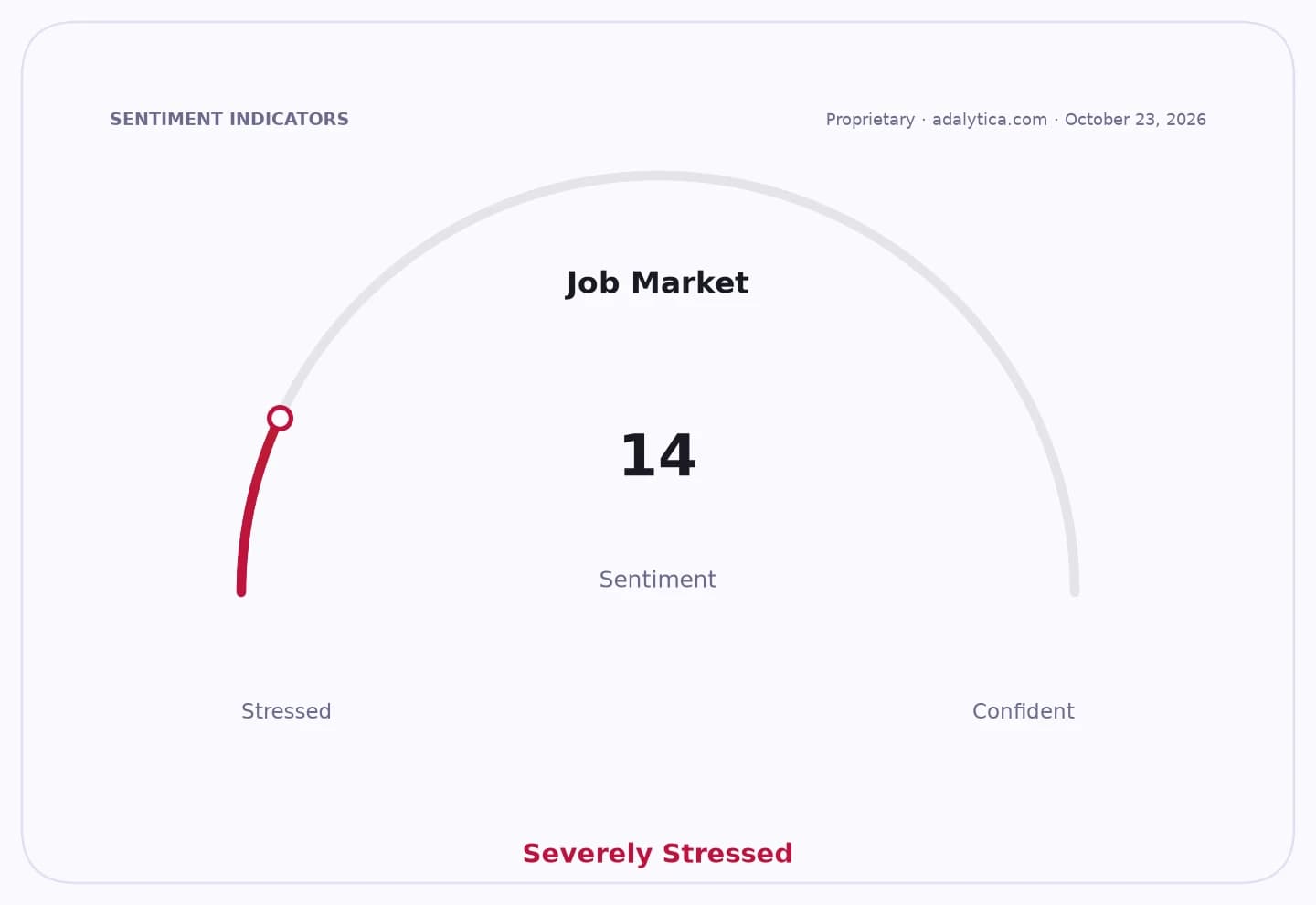
Sentiment IndicatorsⓘProprietary · adalytica.com · October 23, 2026
This is a snapshot — live sentiment, awareness and momentum for 130+ markets update continuously in the dashboard.Open AlphaPulse
The ministers’ guidance to students reflected a broader labor-market challenge. The U.S. unemployment rate in the data context is forecast at 4.09% for October after holding near 4.1%-4.2% in recent months, while job-market sentiment tracked by Adalytica sits at 14, in “Extreme Fear,” underscoring how fragile hiring confidence can be even when headline joblessness is relatively contained. That backdrop makes skills policy and startup formation more economically important for governments trying to avoid a mismatch between education and available work.
For investors, the focus on cloud infrastructure, AI and data storage points to where public policy and private spending may converge. The ministers said sustaining data centers will require reliable power, and pointed to Egypt’s target of lifting reliance on renewables to 42%-45% by 2030, a goal that could support grid investment, solar and wind projects, and the broader energy mix needed for digital expansion.
The labor-market angle also supports the case for private-sector hiring in technology and digital services, where a small amount of capital can launch a business if it solves a clear problem. The ministers told students to build around practical software and AI applications, turning basic technical skills into marketable tools, a model that could help widen the pool of new firms even as traditional employment remains under pressure.
The near-term test is whether policy support for skills, power supply and digital infrastructure translates into more startup formation and jobs, or stays at the level of ministerial messaging. The next signals to watch are new data-center investment, renewable-energy rollout and whether Egypt’s tech-focused training push begins feeding the formal labor market.
| Entity | Gains | Losses |
|---|---|---|
| Egyptian students | ▲clearer startup paths | ▼old low-skill job model |
| Private tech investors | ▲data-center and cloud demand | ▼power-supply bottlenecks |
| Renewable-energy developers | ▲more grid-linked demand | ▼fossil-heavy incumbents |
| Traditional employers | ▲access to digital talent | ▼pressure to upskill fast |