Gold prices in Egypt extended their decline on Thursday, pulling 1-gram bullion bars down to 6,971 pounds as a global selloff fed through to the local market and gave buyers a cheaper entry point after a recent run of volatility.
Egypt Gold Prices Fall as Global Selloff Hits Bars
The move matters because bullion in Egypt is priced off 24-carat gold, leaving domestic bars highly exposed to swings in international prices and the dollar. That makes small bars, from 1 gram to 100 grams, a key gauge of retail and savings demand in a market where investors often treat gold as a store of value and a hedge against inflation and currency weakness.
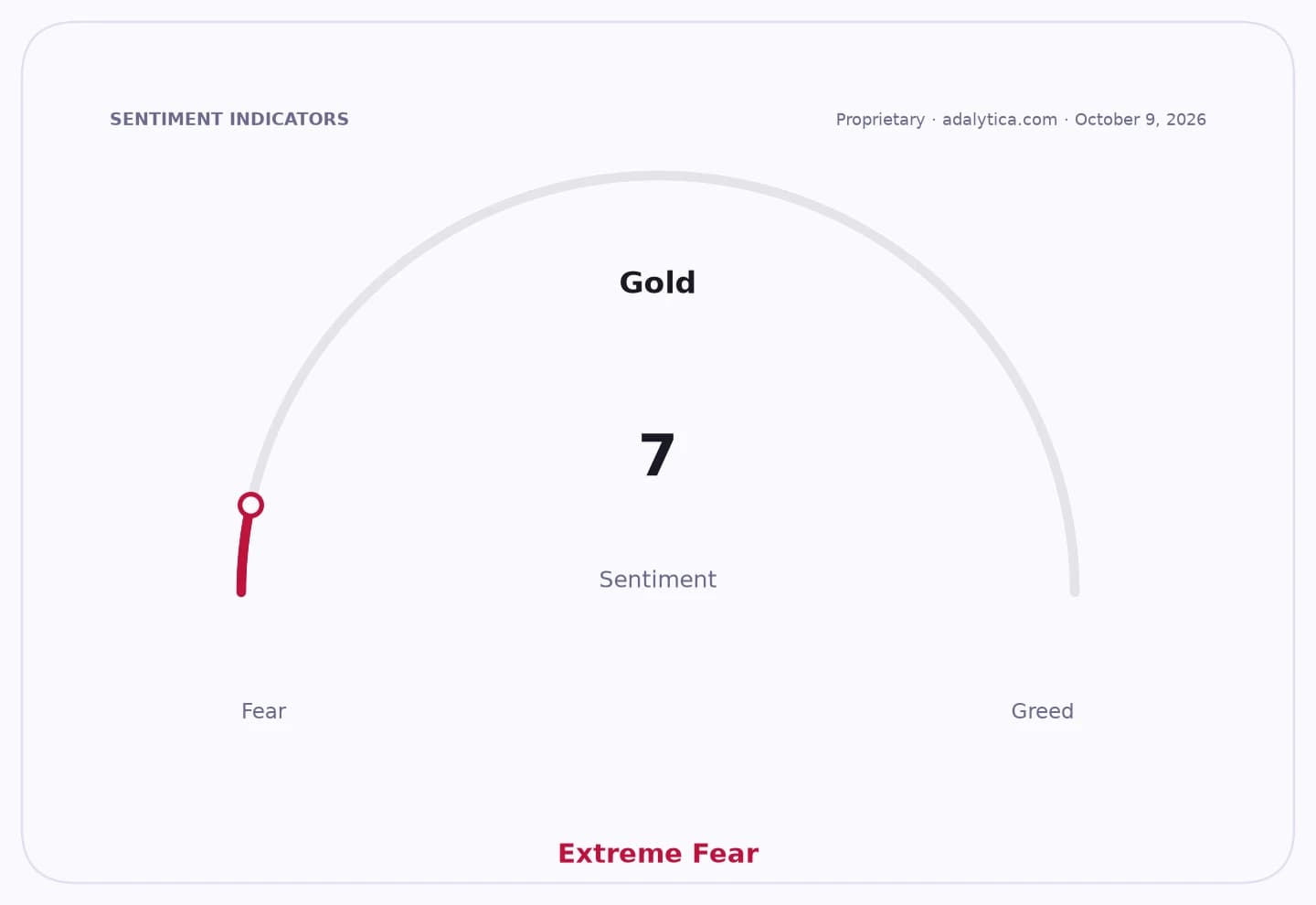
Sentiment IndicatorsⓘProprietary · adalytica.com · October 10, 2026
This is a snapshot — live sentiment, awareness and momentum for 130+ markets update continuously in the dashboard.Open AlphaPulse

Prices in the local market were quoted at 17,427.50 pounds for 2.5 grams, 34,855 pounds for 5 grams, 69,710 pounds for 10 grams and 697,100 pounds for 100 grams. A 250-gram bar was listed at 1,742,750 pounds, while the 21-carat gold coin, or guinea, stood at 48,797 pounds.
The broader price table showed 24-carat gold at 6,971 pounds per gram, 21-carat at 6,100 pounds and 18-carat at 5,228 pounds. For many Egyptian households and small investors, those levels are more actionable than international spot quotes because they determine whether bullion remains affordable as an emergency savings vehicle or long-term asset.

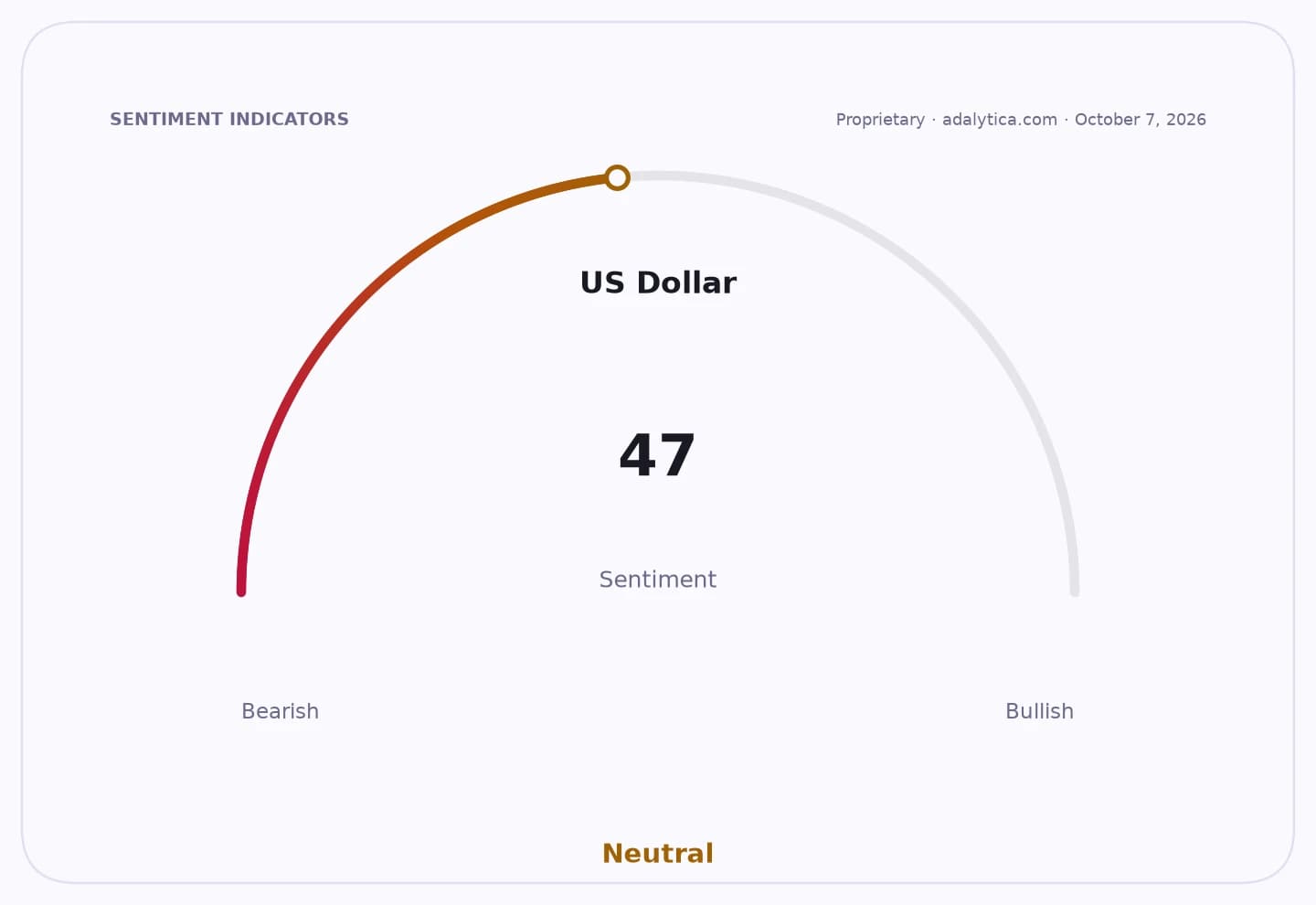
The decline comes even as the underlying macro backdrop remains supportive for gold over time. US 10-year Treasury yields are still elevated at 5.27%, while the gap between 10-year and 2-year yields has narrowed to 44 basis points, a sign that investors are still parsing growth and policy risks. At the same time, Adalytica’s US dollar trade signals show neutral sentiment but elevated awareness, and its CPI gauge points to extreme greed, suggesting markets remain sensitive to inflation and rate expectations.
For gold, that combination is mixed. Higher yields and a firmer dollar usually pressure bullion because they raise the opportunity cost of holding a non-yielding asset. But persistent inflation anxiety, slower real growth and geopolitical uncertainty can revive demand quickly, especially when investors look for protection outside cash and bonds.
Exchange-traded gold proxies echoed the softer tone. GLDM fell to $82.99 on Oct. 9 from $85.59 two days earlier, while AAAU rose modestly to $41.35 after a recent slide, leaving both funds below their 50-day moving averages and with RSI readings indicating a market that remains vulnerable to further swings rather than a clean trend reversal.
In Egypt, the key question is whether lower bullion prices will draw in household demand or whether high financing costs and uncertainty about near-term price direction keep buyers on the sidelines. The answer will determine whether the latest decline proves to be a buying opportunity or just another pause in a volatile gold cycle.
| Entity | Gains | Losses |
|---|---|---|
| Egyptian bullion buyers | ▲Lower entry prices | ▼Recent holders facing mark-to-market losses |
| Jewelry retailers | ▲Potentially better traffic | ▼Margin pressure if demand stays weak |
| Gold savers | ▲Cheaper 1g–100g bars | ▼Those who bought before the drop |
| Dollar/yield-sensitive gold bulls | ▲Opportunity to re-enter | ▼Momentum traders betting on immediate rebound |