Gold prices in Egypt fell on Wednesday, with 21-karat bullion dropping 25 pounds to 6,275 pounds a gram as the metal extended a global pullback driven by firmer U.S. inflation concerns, higher oil prices and expectations that the Federal Reserve may keep policy tight for longer.
Egypt Gold Prices Fall as Global Bullion Pulls Back
The move matters because Egypt’s local gold market is pricing not just the international ounce, but also the dollar exchange rate, import costs and the gap between theoretical and traded values. That makes gold one of the clearest real-time gauges of both global risk appetite and domestic purchasing power. سعيد إمبابي, chief executive of online gold platform iSagha, said local prices were still about 39 pounds a gram below fair value, underscoring that the market has not fully caught up with the underlying bullion valuation even after the decline.
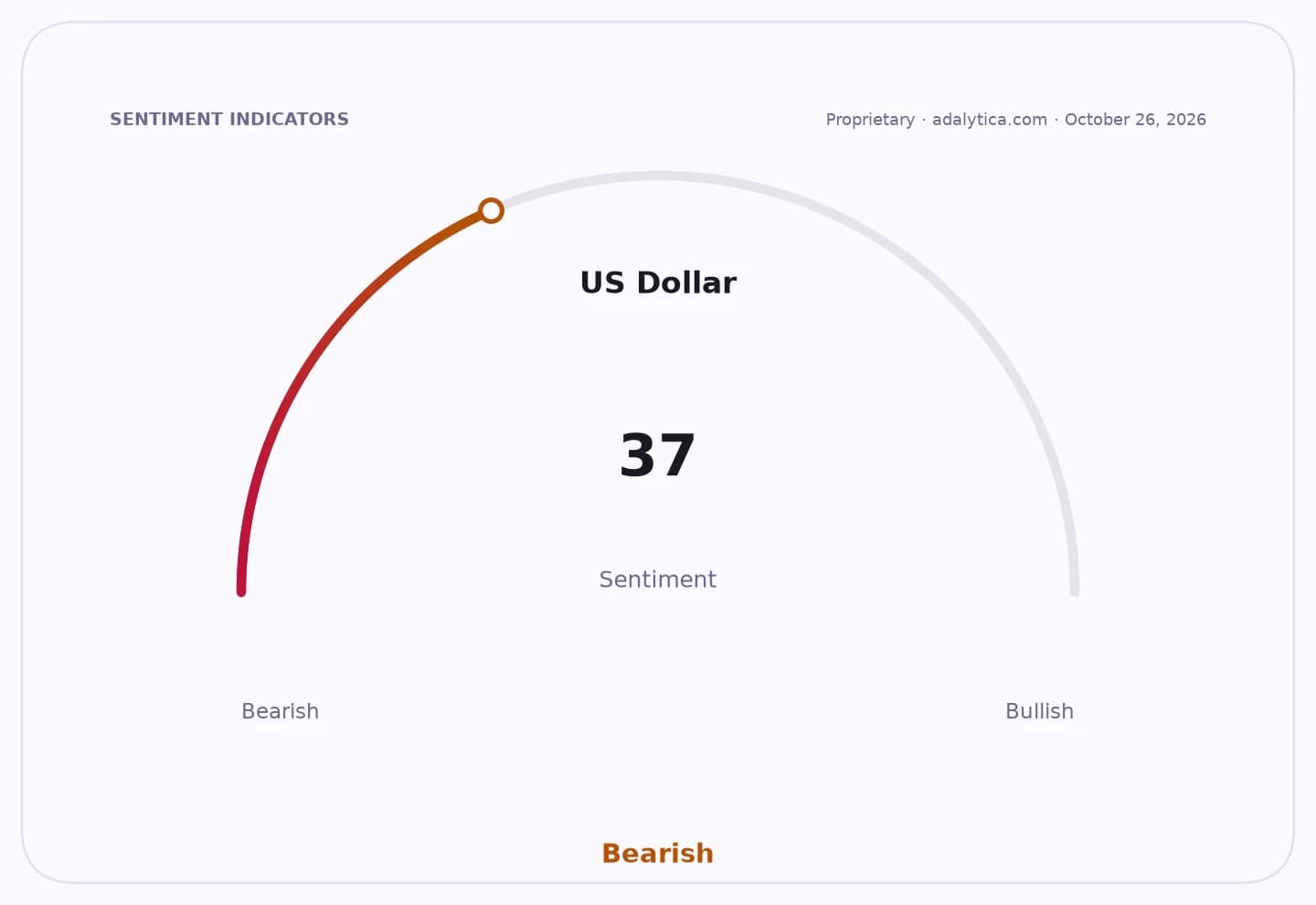
Sentiment IndicatorsⓘProprietary · adalytica.com · October 26, 2026
This is a snapshot — live sentiment, awareness and momentum for 130+ markets update continuously in the dashboard.Open AlphaPulse
The 21-karat price fell from 6,300 pounds at Tuesday’s close. Twenty-four-karat gold slipped to 7,171 pounds a gram, 18-karat to 5,379 pounds, and the gold pound to about 50,200 pounds. Globally, spot gold was trading near $4,120 an ounce, far below its January peak of $5,595.46, while futures data showed gold still under pressure around the $4,000 level. In dollar terms, the metal has lost nearly a quarter from its highs as markets reassess how quickly inflation will ease and how far U.S. real yields can rise.
That shift has prompted a wave of forecast cuts from major banks. CIBC lowered its fourth-quarter target to $4,500 an ounce from $6,500, while JPMorgan cut its estimate to $4,500 from nearly $6,000. UBS and Goldman Sachs also trimmed projections, with most year-end 2026 targets now clustered around $4,450 to $4,650. The revisions reflect a market that is no longer assuming an aggressive easing cycle, but they do not erase longer-term support from central bank buying, ETF inflows and constrained mine supply.
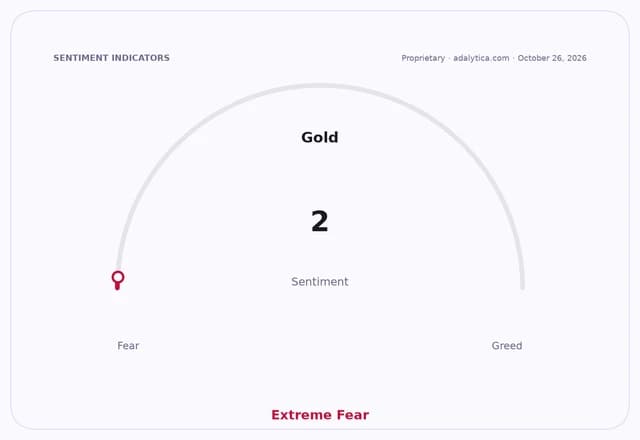
The macro backdrop is doing most of the work. Investors are watching U.S. inflation data, oil prices, Treasury yields and the dollar ahead of the Federal Reserve’s Oct. 27-28 meeting. If inflation remains sticky, the case for holding gold weakens further because higher real yields raise the opportunity cost of owning a non-income-bearing asset. If inflation cools and yields ease, gold could stabilize quickly, especially given how sharply sentiment has already deteriorated. Adalytica’s Gold Fear & Greed Index stood at 2, indicating extreme fear, while its U.S. dollar signals remained neutral, suggesting the latest weakness is being driven more by rates than by a fresh dollar surge.
For investors, the immediate question is whether this is a healthy reset after an overbought rally or the start of a deeper repricing. The bullish case rests on central bank demand, ETF inflows and limited mine growth, which still point to structural support. The bearish case is that with the 50-day moving average now above spot prices and momentum indicators weakening, the market could remain range-bound or drift lower if the Fed keeps a hawkish bias and real yields stay elevated.
For Egypt’s consumers and jewelers, the drop eases some pressure after months of elevated prices, but it also shows how tightly the local market remains tethered to global bullion and monetary policy. The next catalyst is the Fed decision, followed by inflation releases that will determine whether gold can reclaim lost ground or whether Wednesday’s decline is the first stage of a broader correction.
| Entity | Gains | Losses |
|---|---|---|
| Jewelry buyers in Egypt | ▲Lower entry prices | ▼Recent holders of inventory |
| Gold importers/sellers | ▲Potential restocking demand | ▼Near-term pricing power |
| Central banks/long-term buyers | ▲Better accumulation levels | ▼Short-term momentum traders |
| Fed hawks / higher real yields | ▲Stronger policy credibility | ▼Gold bulls and ETF holders |