A Ukrainian blogger’s account of living in Hurghada for about $610 before internet highlights why Egypt remains a budget magnet for households trying to stretch income further while the cost of living at home stays high.
Egypt Draws Ukrainian Expats With Low Living Costs
Her monthly breakdown — $450 for a studio, $60 for utilities and $100 for internet, with a goal of staying near $1,000 including daily spending — underlines how the economics of relocation are being reshaped by housing costs, access to services and the ability to trade away climate and convenience for lower fixed expenses. For families from Ukraine, where the war has distorted incomes, rents and mobility, that trade-off can be decisive.
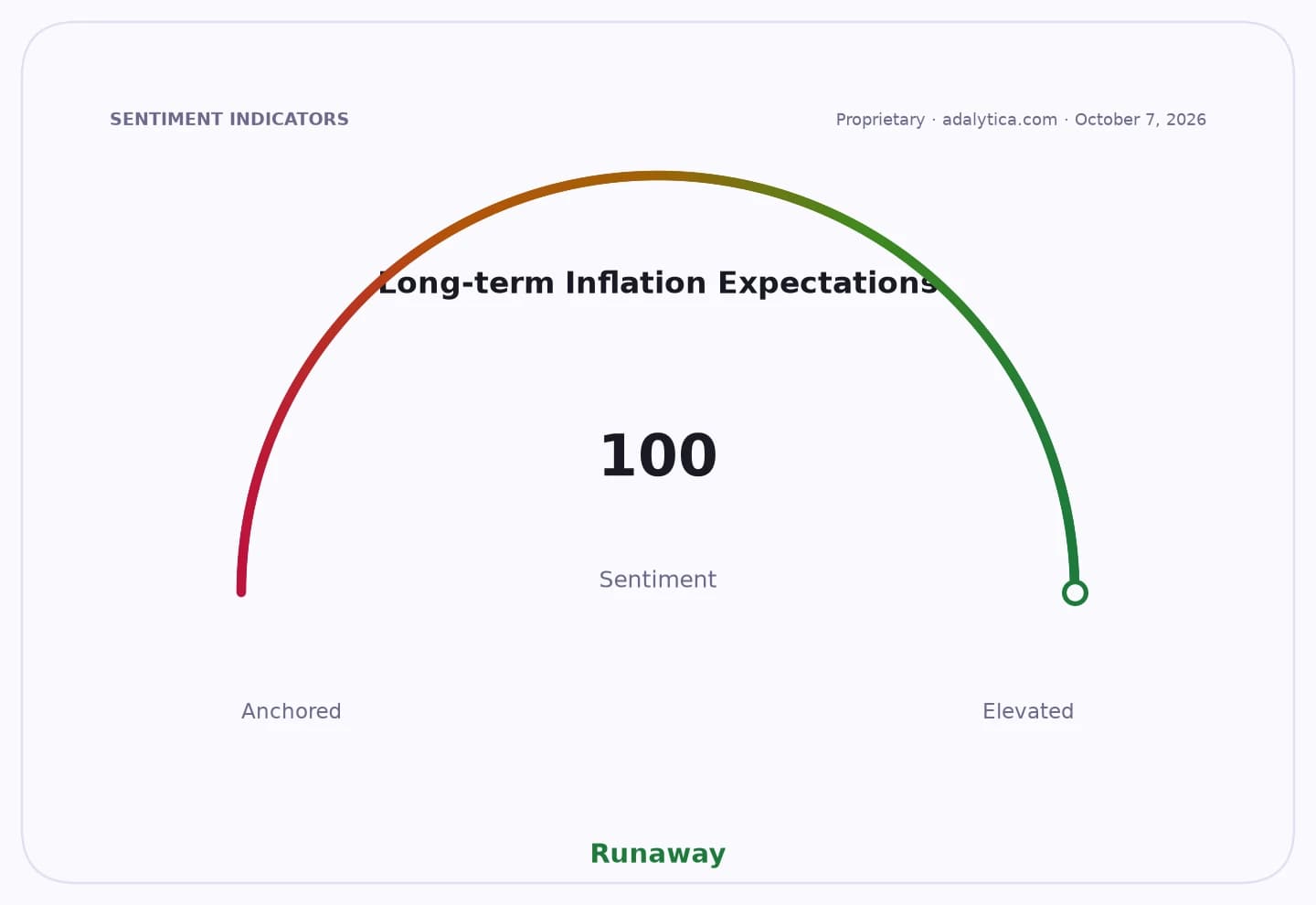
Sentiment IndicatorsⓘProprietary · adalytica.com · October 10, 2026
This is a snapshot — live sentiment, awareness and momentum for 130+ markets update continuously in the dashboard.Open AlphaPulse
The appeal is not simply that Egypt is “cheap.” It is that a resort-market structure can still offer bundled value: beachfront access, pools, children’s activities and proximity to the sea without the premium attached to comparable coastal housing in Europe. In the blogger’s case, living inside the El Karma hotel complex effectively provided amenities that would often be priced separately elsewhere.
That matters for migrants and seasonal expatriates because housing is usually the largest monthly outlay. At $450, the rent is well below what many families would pay in major Ukrainian cities or in much of the EU, even before factoring in winter utility bills, transport and childcare. The comments comparing the cost favorably with Lviv and broader Ukraine reflect a larger consumer pattern: households are increasingly benchmarking against total monthly cash burn, not nominal rent alone.
The story also fits a broader inflation backdrop. In the US, the consumer price index has risen to 334.131 from 237.336 in 2016, a reminder that accumulated price pressure across global economies has made low-cost locations more attractive. Yet the attractiveness of Egypt is relative, not absolute: the blogger’s own internet bill of $100 shows that imported services and patchy local infrastructure can still erode the headline savings.
For Egypt, the influx of price-sensitive foreign residents and long-stay visitors supports tourism-linked demand beyond traditional package travel. That is economically relevant because it brings spending into housing, food, services and local retail, while reinforcing demand for mid-market furnished apartments and hotel-adjacent rentals. It also helps explain why authorities are pushing broader development and financing plans to expand housing and urban capacity.
Investors should see the trend as a signal that affordability is becoming a competitive asset in travel, real estate and consumer services. Developers and hospitality owners with inventory in Red Sea destinations may benefit if long-stay demand stays firm. The risk is that rising prices, currency swings or infrastructure bottlenecks — especially around internet and other utilities — could narrow the cost gap that currently makes Egypt appealing.
For Ukrainians and other cost-conscious expatriates, Egypt’s value proposition remains straightforward: warm weather, sea access and a monthly budget that can still come in around $1,000. Whether that remains sustainable will depend on rents, service quality and the pace of Egypt’s own inflation and development cycle.
| Entity | Gains | Losses |
|---|---|---|
| Ukrainian families abroad | ▲Lower monthly living costs | ▼Higher move and setup costs |
| Egypt’s coastal landlords | ▲More long-stay demand | ▼Pressure to keep prices competitive |
| Tourism and services sector | ▲Steady spending on housing and food | ▼Dependence on cost-sensitive demand |
| High-cost urban renters in Ukraine/EU | ▲— | ▼Relative affordability advantage |