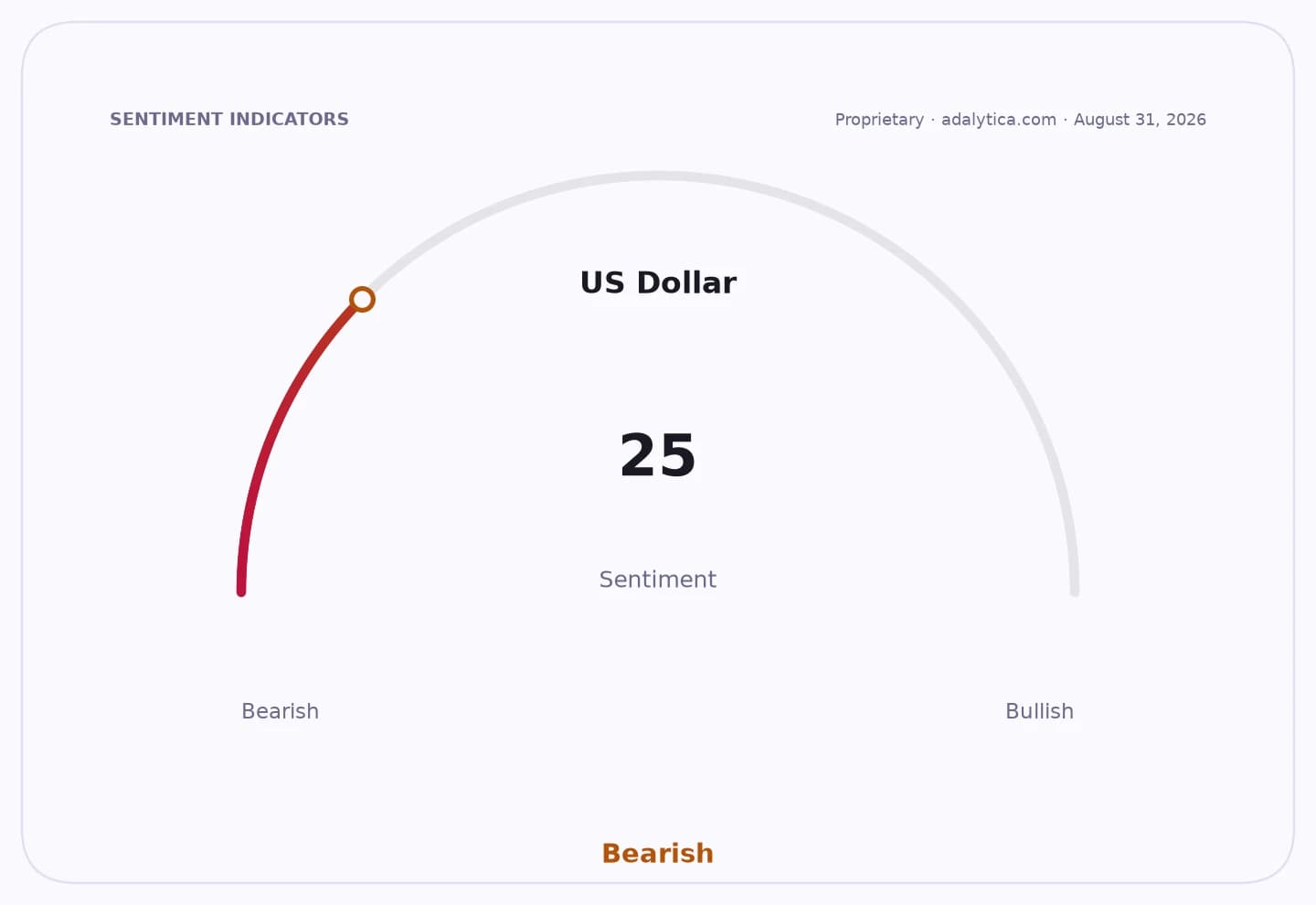
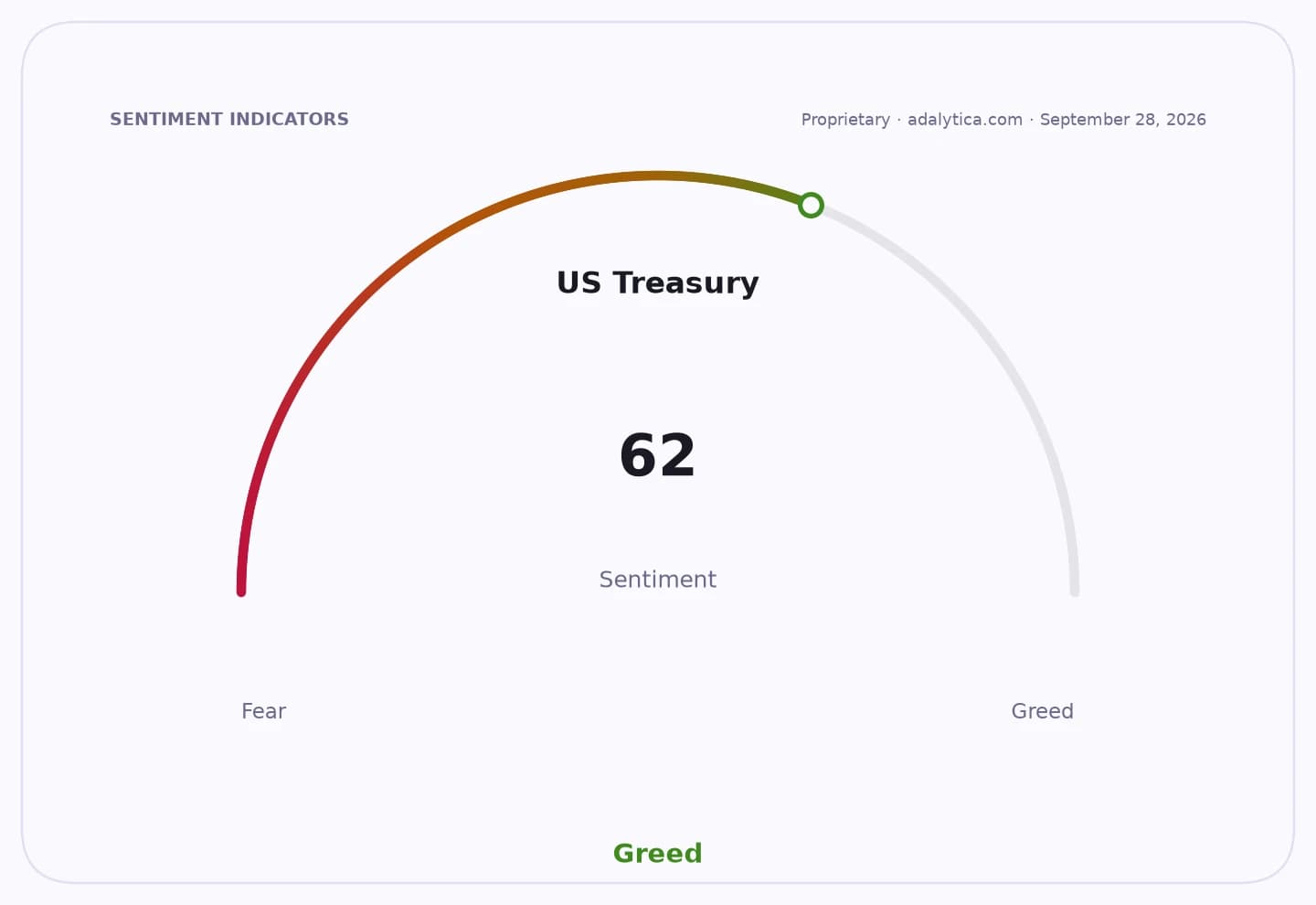
Emerging market local-currency bonds are looking more appealing again as U.S. Treasury yields climb, the Federal Reserve stays relatively restrictive and the dollar loses some of its recent momentum.
Emerging Market Local Bonds Gain Appeal as Dollar Softens
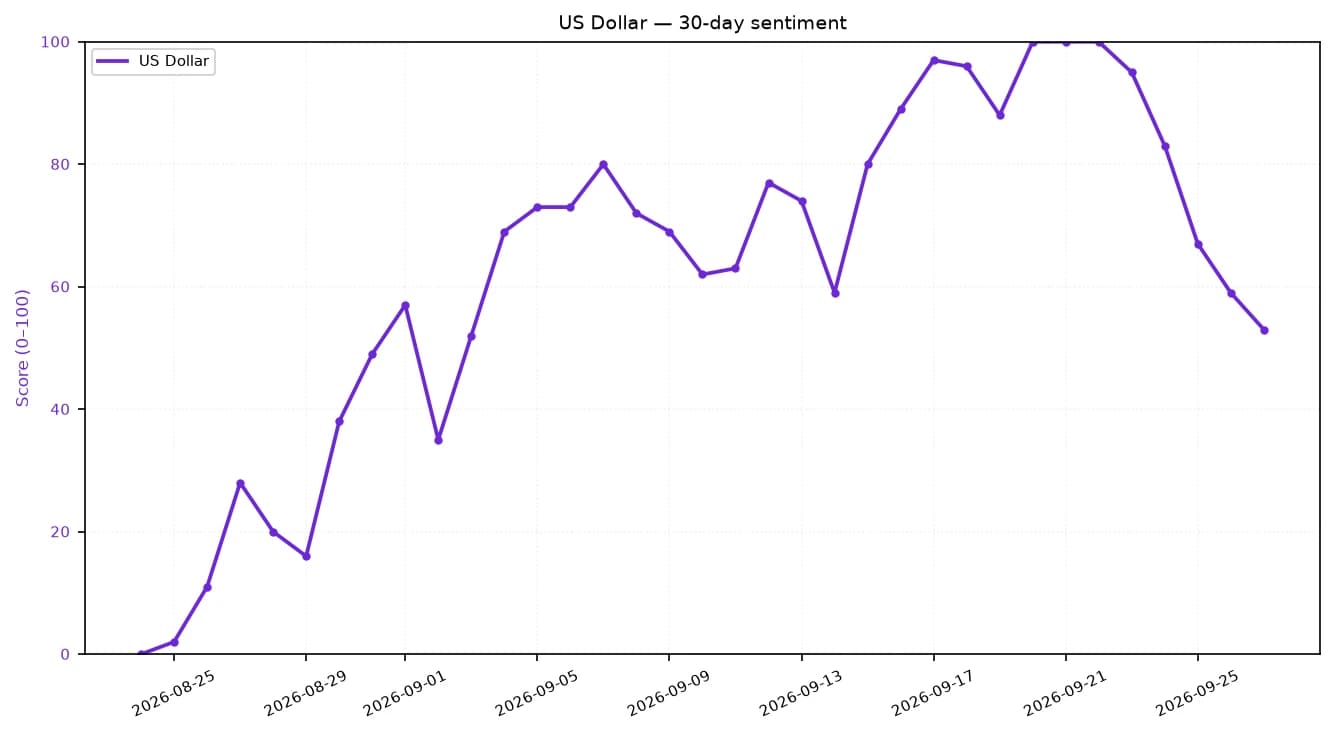
That matters because this is the kind of backdrop that can reshape cross-border capital flows. When U.S. rates rise, investors usually expect American assets to keep pulling money home. But if the dollar starts to look less one-way and emerging market policymakers are offering attractive carry, local debt can regain a rare combination of yield and price support.
Sentiment IndicatorsⓘProprietary · adalytica.com · September 28, 2026
This is a snapshot — live sentiment, awareness and momentum for 130+ markets update continuously in the dashboard.Open AlphaPulse
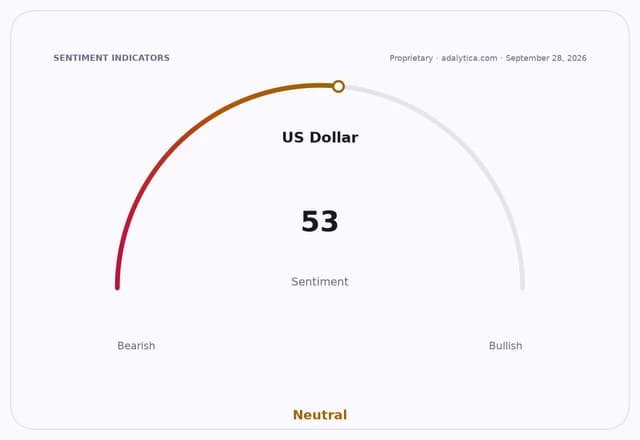
The case is especially strong in Latin America, where Jupiter Dynamic Bond managers Ariel Bezalel and Harry Richards say countries such as Brazil stand out. Their argument is straightforward: Brazil has abundant power, critical minerals and industrial raw materials that could make it a key supplier to the global artificial-intelligence investment cycle. For long-term investors, that is important because it links bond demand not just to interest rates, but to a broader growth story built on commodities, infrastructure and export capacity.
The market backdrop has helped too. The 10-year U.S. Treasury yield has been pushed higher, with some traders warning it could reach 6% by January, while the Federal funds rate remains elevated around 3.63%. At the same time, high-yield credit spreads have narrowed to roughly 2.80 percentage points from earlier this year, a sign that risk appetite has not vanished even as rate volatility persists. In that sort of environment, investors are forced to ask where they are being paid enough for duration and currency risk.
That question is exactly why emerging market debt funds have stayed on watchlists. The iShares J.P. Morgan USD Emerging Markets Bond ETF, EMB, and the local-currency counterpart EMLC have both shown that investors are still willing to own the asset class, even as prices have pulled back recently. EMB closed at 92.18 on September 25, below its 50-day moving average, while EMLC ended at 24.96. Those levels do not scream euphoria; they suggest a market that is trying to find its footing after a period of pressure.
For investors, the key distinction is between hard-currency debt and local-currency debt. Hard-currency bonds can look steadier when a dollar rally is powerful, but local bonds offer a second engine of return: if domestic inflation cools and central banks can ease, prices can rise even before currency gains arrive. That is why local debt often becomes attractive late in a U.S. tightening cycle or when the dollar loses strength.
There are risks, of course. A sharp move higher in U.S. yields could still punish emerging market currencies, and that would hit local bond returns quickly. Political noise, fiscal slippage and commodity swings can also derail the story country by country. But for investors with a multi-year horizon, those risks are usually the price of admission to a market that can deliver better real yields than many developed-world alternatives.
The bigger narrative is that emerging market local currency bonds are not merely a rate trade. They are a way to express a view on slowing U.S. tightening, a softer dollar and the growing importance of commodity-rich economies in global supply chains. For patient investors, that makes the asset class worth watching, and in a diversified portfolio, worth considering for long-term income and total return.
| Entity | Gains | Losses |
|---|---|---|
| Emerging market local bonds | ▲Higher relative yield | ▼Vulnerable to currency swings |
| U.S. Treasury sellers | ▲Higher nominal yields | ▼Lower bond prices |
| Latin American exporters | ▲Better commodity demand | ▼Stronger local currencies if too fast |
| Emerging market bond investors | ▲Attractive carry and diversification | ▼Near-term rate volatility |