Ethereum’s next big adoption battle may not be speed alone, but whether it can make AI-powered crypto commerce secure enough for institutions to trust it.
Ethereum AI security push and ETF flows
That is the significance of Vitalik Buterin’s push for a “paranoid mode” for AI agents, a proposal that aims to harden privacy by routing activity through Tor, obscuring traffic, protecting payer identity and rewriting prompts locally. For long-term investors, the point is bigger than one X post: Ethereum is increasingly trying to position itself as the settlement layer for agentic commerce, and that only works if institutions believe the network can handle AI without opening new attack surfaces.
Why does that matter economically? Because the next wave of blockchain usage is likely to be judged on security, not just throughput. AI agents can make transactions easier and smart-contract workflows more efficient, but they also introduce fresh risks if an autonomous agent is compromised. In plain English, the same tools that could expand Ethereum’s use in decentralized finance could also become the weakest link if privacy and verification fail. That is why Buterin’s security-first framing matters: it is a reminder that institutional adoption is often won by the chain that can reduce operational risk, not the one that simply promises the most features.
There is also evidence that Ethereum’s ecosystem is using AI for defense as much as offense. Francesco of Ethereum Labs said AI helped developers complete most of the formal verification work in just four to five days, while the network’s Fast Confirmation Rule can let applications confirm blocks in about 24 seconds, versus roughly 13 minutes for finality under stronger assumptions. Those are the kinds of improvements that matter to institutional users, because they speak directly to reliability, bugs and the cost of building on-chain products.
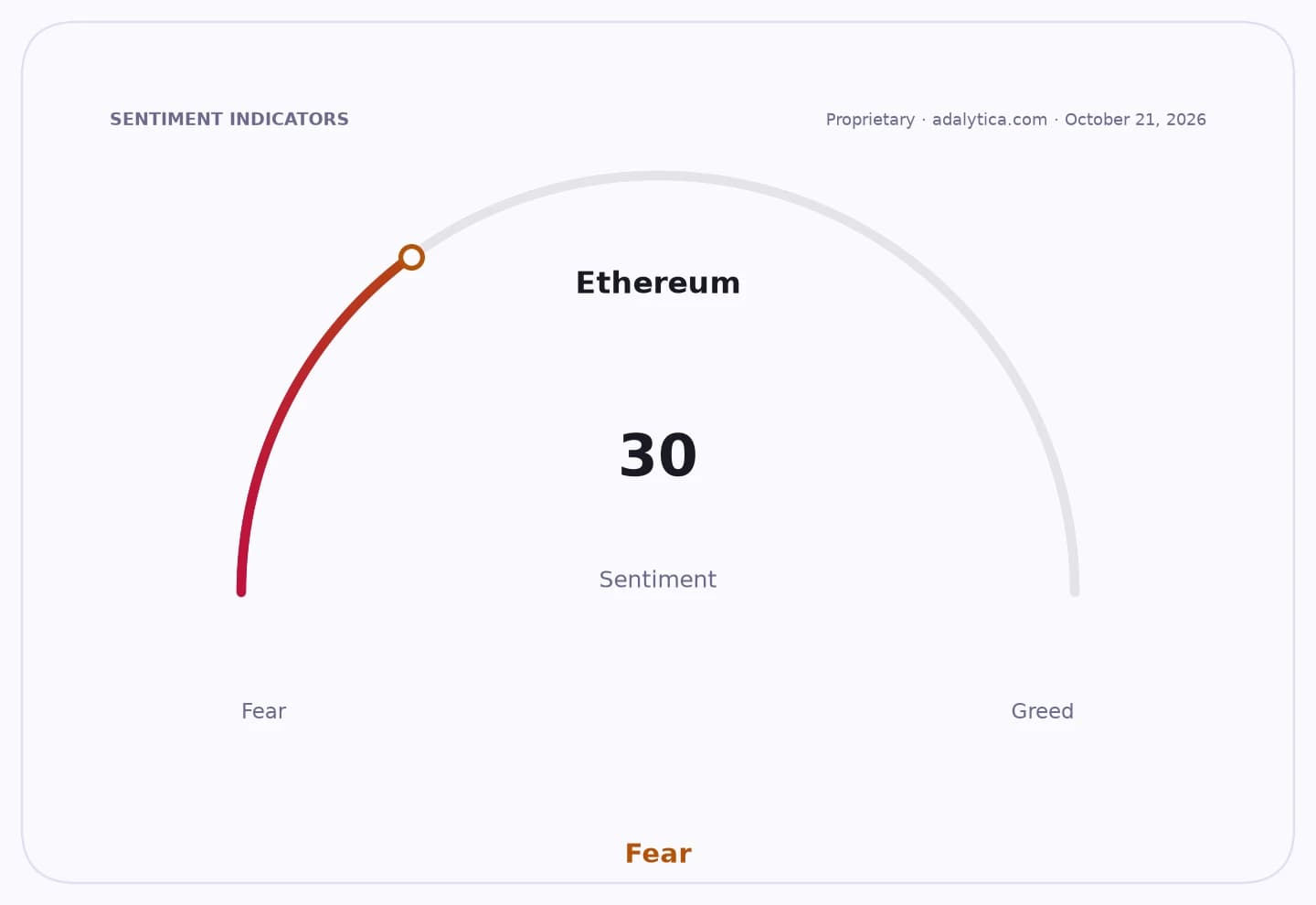
Ethereum — 30-day sentimentadalytica.com
Explore this data interactively — full history, time series and cross-market comparisons.Open AlphaPulse
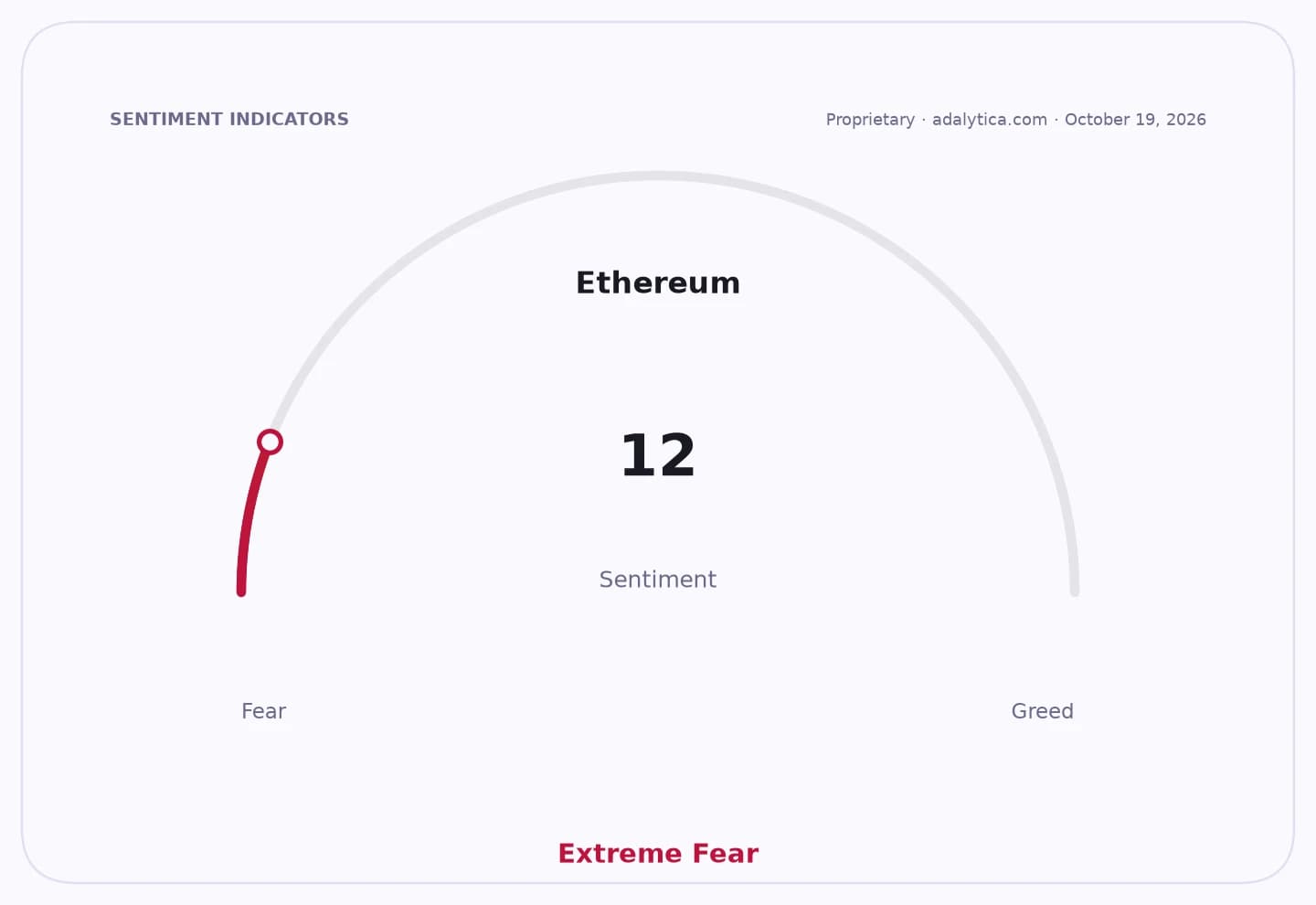
The market backdrop makes the timing even more interesting. Ethereum ETF flows, including Morgan Stanley’s Ethereum ETF, reportedly avoided outflows for 20 straight days even as markets turned risk-off. At the same time, Adalytica’s Ethereum Fear & Greed Index shows sentiment at 30, or fear, while awareness sits at 60, or neutral. That combination often marks a market that is nervous but still paying attention — exactly the kind of environment where a credible security narrative can support longer-term accumulation.
Ethereum is not being valued only on today’s price action. The token has recently been trading around $2,503, still below its 50-day moving average of about $2,552, while the RSI at 43.7 suggests the market is recovering from weakness rather than overheating. For investors, that matters because the chart says sentiment is fragile, but the structural story is not broken. If anything, it shows the market is waiting for proof that Ethereum can balance faster execution with stronger security.
The risk is obvious: more complexity can slow the network and weaken the user experience if security becomes too expensive in speed terms. That trade-off is not trivial. But for patient investors, the broader narrative is still constructive. If Ethereum can keep making AI agents safer while preserving enough speed for real-world use, it improves its case as a durable institutional platform rather than just another speculative crypto asset.
That is why Buterin’s “paranoid mode” should be seen less as a quirky idea and more as a signal of Ethereum’s long game. The winners in crypto are likely to be the networks that institutions can use without worrying about hidden vulnerabilities. Ethereum is trying to become one of them, and that makes its AI security push worth watching for years, not days.
| Entity | Gains | Losses |
|---|---|---|
| Ethereum long-term holders | ▲stronger institutional case | ▼slower execution if security dominates |
| Institutional investors | ▲lower protocol risk | ▼less upside if adoption stalls |
| AI agent builders on Ethereum | ▲better privacy tools | ▼added complexity and latency |
| Short-term speculators | ▲volatility opportunities | ▼patience-dependent thesis |