Ethereum is moving to raise its gas limit toward 200 million as the next network upgrade, Glamsterdam, reaches its final testnet stage, a change that could materially lift throughput and reinforce the chain’s case as the core settlement layer for decentralized finance, tokenized assets and AI-linked onchain applications.
Ethereum gas limit rises toward 200 million
The market should care because blockspace is Ethereum’s scarce commodity. A higher gas limit means the network can process more transactions and more complex smart-contract activity per block, easing congestion if demand returns and improving the economics for builders who need predictable execution. In a crypto market still wrestling with outflows, weak risk appetite and cautious sentiment, that kind of supply-side upgrade is the kind of infrastructure story investors tend to underestimate until usage accelerates again.
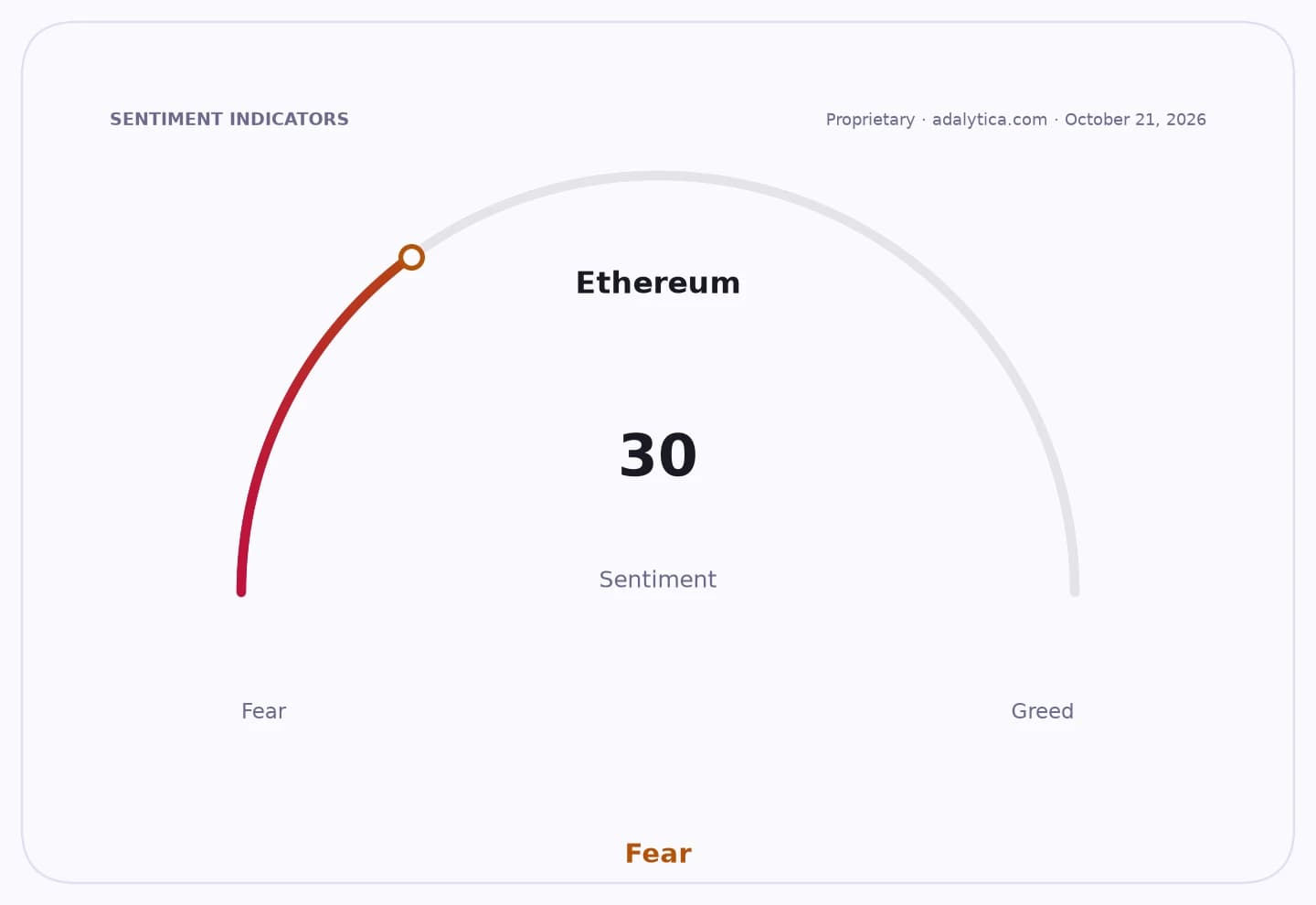
Sentiment IndicatorsⓘProprietary · adalytica.com · October 22, 2026
This is a snapshot — live sentiment, awareness and momentum for 130+ markets update continuously in the dashboard.Open AlphaPulse
Ethereum’s price action shows why the upgrade matters. ETH has been stuck near $2,400, trading below its 50-day moving average around $2,551 and its 200-day average near $2,155, with momentum still negative even after a recent rebound. The token closed at $2,397.69 on Oct. 22, down from $2,470.77 the day before, while the Relative Strength Index sat at 42.6, signaling neither oversold panic nor clear bullish conviction. In other words, the market is waiting for a catalyst that can turn technical stabilization into a fundamental re-rating.
That is where Glamsterdam comes in. Ethereum has spent years optimizing for security and decentralization, but the next phase of competition is about usability, capacity and cost. If the network can safely scale blockspace without compromising reliability, it strengthens the investment case not just for ETH itself but for the entire stack built on top of it: layer-2 networks, infrastructure providers, wallet ecosystems and application developers that depend on low-friction settlement.
For investors, the real opportunity is not simply that Ethereum gets faster. It is that a credible path to materially higher throughput can widen the gap between Ethereum and competing chains that promise speed but lack comparable liquidity, developer depth and institutional trust. If Glamsterdam progresses smoothly through testing, it gives the market a fresh reason to look past short-term ETF redemptions and macro-driven selling and focus instead on the network’s long-duration cash flow-like demand for blockspace.
The setup remains asymmetric. Ethereum is still trading in a fear-heavy environment, according to Adalytica’s Ethereum Fear & Greed Index, which shows neutral sentiment at 46 but awareness in fear territory at 28. Yet that is often precisely when infrastructure upgrades matter most: when expectations are low, execution can have outsized impact. If the final testnet holds and the gas-limit increase moves closer to mainnet adoption, ETH could reassert itself as the highest-conviction bet on the next wave of onchain activity. For investors willing to think beyond the current malaise, the upgrade cycle may be the beginning of the next Ethereum re-rating.
| Entity | Gains | Losses |
|---|---|---|
| Ethereum validators/builders | ▲More capacity, better usability | ▼Higher network complexity |
| ETH bulls | ▲Fresh upgrade catalyst | ▼Weak near-term price momentum |
| Competing smart-contract chains | ▲Little immediate benefit | ▼Relative adoption edge narrows |
| Layer-2 ecosystems | ▲More scalable base layer | ▼Fee pressure if demand stays soft |