Europe’s new AI transparency rules may become a surprisingly powerful brake on one of the housing market’s most annoying digital tricks: AI-edited property photos that make homes look bigger, brighter or more modern than they really are.
EU AI Act Targets Property Listing Photo Edits
That matters because real estate is increasingly sold online, and trust is the currency of the market. If buyers cannot tell whether a kitchen, living room or garden has been digitally polished beyond recognition, the entire listing process gets less efficient. For investors, that is not just a consumer-protection issue — it is a test of whether the EU’s AI Act can impose real discipline on a fast-moving sector that increasingly uses generative AI to market homes.
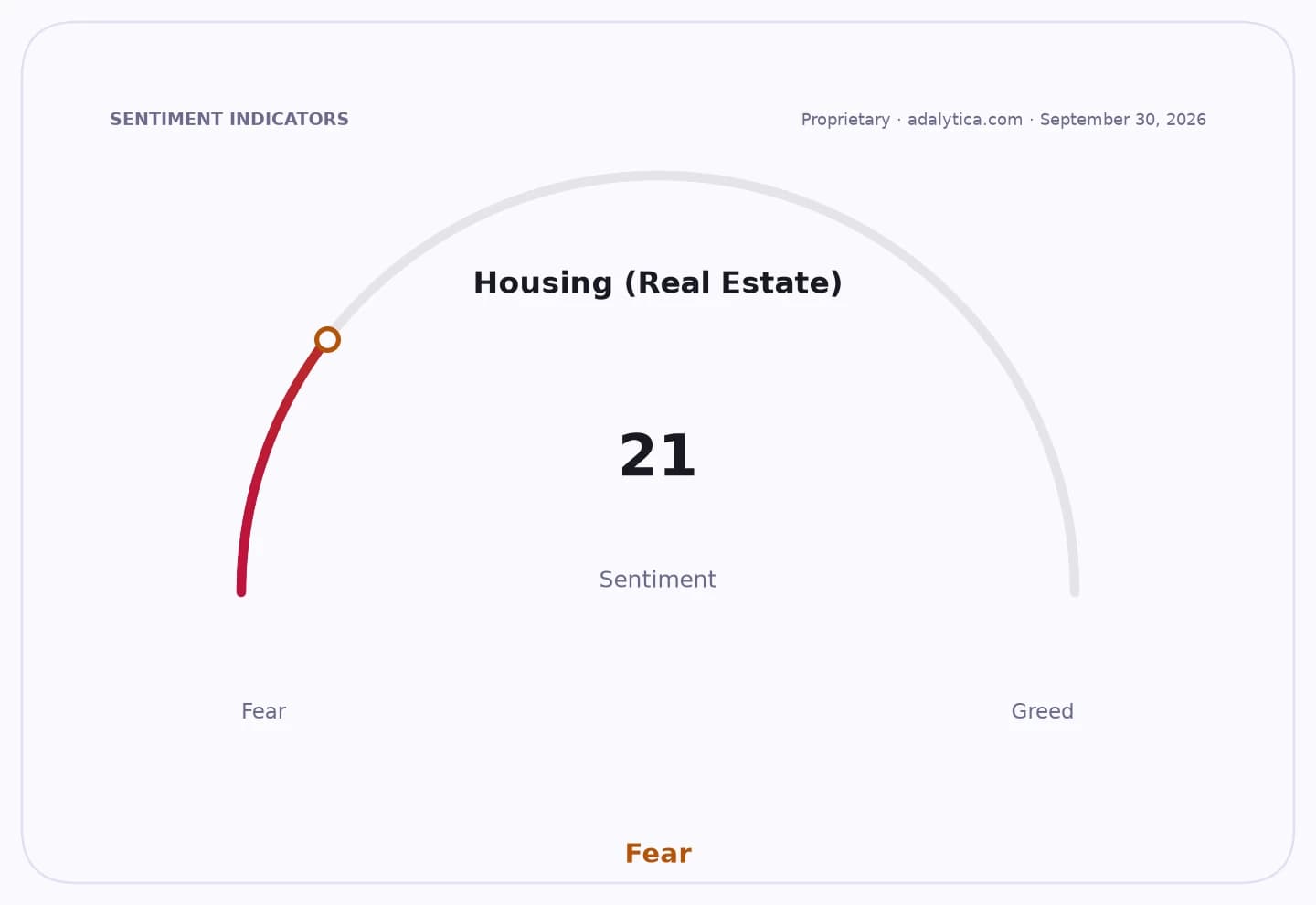
Sentiment IndicatorsⓘProprietary · adalytica.com · September 30, 2026
This is a snapshot — live sentiment, awareness and momentum for 130+ markets update continuously in the dashboard.Open AlphaPulse
The core of the issue is “housephishing,” the practice of using AI to enhance or alter listing photos in ways that can mislead would-be buyers. A sofa appears where none exists, a room looks larger than it is, or a modern appliance seems to have been dropped into a dated flat. Traditional home staging has long been accepted because it shows a property at its best. The problem with AI is that it can do the same thing faster, cheaper and at scale, while making it harder for consumers to spot what is real.
The EU’s AI Act, which began taking effect in August, requires AI-generated or AI-altered content to be clearly labeled. In real estate, that means photos that have been materially modified with AI may need to carry an AI transparency marker. The law also puts obligations on AI providers and users to make manipulated content identifiable, with penalties that can reach 15 million euros, or 3% of global annual turnover. In principle, that is enough to make brokers and listing platforms think twice before treating AI-enhanced photos as just another marketing tool.
For property investors and homebuyers, the significance is practical. Cross-border buyers, remote purchasers and older consumers are especially vulnerable when they cannot inspect a home in person. If AI makes listings look more appealing than the underlying asset, it can distort pricing, waste time and damage confidence in online marketplaces. Over time, that could raise transaction friction in Europe’s housing market and push buyers to demand more verification, more disclosures and more legal safeguards.
Still, enforcement is the real question. The law is new, and the line between minor edits — such as changing lighting or wall color — and manipulative alteration is not yet clear. Real estate listings also move quickly, which makes monitoring difficult. Screenshots and complaints may help, but they are a blunt tool. That leaves a gap between Europe’s ambitious rulebook and the everyday reality of marketplaces where a deceptive listing may disappear before regulators ever see it.
The response from the industry will matter. Real estate associations in Belgium are already updating ethics rules to align with the new law, and brokers remain responsible for what they publish even if AI tools are doing the editing. That suggests the firms most exposed are not the AI vendors themselves, but the intermediaries — brokers, portals and agencies — that rely on trust to convert clicks into sales.
For investors, the bigger lesson is that AI regulation is moving from theory to operating risk. Companies that market homes, manage listings or provide AI image tools in Europe may need better disclosure systems, stronger compliance checks and tighter platform controls. Firms that adapt early could earn trust; those that treat AI-generated visuals as harmless embellishment could face fines, reputational damage and, in a worst case, lost licensing or listing privileges.
In other words, the EU is trying to prevent AI from turning real estate into a confidence game. That will not eliminate misleading listings overnight, but it could make European housing platforms cleaner, more transparent and ultimately more investable. For long-term investors, the issue is worth watching: regulation may not kill AI in property marketing, but it may decide who gets to profit from it responsibly.
| Entity | Gains | Losses |
|---|---|---|
| Homebuyers | ▲clearer disclosures | ▼misleading listings |
| Honest brokers | ▲stronger trust | ▼rivals using AI tricks |
| AI vendors | ▲demand for compliant tools | ▼sloppy image-editing use cases |
| Regulator/enforcers | ▲more oversight power | ▼harder monitoring workload |