Europe and Australia are moving to lock in a broader strategic partnership that could reshape trade, security and supply-chain ties just as both seek to reduce exposure to coercion from bigger powers.
EU and Australia finish free trade talks
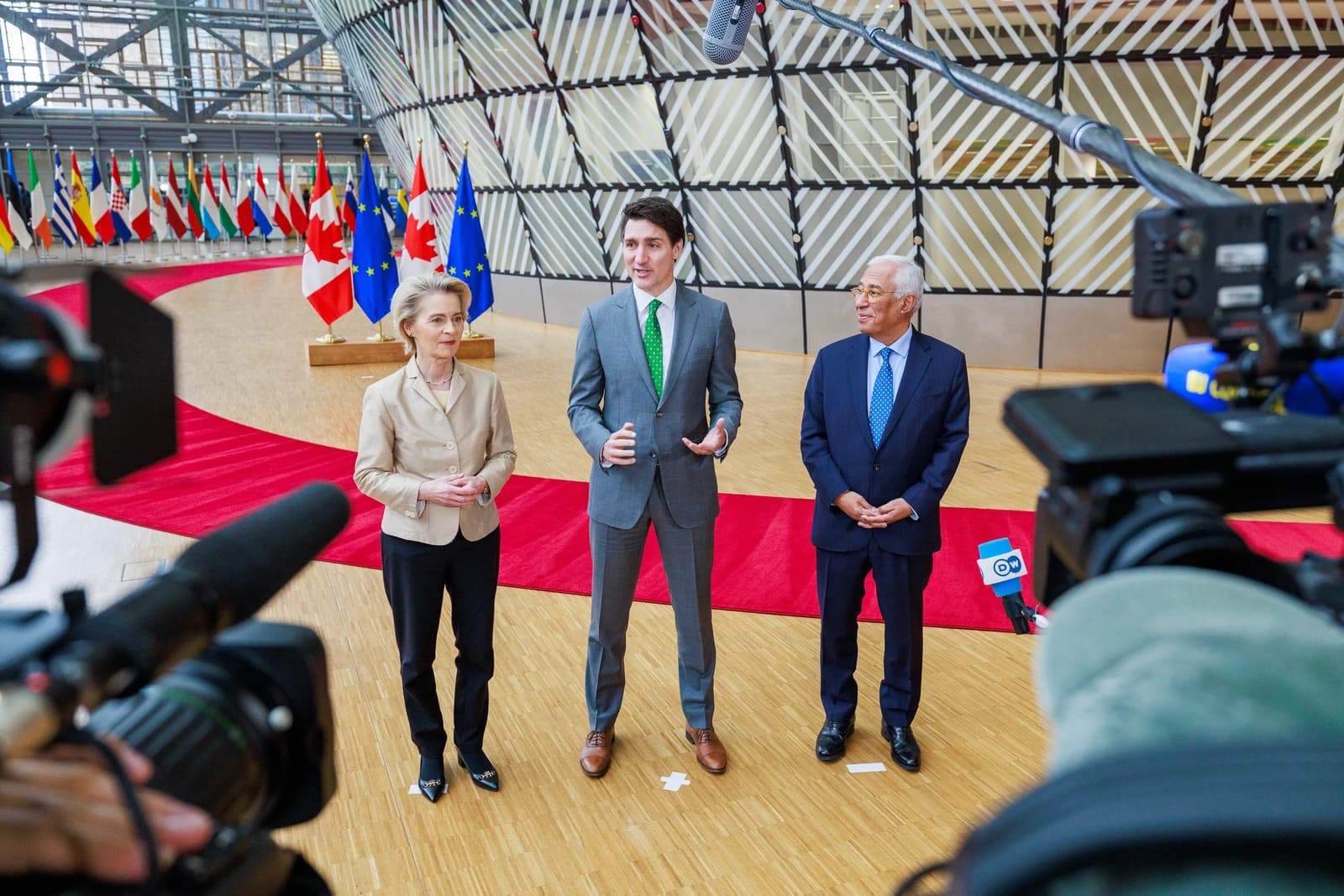
European Council President Antonio Costa, European Commission President Ursula von der Leyen and Australian Prime Minister Anthony Albanese said they had finished negotiations on a “comprehensive and commercially meaningful” free trade agreement and want to sign it as soon as possible, giving businesses a clearer path into one of the world’s most politically aligned markets.
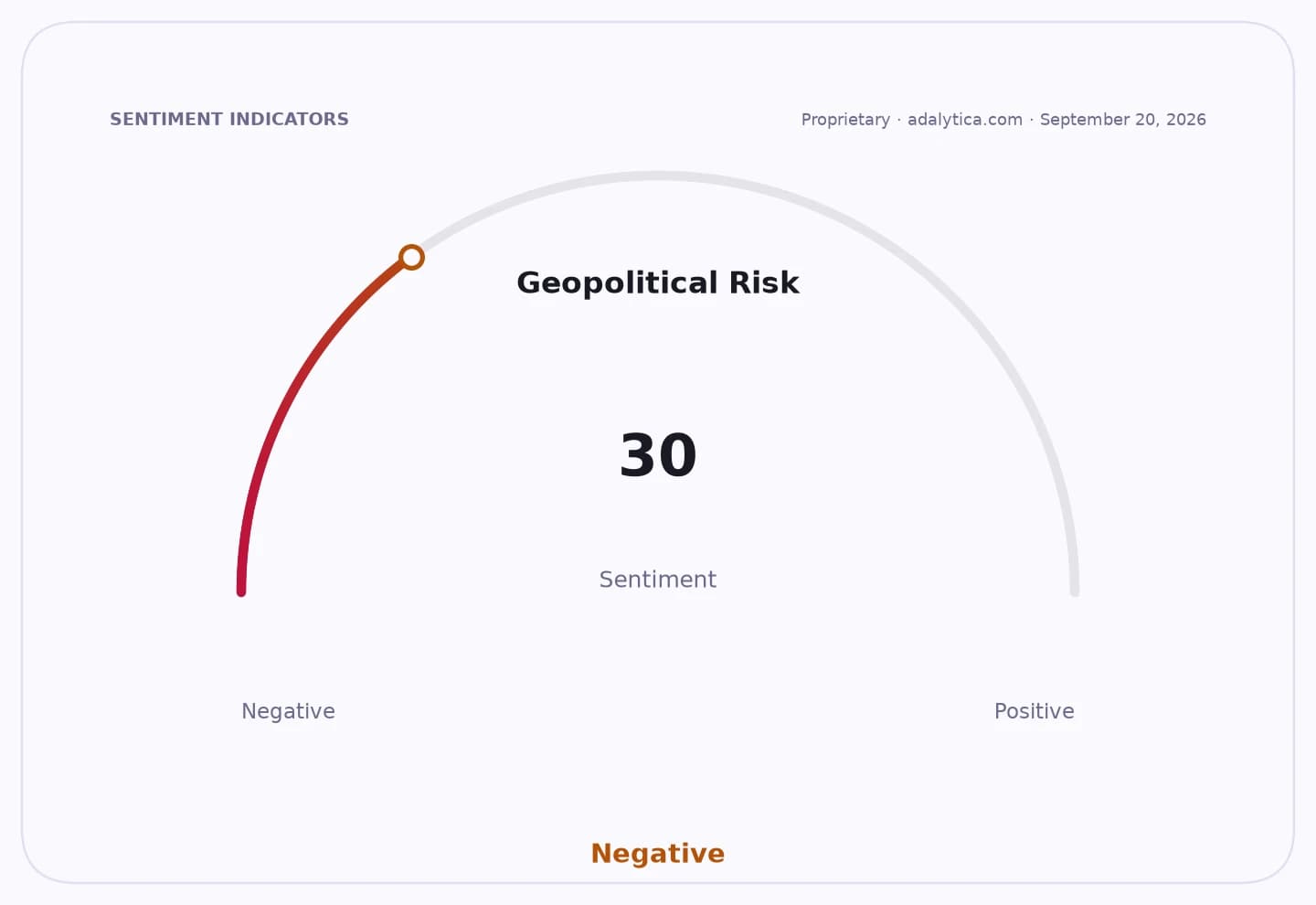
Sentiment IndicatorsⓘProprietary · adalytica.com · September 25, 2026
This is a snapshot — live sentiment, awareness and momentum for 130+ markets update continuously in the dashboard.Open AlphaPulse

The timing matters because the deal goes well beyond tariff cuts. The leaders also backed deeper cooperation on critical raw materials, emerging technologies and economic security, including responses to economic coercion and non-market policies. That puts the relationship squarely in the orbit of industrial policy, where access to minerals, chips and trusted supply chains is increasingly as important as market access.
For Europe, the agreement offers a way to diversify away from China-linked supply risks while securing a stable source of raw materials needed for electrification, defence production and digital infrastructure. For Australia, it strengthens an export strategy built around premium agricultural, industrial and resource sales at a time when it is also navigating slower domestic growth and pressure on household finances.
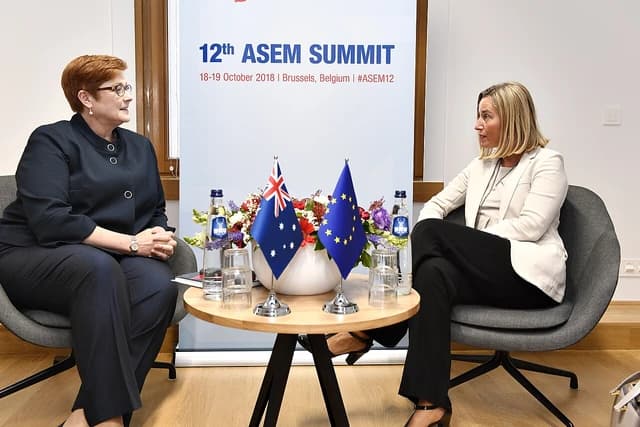
The leaders said they also welcomed progress toward Australia’s association with Horizon Europe from 2027, a move that would deepen research cooperation and connect Australian institutions more closely to Europe’s innovation base. That matters for investors because it can accelerate partnerships in clean tech, materials science, cyber and artificial intelligence governance, all areas where the commercial payoff increasingly depends on cross-border regulatory alignment as much as funding.
Security was another clear pillar of the new relationship. Costa, von der Leyen and Albanese reviewed the EU-Australia Security and Defence Partnership, highlighting work on hybrid threats, cyberattacks, foreign information manipulation, maritime security and crisis management. The emphasis reflects a wider geopolitical shift: both sides are treating trade as a national security tool and looking for trusted partners as tensions remain elevated in Ukraine, the Middle East and the Pacific.
Australia’s role as COP31 negotiations president also reinforces its usefulness to Europe as a partner on climate diplomacy and energy transition policy, while the discussion of the CPTPP underscores the EU’s interest in linking itself more closely to Indo-Pacific trade architecture. Together, those threads point to a partnership designed not just to expand commerce, but to build resilience against supply shocks and geopolitical fragmentation.
For investors, the near-term question is execution. A signed trade deal could improve sentiment toward European and Australian exporters, resource developers and logistics groups tied to cross-regional flows. But the bigger prize may be longer dated: a more durable policy framework for minerals, defence, digital regulation and research collaboration that could lift the strategic value of companies operating in both regions.
| Entity | Gains | Losses |
|---|---|---|
| EU exporters | ▲Better access to Australia | ▼Higher competition at home |
| Australian miners | ▲Stronger EU demand for raw materials | ▼More scrutiny on supply standards |
| Research institutions | ▲Horizon Europe links | ▼Isolated funding pools |
| China-linked suppliers | ▲No direct gain | ▼More diversification pressure |