Coffee prices in Europe could rise sharply if the EU follows through on stricter pesticide rules for imports, but the bigger market driver remains a global supply squeeze that has already pushed bean costs higher.
EU Coffee Import Rules Could Lift Prices
The European Commission’s Joint Research Centre said coffee could become as much as 332% more expensive under proposed “mirror clause” rules that would require imported food to meet the same pesticide standards as EU-grown crops. Citrus prices could rise by more than 80%, according to the report, because some foreign suppliers may be forced to change farming methods or lose access to the bloc altogether.
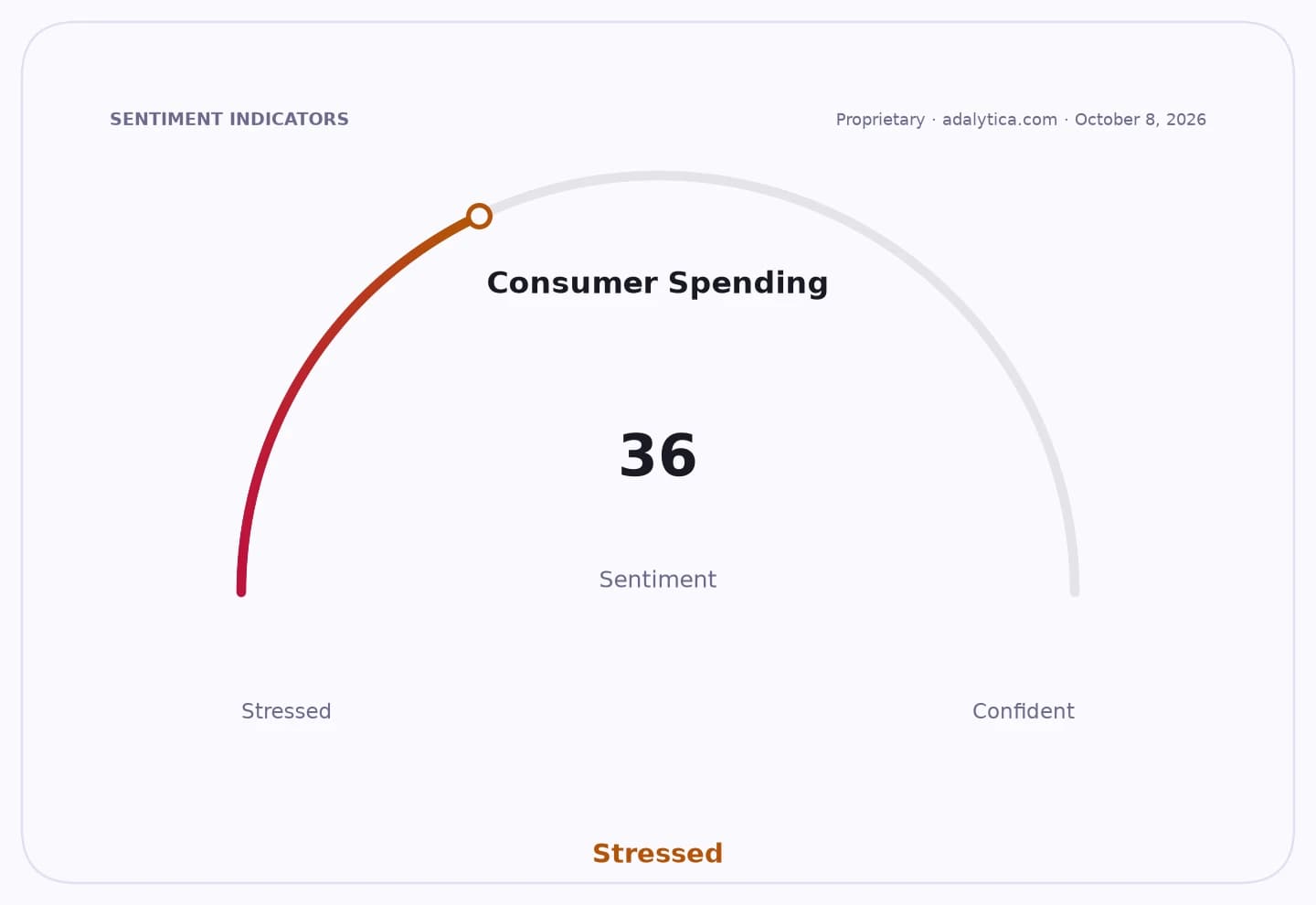
Sentiment IndicatorsⓘProprietary · adalytica.com · October 21, 2026
This is a snapshot — live sentiment, awareness and momentum for 130+ markets update continuously in the dashboard.Open AlphaPulse
That makes the policy economically significant even if analysts say the worst-case pricing forecasts are overstated. eToro analyst Pawel Majtkowski said warnings of a 300% jump in coffee prices “seem heavily exaggerated,” though the rules could still add to consumer costs. For importers, roasters and retailers, the risk is less about an immediate price shock than a slower tightening of supply chains, higher compliance costs and potential trade friction with producers outside the EU.
The timing is awkward for a market already under strain. The International Coffee Organization said its ICO Composite Indicator Price rose 15.4% month on month in July 2026 to 287.26 cents a pound, driven by concerns over arabica supply, delayed harvesting in Brazil, lower certified arabica stocks in the U.S. and the prospect of a strong El Niño later this year. In other words, the EU is considering tougher rules just as weather and inventory dynamics are already lifting global prices.
For investors, that combination matters because it supports pricing power for coffee sellers while squeezing margins for roasters, cafés and food retailers that cannot fully pass on higher input costs. Shares of coffee-related names such as J.M. Smucker’s coffee unit and Starbucks are likely to remain sensitive to bean inflation, although the impact will vary by hedging strategy, sourcing mix and regional pricing flexibility. Starbucks, which sells premium drinks and has more scope to raise menu prices than grocery brands, may be better positioned than mass-market packaged coffee makers. But even stronger brands face a demand-risk tradeoff if consumer budgets are already under pressure.
The policy debate also has a broader economic angle. Brussels says the aim is to protect European consumers and level the playing field for farmers bound by stricter pesticide rules. Critics will argue it amounts to a de facto trade barrier that could raise food costs and invite retaliation from exporters in Latin America, Africa and Asia. If the rules are watered down, the price effect may be modest; if they are enforced aggressively, the market could see a rerouting of supply and a re-pricing of some staple imports.
For now, the clearest read is that regulation is adding a second layer of risk to an already volatile coffee market. The medium-term winners are likely to be growers and roasters with cleaner supply chains and stronger pricing power. The losers are consumers, import-dependent food companies and exporters that cannot meet the EU’s standards quickly enough.
| Entity | Gains | Losses |
|---|---|---|
| EU farmers | ▲Level playing field | ▼— |
| Coffee exporters outside EU | ▲— | ▼Compliance costs, lost access |
| Roasters with hedging/pricing power | ▲Higher resale prices | ▼— |
| Consumers and mass-market retailers | ▲— | ▼Higher shelf prices |