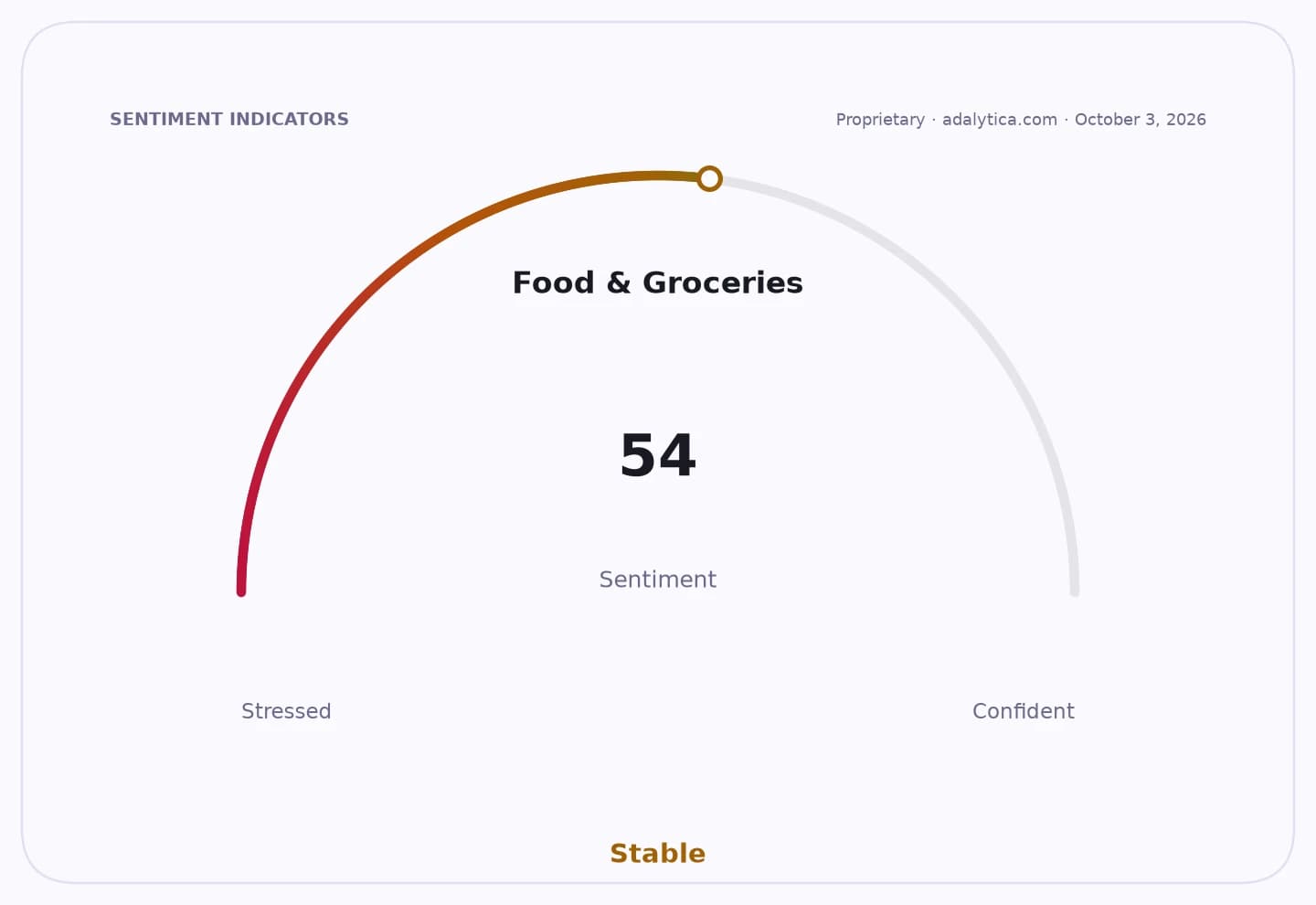
Coffee, butter and cheese have emerged as some of the most expensive everyday groceries South Africans buy, underscoring how inflation in high-value staples can hit households far harder than the headline cost of bulk starches and bread.
South Africa grocery prices hit coffee and butter
Current 2026 retail pricing shows coffee at about R430 a kilogram, premium butter at R380, cheese at R230 and sausage and cold cuts at R225, making these items far pricier per unit than the foods that anchor most diets. Beef at R170 a kilogram and olive oil at R150 a litre also sit well above mass-market staples, while rice at roughly R47 a kilogram and bread at R41 remain relatively cheaper. By contrast, milk is around R20 a litre and maize meal peaks near R22 a kilogram, or less than R10 a kilogram in a 10kg bulk bag.
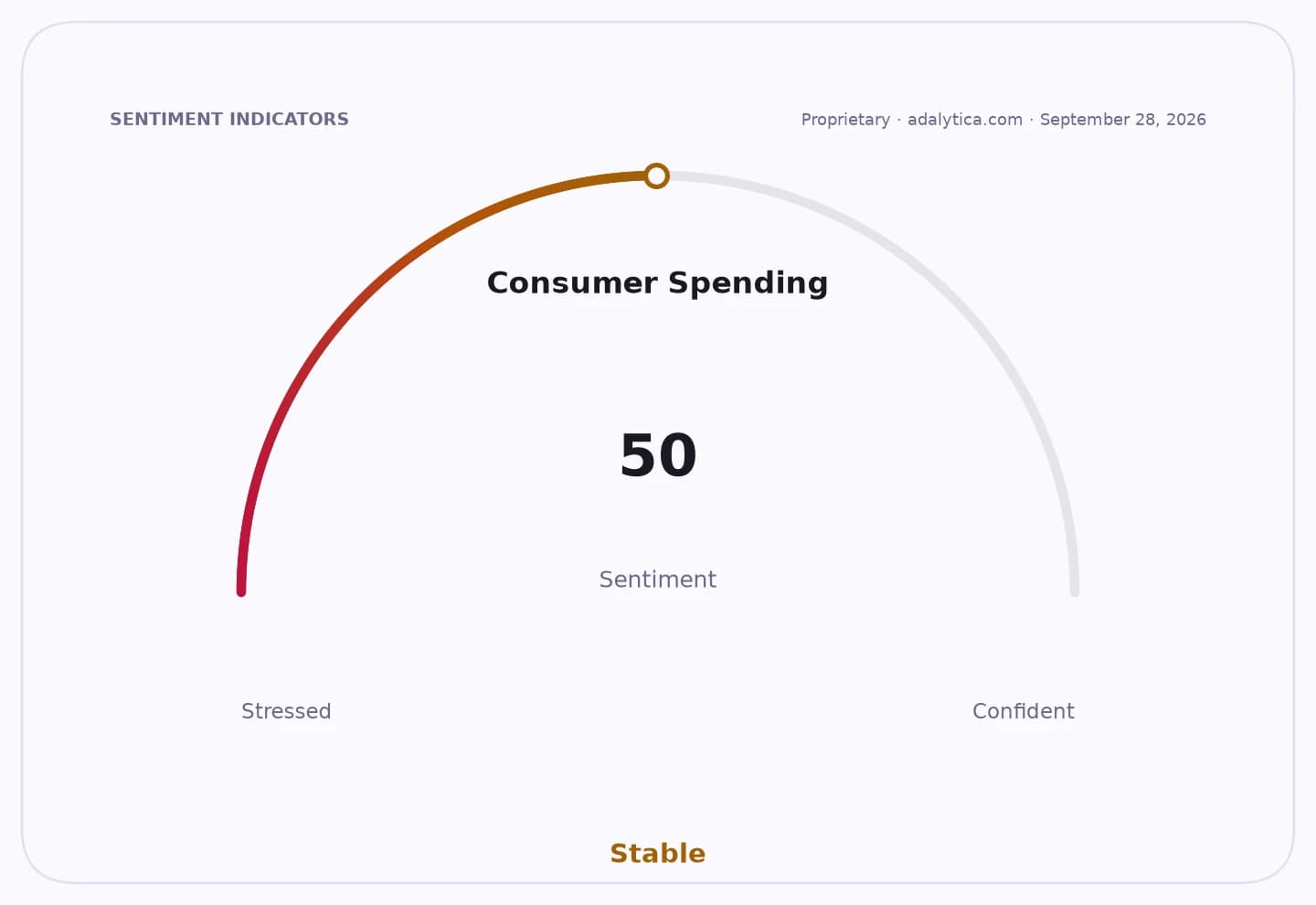
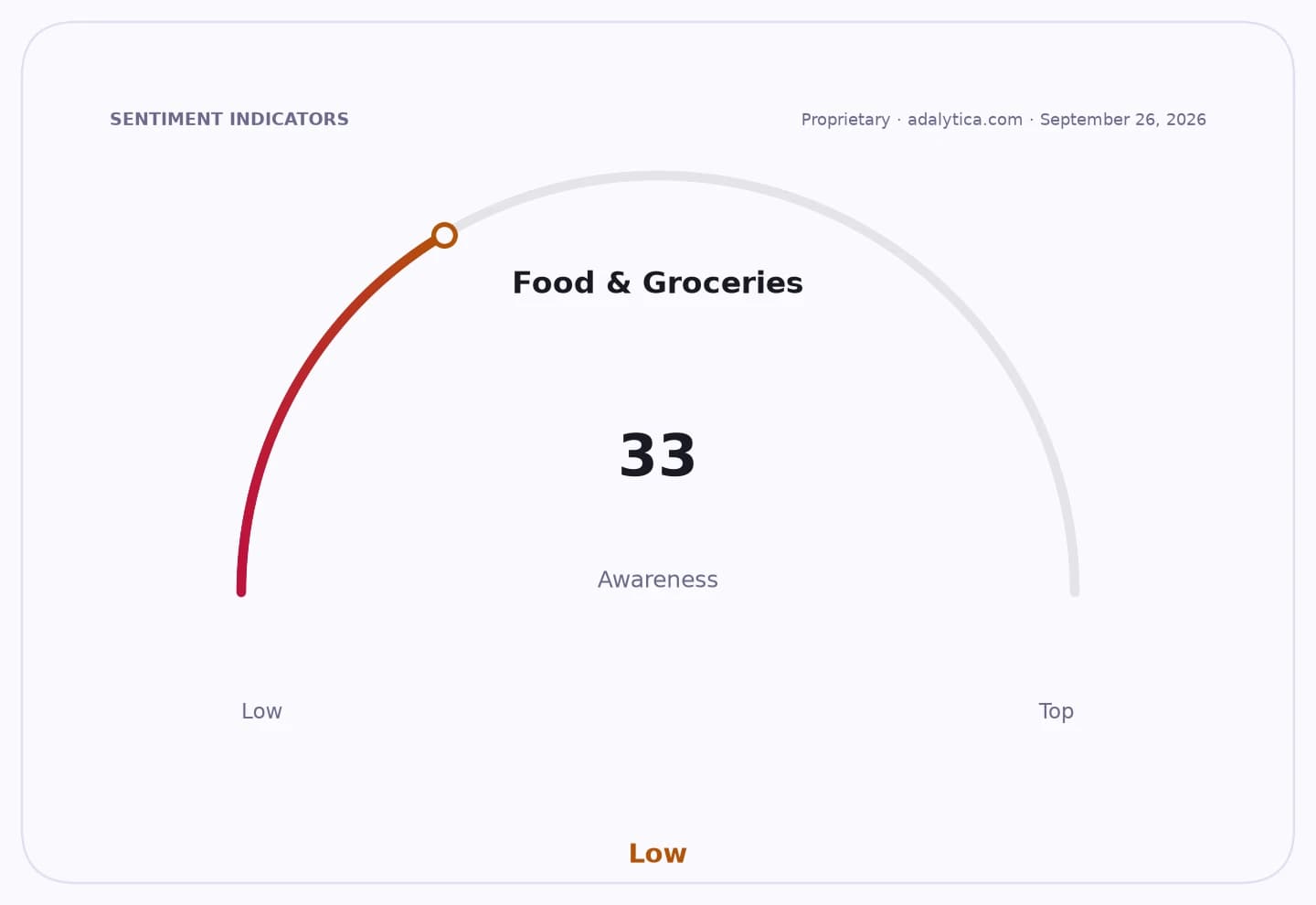
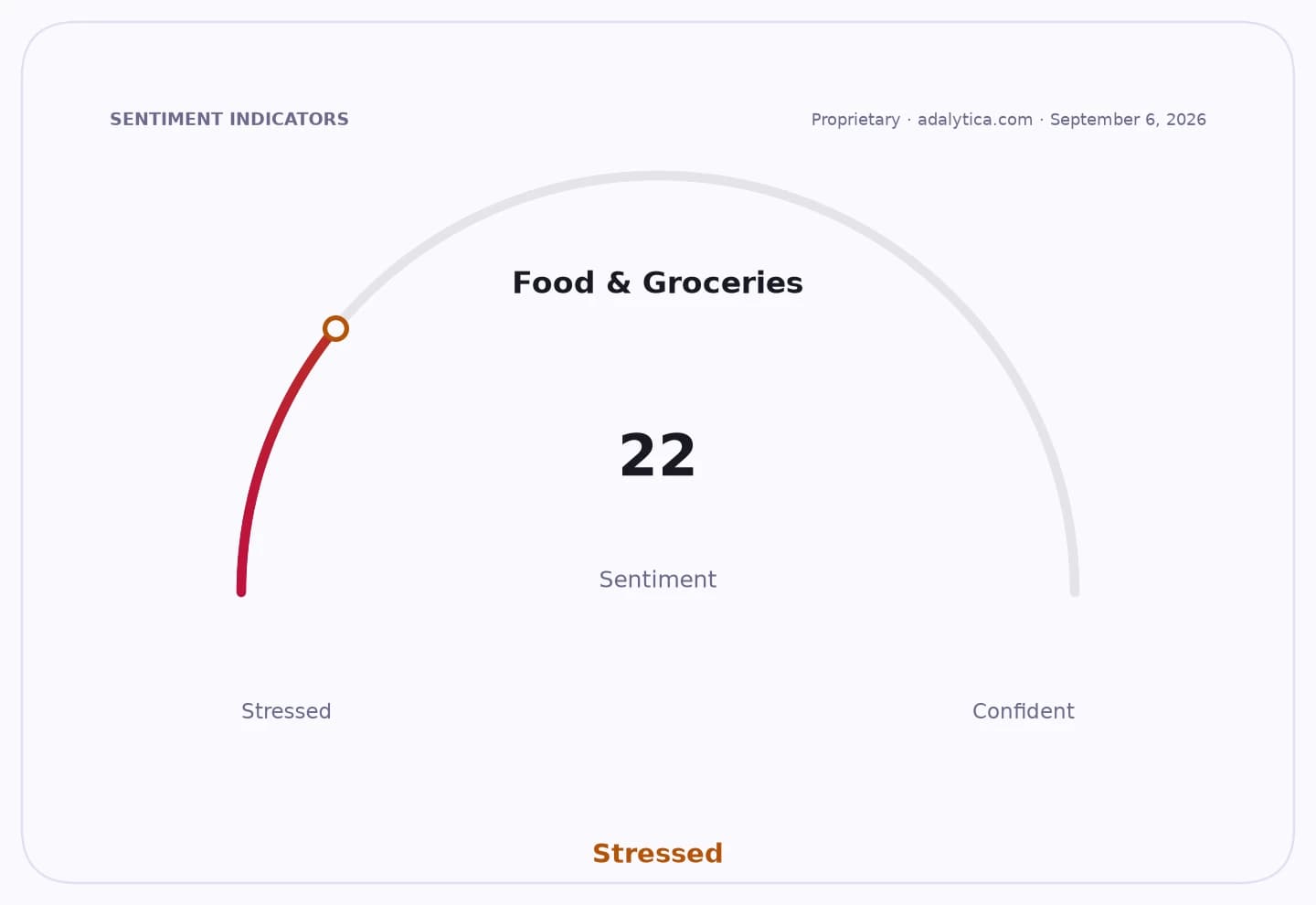
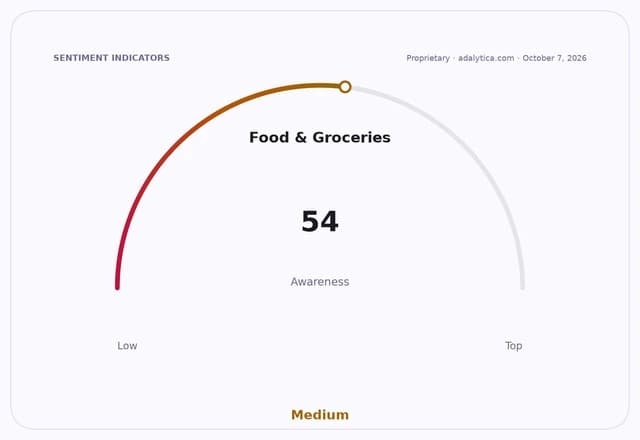
Sentiment IndicatorsⓘProprietary · adalytica.com · October 7, 2026
This is a snapshot — live sentiment, awareness and momentum for 130+ markets update continuously in the dashboard.Open AlphaPulse
That spread matters because it captures a broader truth about food inflation: not all staples move together, and the pressure on consumers is increasingly concentrated in discretionary-but-common items rather than in the cheapest calories. In a country where many households stretch budgets across both formal supermarkets and informal traders, the gap between small-pack retail pricing and bulk pricing can determine whether shoppers trade down, cut volumes or simply absorb the increase.
The economics are especially striking when measured against fuel. At the current upper-end estimate, coffee costs roughly 100 times more per kilogram than petrol on a volume basis, while premium butter sits in the same league. That comparison is crude, but it illustrates how branded, imported or highly processed foods can become inflation outliers even when other costs are more stable. It also helps explain why consumer sentiment around grocery spending can turn sharply sour even without a broad-based food crisis.
For investors, the story points to a persistent strain on South African consumers rather than a one-off pricing spike. Retailers with exposure to low-income shoppers may continue to see trading-down, basket compression and a preference for promotional lines, while suppliers of premium dairy, coffee and edible oils may retain pricing power if demand proves inelastic. The dynamic also reinforces the importance of food inflation, exchange rates and input costs for the wider consumer sector.
Global food markets add another layer. Food prices have risen for a third straight month worldwide, with climate disruption, geopolitical tensions and supply-chain frictions keeping the outlook volatile. That suggests South African shoppers are not just facing local markups, but a global cost backdrop that can keep prices elevated even when domestic demand is weak.
The key risk is that the burden falls unevenly: households can usually cut back on coffee, butter and processed meats, but they have far less flexibility on bread, rice and maize meal. That means the sharpest pain may show up not in headline inflation prints alone, but in deteriorating disposable income, weaker volumes for premium grocery categories and a continued shift toward cheaper bulk purchases.
| Entity | Gains | Losses |
|---|---|---|
| Premium food suppliers | ▲Higher unit pricing | ▼Volume-sensitive shoppers |
| Bulk retailers | ▲Bigger value-seeking traffic | ▼Small-pack margin mix |
| South African households | ▲Cheaper bulk staples | ▼Daily grocery budgets |
| Consumer-facing retailers | ▲Trade-down traffic | ▼Premium basket growth |