EUR/USD is pinned near 1.10 as investors weigh the prospect of another Federal Reserve rate increase against a fresh surge in geopolitical risk that is pushing the dollar higher across global markets.
EUR/USD near 1.10 as dollar stays firm

The pair has been drifting lower alongside a firmer greenback, with the dollar index ETF UUP rising to 29.56 and still above its 50-day and 200-day moving averages, while the euro ETF FXE is stuck near 101.48, below both key trend lines. That divergence underscores a market still favoring the dollar as U.S. yields stay elevated and the Fed remains on a tightening bias, with the benchmark federal funds rate at 3.88% and the 10-year Treasury yield at 5.12%.
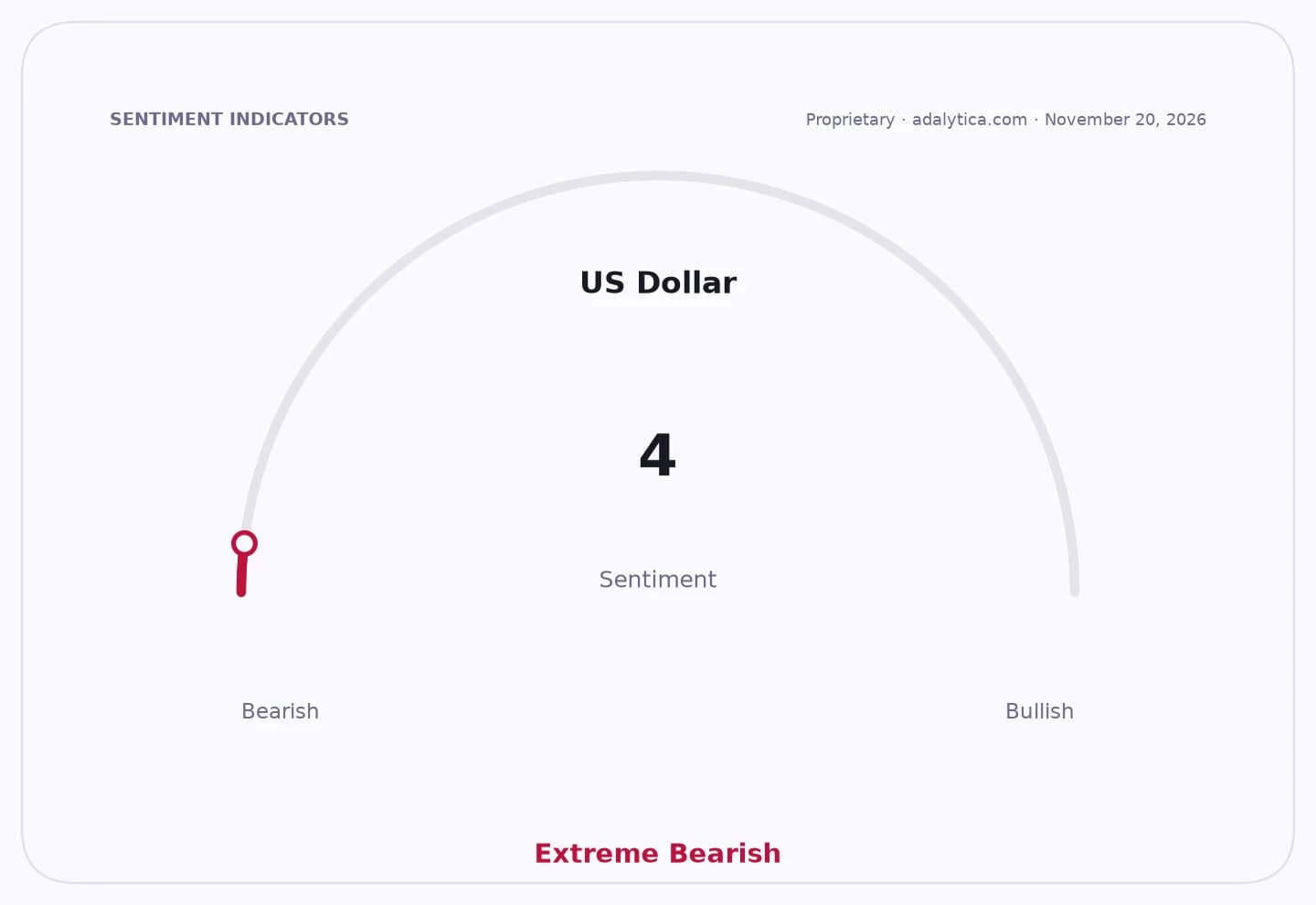
Sentiment Indicators

The move matters because a stronger dollar tightens financial conditions globally, raises the cost of dollar funding and adds pressure to emerging markets already dealing with imported inflation. For Europe, a weaker euro can cushion exporters, but it also raises the price of energy and other dollar-denominated imports, complicating the European Central Bank’s inflation fight.
Technical indicators also lean against the euro. EUR/USD is trading around 1.10, below its 50-day moving average near 1.13 and 200-day average near 1.15, while RSI readings remain soft and MACD stays negative, suggesting momentum is still tilted toward dollar strength rather than a clean euro recovery.
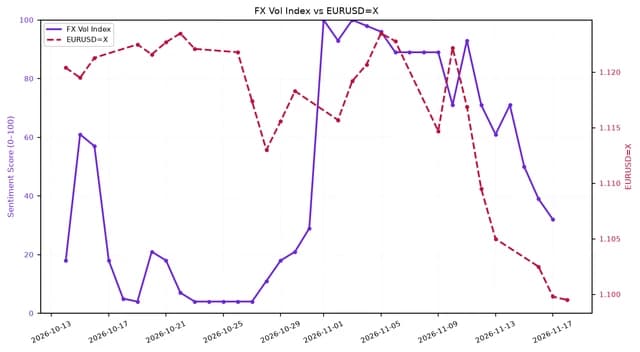
Geopolitical anxiety is reinforcing the move. Adalytica’s global stability gauge sits at 4 on a 100-point scale, labeled extreme fear, while its dollar trading signals show fear at 30. That combination usually supports the dollar as investors seek liquidity and perceived safety, especially when rates are already working in the currency’s favor.
For investors, the key question is whether the euro can hold current levels if U.S. yields stay near cycle highs and geopolitical stress intensifies. A break lower in EUR/USD would feed further dollar strength, while any pullback in Treasury yields or easing in geopolitical tension could open the door to a short-covering bounce in the single currency.
| Entity | Gains | Losses |
|---|---|---|
| U.S. dollar | ▲Safe-haven demand, yield support | ▼Euro buyers |
| EUR/USD bears | ▲Momentum continuation | ▼Euro bulls |
| U.S. exporters | ▲Stronger dollar competitiveness abroad | ▼Importers paying more abroad |
| European consumers/importers | ▲— | ▼Higher dollar-priced import costs |