The Euribor’s rise to 3.247% in September is keeping mortgage payments high for thousands of households in the Valencian Community, limiting the relief borrowers had expected after last year’s peak in borrowing costs.
Euribor 3.247% Keeps Spanish Mortgage Payments High
For families in Alicante, Castellón and Valencia with variable-rate loans due for reset, the new benchmark means monthly bills are easing only slowly, or in some cases ticking back up. On a typical 150,000-euro mortgage over 25 years with a 1-point spread, the monthly payment would be about 813 euros at a 4.247% borrowing rate, still roughly 60 to 70 euros a month below the levels seen a year ago, but far from a return to cheap credit.
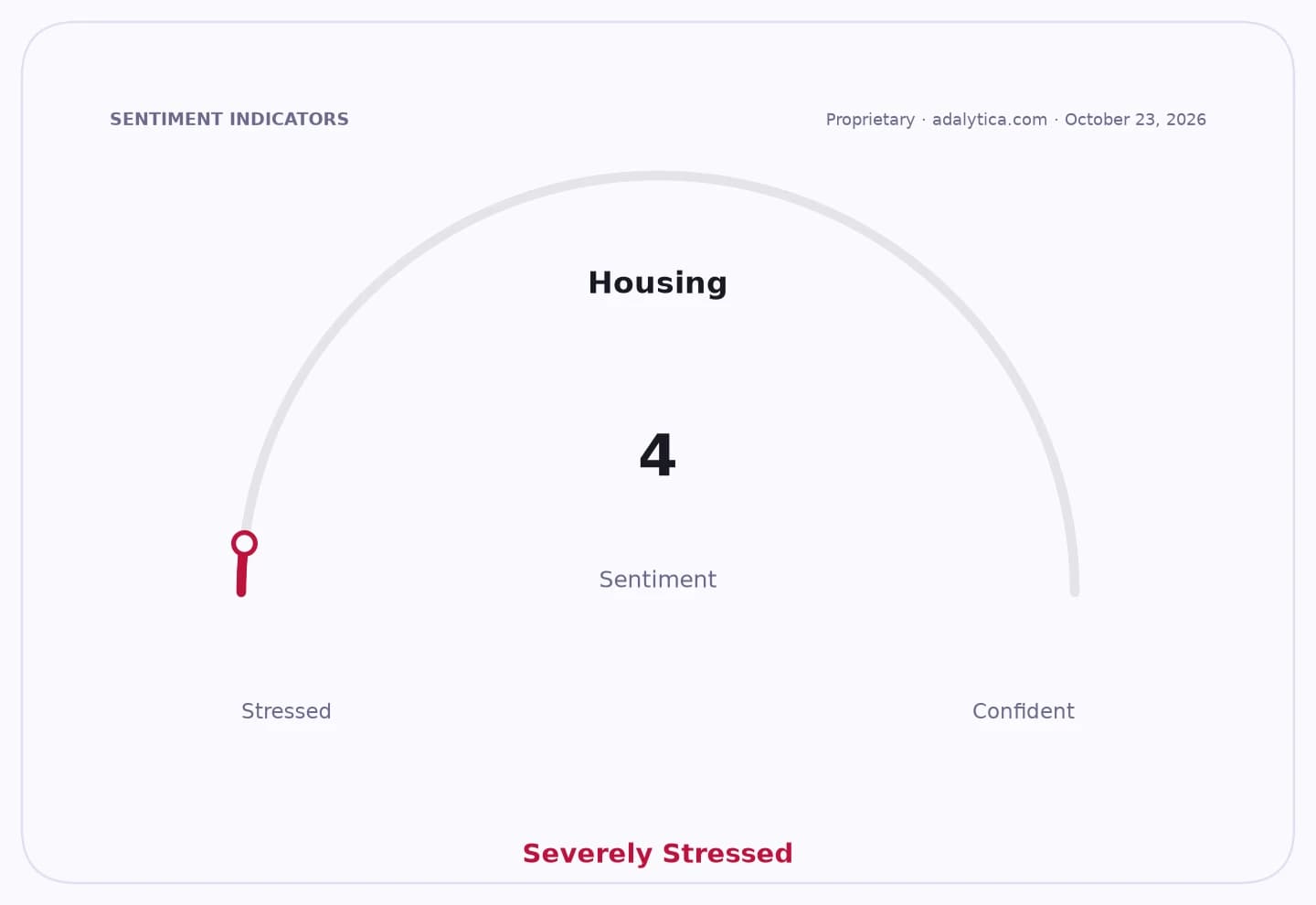
Sentiment IndicatorsⓘProprietary · adalytica.com · October 23, 2026
This is a snapshot — live sentiment, awareness and momentum for 130+ markets update continuously in the dashboard.Open AlphaPulse
The move matters economically because the Euribor remains the reference rate for much of Spain’s floating-rate mortgage market, so even a small increase feeds directly into household disposable income and regional consumption. A plateau in interbank rates also suggests the European Central Bank is moving cautiously, with persistent services inflation in the euro area slowing the pace of monetary easing.
That leaves borrowers in a familiar squeeze: annual resets still offer savings versus the 4%-plus peaks of a year ago, but semiannual reviews are now more likely to feel the slowdown in rate cuts immediately. For leveraged households, the difference between a falling and a sticky benchmark can determine whether payments free up cash for spending or keep budgets under pressure.
Consumers are increasingly being pushed toward refinancing strategies such as renegotiating spreads with their lender, switching banks or moving into mixed-rate mortgages that lock in fixed payments for the first five or 10 years. The three-month Euribor, at 2.642% in mid-October, remains more than 60 basis points below the one-year rate, underscoring how markets are pricing a cautious path for rates rather than a quick drop.
For investors, the story reinforces the split between lenders that benefit from still-elevated borrowing costs and households that remain constrained by debt servicing. It also keeps attention on banks with heavy Spanish mortgage exposure, including BBVA, which is due to report third-quarter results on Oct. 29 after DBRS changed its outlook to stable from positive.
| Entity | Gains | Losses |
|---|---|---|
| Banks | ▲Higher lending spreads | ▼Mortgage demand pressure |
| Variable-rate borrowers | ▲Still below 2024 peaks | ▼Elevated monthly payments |
| Valencian households | ▲Gradual relief vs. last year | ▼Less disposable income |
| BBVA and peers | ▲Steady interest income | ▼Refinancing and affordability risk |