The euro and U.S. dollar were mostly steady in Albania on Thursday, a sign that foreign-exchange markets are still waiting for the next clear signal from U.S. labor data and interest-rate expectations.
Euro, dollar mostly steady in Albania
For Albanian households and businesses, that calm matters because imported fuel, food and consumer goods are priced in currencies that can move quickly when the dollar strengthens or weakens. A quieter market can ease pressure on costs, while a sharper swing can ripple through prices, margins and savings decisions.
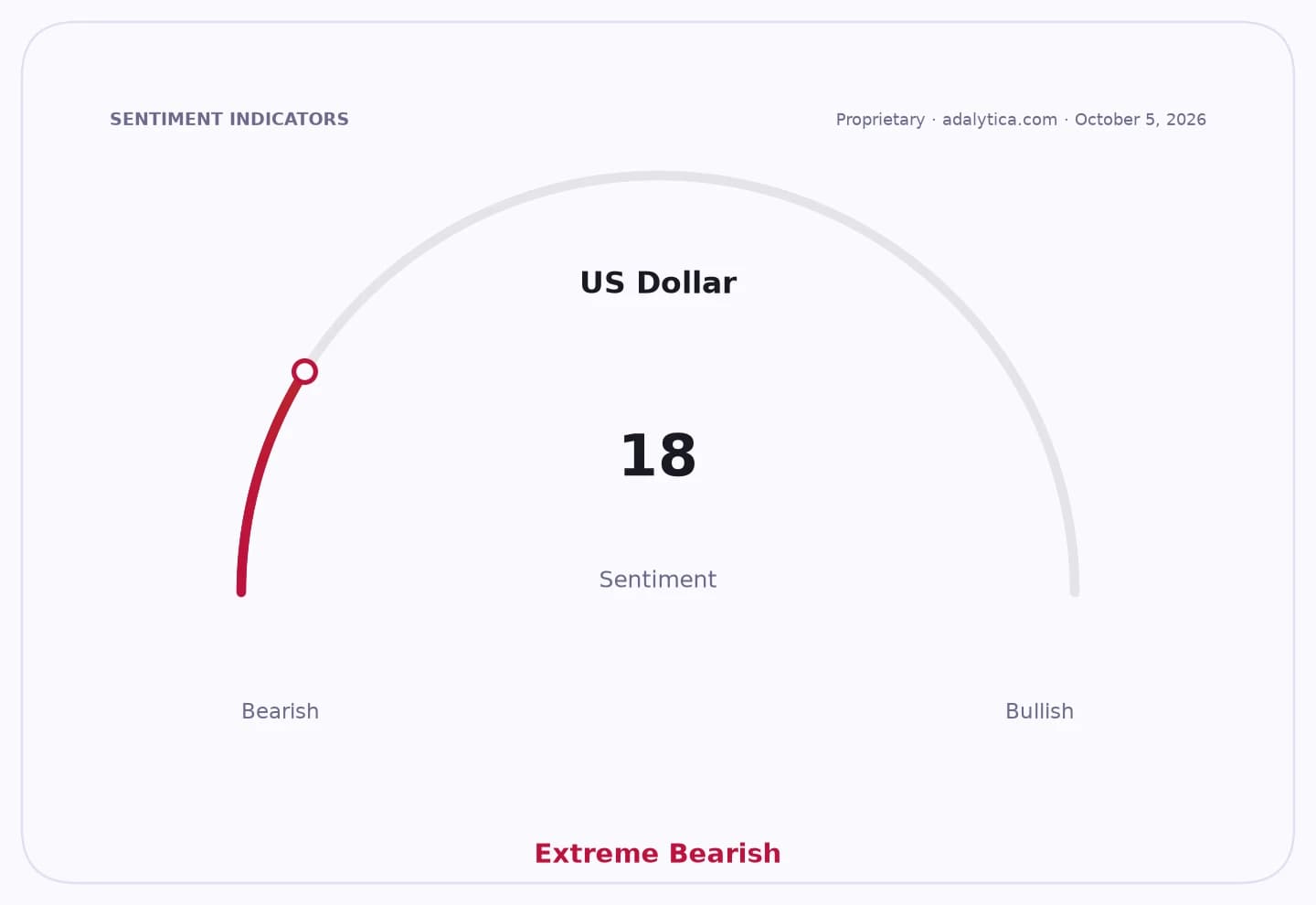
Sentiment IndicatorsⓘProprietary · adalytica.com · October 4, 2026
This is a snapshot — live sentiment, awareness and momentum for 130+ markets update continuously in the dashboard.Open AlphaPulse
In local trading, the dollar was bought at 81.1 lekë and sold at 82 lekë, while the euro was bought at 91.6 lekë and sold at 92.3 lekë. The Swiss franc was quoted at 97.8 lekë to buy and 98.8 lekë to sell, and sterling at 107.3 lekë and 108.3 lekë.
The broader message is that currency markets are still being driven less by domestic noise and more by global rate politics. Investors remain focused on whether the Federal Reserve keeps policy restrictive for longer, or whether cooling growth and softer labor conditions give it room to ease. That matters because the dollar’s direction often sets the tone for everything from emerging-market capital flows to the cost of servicing foreign-currency liabilities.
The euro’s own trading picture is mixed. Euro exchange-traded fund FXE slipped to $103.82 on Oct. 2, below both its 50-day and 200-day moving averages, with the relative strength index at 12.9, a level that suggests the fund has been heavily sold in recent sessions. By contrast, the yen ETF FXY was at $58.07, roughly back to its 50-day and 200-day moving averages, indicating a more balanced market there.
Adalytica’s Euro Trade Signals snapshot showed sentiment at 29, labeled fear, even as awareness remained extremely high, a reminder that attention is intense even when conviction is weak. The U.S. dollar signal was also in fear territory, with sentiment at 16, underscoring the market’s caution rather than a clear bullish or bearish consensus.
For investors, that kind of setup usually argues for patience rather than prediction. Currencies can stay range-bound until a single macro trigger breaks the stalemate, and when they do move, they can reprice quickly across bonds, stocks and commodity markets. For long-term portfolios, the better question is not whether the euro or dollar wins today, but which businesses can keep generating cash no matter where exchange rates go next.
The Albanian rate board will likely stay sensitive to that global backdrop. If U.S. data reinforce the case for higher-for-longer rates, the dollar could regain traction and keep pressure on import costs. If growth slows and rate cuts come into view, the euro and other major currencies could recover some ground. Either way, foreign-exchange investors should keep this on the watchlist.
| Entity | Gains | Losses |
|---|---|---|
| Albanian importers | ▲Lower FX volatility | ▼Faster cost inflation |
| Albanian consumers | ▲More stable prices | ▼Imported goods costs |
| U.S. dollar bulls | ▲Haven demand if data weaken | ▼Softer rate expectations |
| Euro holders | ▲Possible rebound if Fed eases | ▼Near-term momentum traders |