Euro zone government bond yields climbed to fresh multi-year highs ahead of inflation data, underscoring how quickly the market is repricing the path for European Central Bank policy and the cost of capital across the region.
Euro zone bond yields rise ahead of inflation data

The move matters because higher sovereign yields are not just a bond-market story: they feed directly into mortgage rates, corporate borrowing costs and equity valuations, while also making it harder for highly indebted governments to finance deficits. With the euro zone inflation print due, traders are positioning for a reading that could keep the ECB cautious longer than investors had hoped.
Sentiment IndicatorsⓘProprietary · adalytica.com · September 1, 2026
This is a snapshot — live sentiment, awareness and momentum for 130+ markets update continuously in the dashboard.Open AlphaPulse

The benchmark 10-year U.S. Treasury yield was last around 4.73%, while the 2-year note yielded 4.34%, a reminder that developed-market debt is still under pressure from sticky inflation expectations. In Europe, that backdrop is forcing investors to demand more compensation for duration risk, particularly after a July euro zone inflation rate of 2.9% highlighted the persistence of energy-driven price pressures.
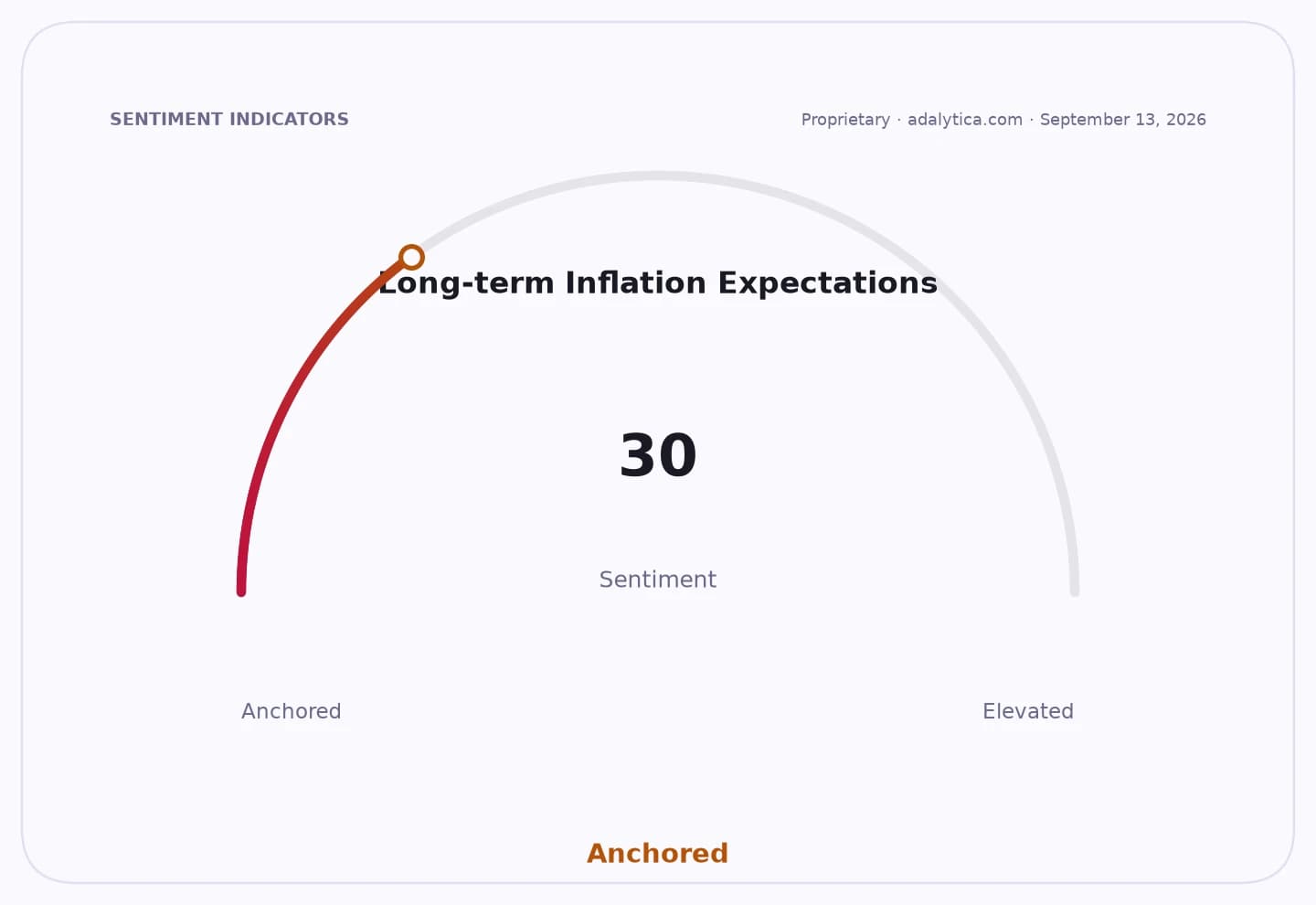
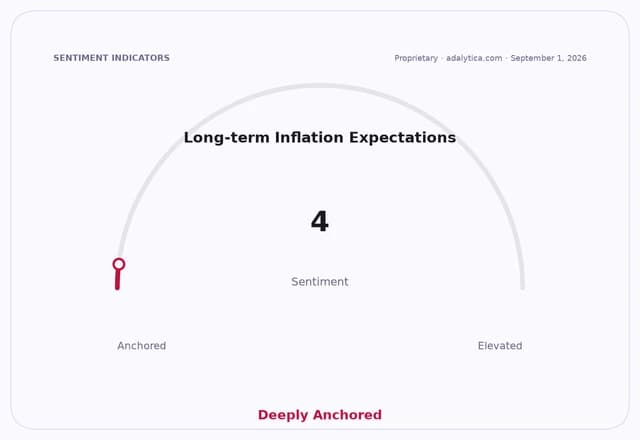
That inflation stickiness is exactly what is keeping central banks from declaring victory. Adalytica’s long-term inflation expectations gauge was in “Extreme Fear” at 4, while confidence in the Fed’s 2% target sat at 30, and the 5-year breakeven sentiment measure was also at 4. Those readings capture a market still uneasy that inflation may prove more durable than policymakers want.
Long-term Inflation Expectations — 30-day sentimentadalytica.com
Explore this data interactively — full history, time series and cross-market comparisons.Open AlphaPulse
For investors, the implications are immediate. Bond-heavy portfolios face a tougher tape, and rate-sensitive equities can struggle when yields push higher. U.S. intermediate Treasuries, tracked by the IEI ETF, closed at 116.17 and remain only modestly above both their 50-day and 200-day moving averages, while the broad bond market proxy BND ended at 72.24, leaving little cushion if yields keep rising. By contrast, euro zone stocks, represented by the EZU ETF, have held up better, but higher yields can eventually bite valuations there too.
The deeper thesis is that the market may be underestimating how long inflation and financing costs stay elevated. If the upcoming euro zone data confirms another hot print, the ECB will have less room to ease, sovereign yields could extend their climb, and the pressure shifts to the most leveraged borrowers and the most duration-sensitive assets. For investors, the play is still to favor pricing power, short-duration income and balance-sheet strength over long-dated assets that need falling rates to justify their multiples.
| Entity | Gains | Losses |
|---|---|---|
| Euro zone lenders | ▲Higher net interest margins | ▼Borrowers seeking cheaper credit |
| Short-duration bond funds | ▲Less duration risk | ▼Long-duration bond holders |
| Banks and insurers | ▲Better reinvestment yields | ▼Rate-sensitive equities |
| Highly indebted governments | ▲None | ▼Higher refinancing costs |