Inflation in the euro zone picked up to 3.2% in August, a reminder that price pressures are still too hot for the European Central Bank to declare victory and start easing policy.
Euro zone inflation rises to 3.2% in August

That matters because the ECB is trying to thread a difficult needle: cool inflation without choking off an economy that is already fragile. August’s reading was above July’s 2.9% and well over the central bank’s 2% target, keeping alive the case for another rate increase if officials conclude inflation is becoming more entrenched than they want.
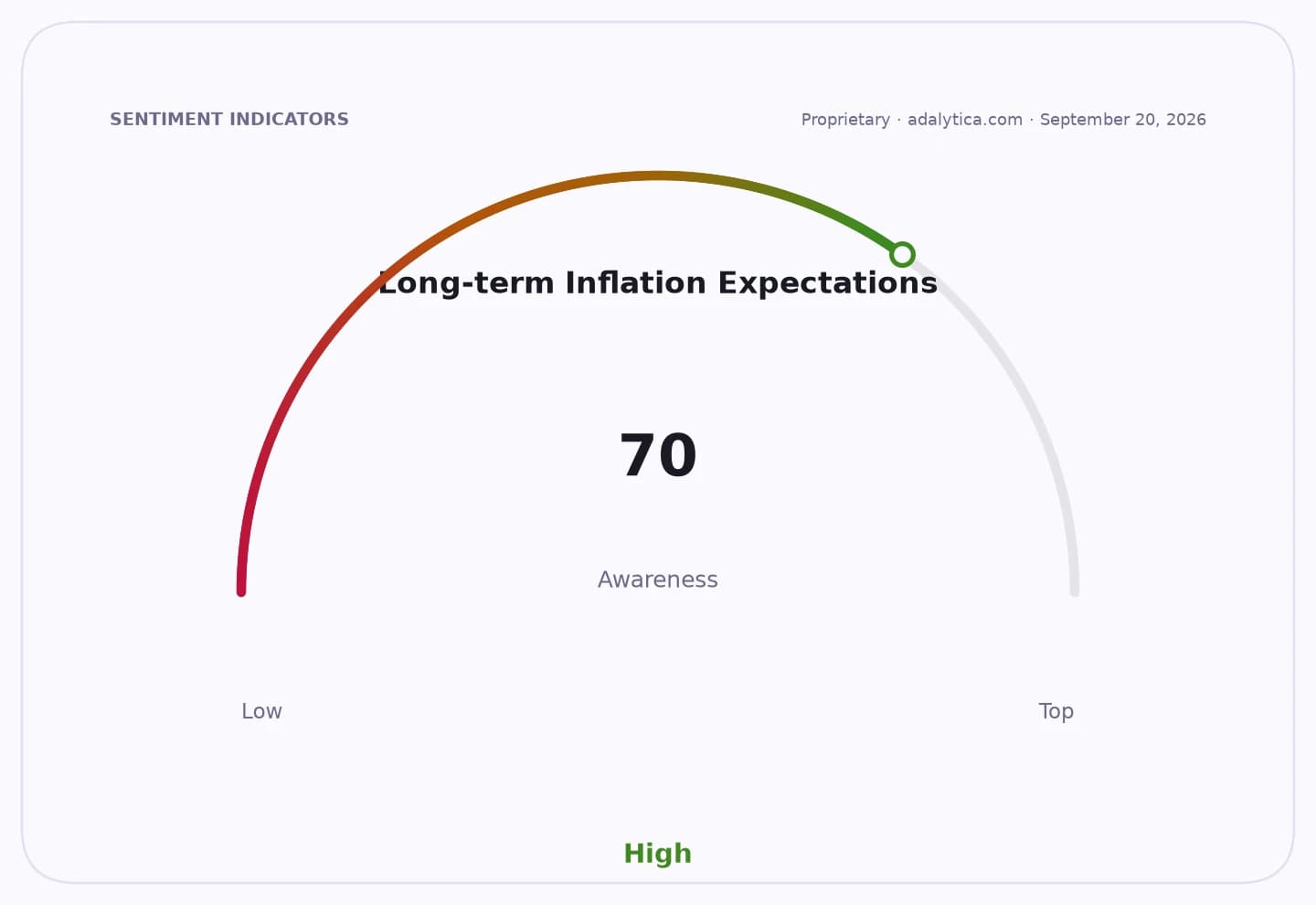
Sentiment IndicatorsⓘProprietary · adalytica.com · September 18, 2026
This is a snapshot — live sentiment, awareness and momentum for 130+ markets update continuously in the dashboard.Open AlphaPulse
Portugal showed why the picture across the currency bloc is still uneven. Annual inflation there climbed to 3.6%, putting it 0.4 percentage points above the euro zone average. Across the European Union, inflation also rose to 3.2%, up from 3.0% in July, underscoring that this is not a one-country problem but a broader European pricing issue.
The composition of inflation is just as important as the headline number. Services were the biggest contributor in the euro zone, adding 1.43 percentage points, followed by energy at 1.29 points. Food, alcohol and tobacco added another 0.22 points. For investors, that mix is a warning sign: service inflation tends to be stickier than volatile goods prices, while energy costs can ripple through the economy and keep pressure on corporate margins.
That is why bond traders, equity investors and currency markets will keep leaning on every new euro zone print. Higher-for-longer interest rates support the euro and can weigh on rate-sensitive sectors such as housing, utilities and small caps, while helping banks by protecting net interest margins. The flip side is that tighter policy can slow growth and squeeze companies that depend on cheap financing or consumer spending.
The regional spread also matters for policy. Sweden posted just 0.3% inflation, while Romania, Lithuania and Cyprus were among the highest. That divergence makes it harder for the ECB to satisfy every member state with one rate setting, especially when inflation is still running above target in the bloc’s core economies.
For long-term investors, the takeaway is straightforward: the euro zone is not yet out of the inflation woods. If price growth stays above target into the autumn, the ECB will remain under pressure to keep policy restrictive, and that will continue to shape returns across European equities, sovereign bonds and the euro itself. It is worth watching closely.
| Entity | Gains | Losses |
|---|---|---|
| ECB hawks | ▲Higher odds of tighter policy | ▼More room for patience |
| Euro currency | ▲Support from higher-rate expectations | ▼Relief from easier policy |
| Banks | ▲Wider interest margins | ▼Slower loan growth |
| Consumers and rate-sensitive stocks | ▲Less immediate relief | ▼Higher borrowing costs |