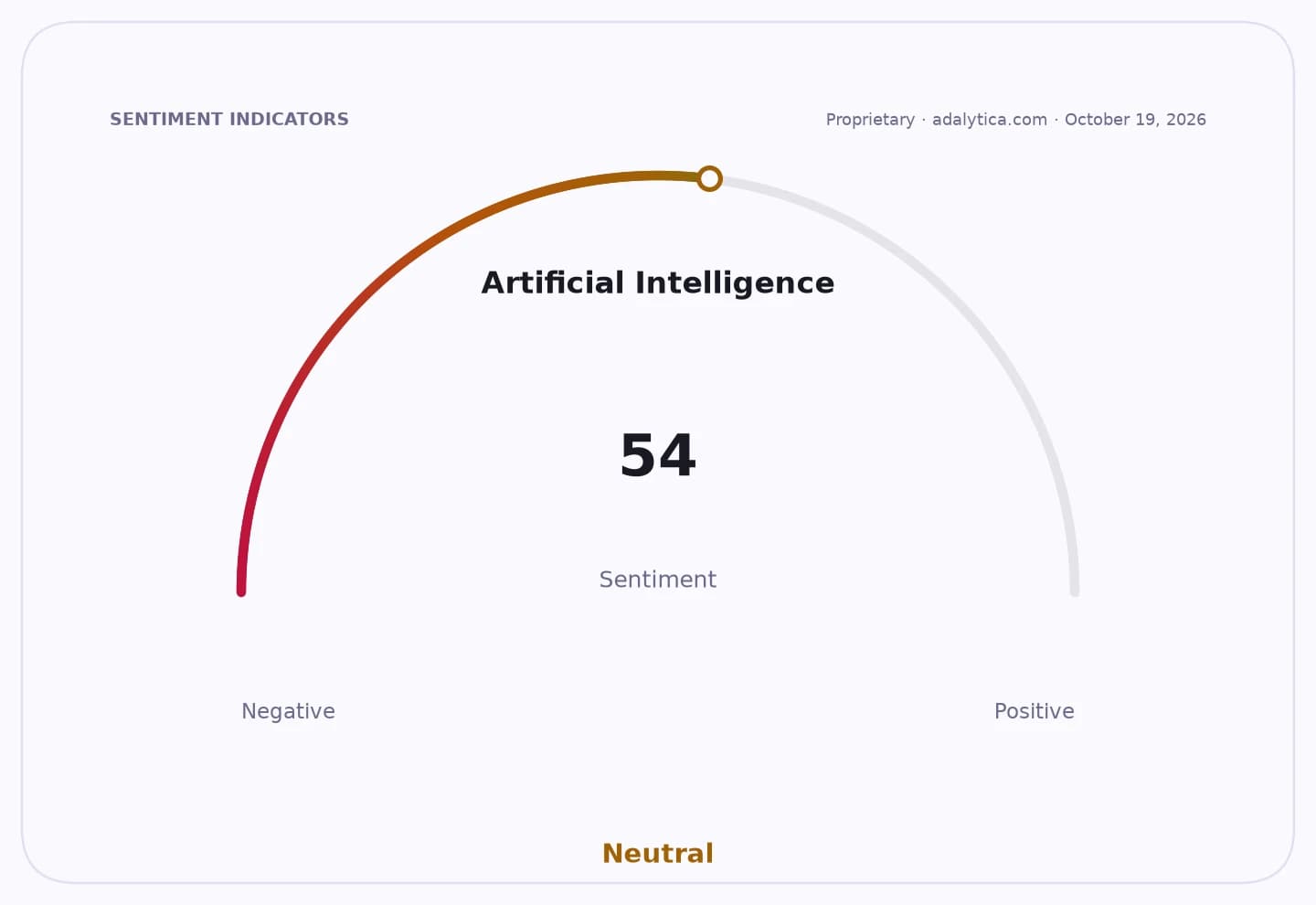
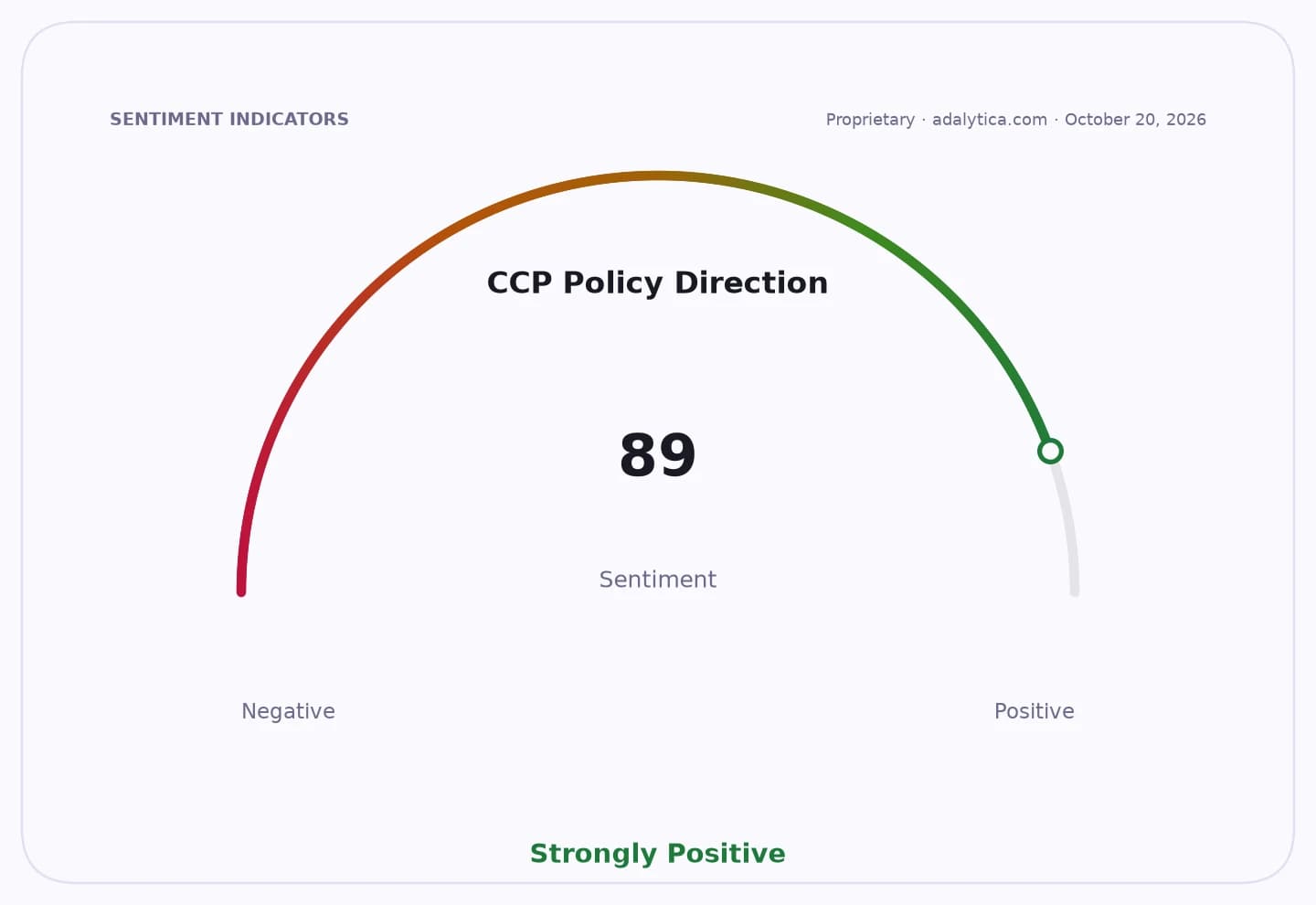
Europeans are using artificial intelligence more often, but the public is still leaning toward tighter oversight over faster growth, a political backdrop that could shape how quickly the region’s AI market expands and how costly compliance becomes for Big Tech.
Europeans Use AI More but Want Tighter Oversight
A YouGov survey across seven EU countries found nearly half of Europeans have already used AI tools, with usage highest in the Netherlands at 64% and Spain at 61%. Yet most respondents said regulating AI matters more than encouraging its development, underscoring a cautious consumer mood even as the technology becomes more mainstream.
Sentiment IndicatorsⓘProprietary · adalytica.com · October 20, 2026
This is a snapshot — live sentiment, awareness and momentum for 130+ markets update continuously in the dashboard.Open AlphaPulse
That tension matters economically because Europe is trying to build a bigger AI ecosystem without losing public trust. If voters prefer guardrails to speed, regulators are likely to keep pressure on firms rolling out AI models, cloud services and consumer tools, adding friction to commercialization but potentially reducing backlash over privacy, safety and misinformation.
The survey also suggests the region is not uniformly pessimistic. Roughly half of Spaniards and 48% of Romanians see a positive impact on Europe’s economic growth, while only 22% of French respondents agree, highlighting uneven appetite for the technology’s role in productivity gains.
Even so, confidence in Europe’s own tech base remains surprisingly firm. Nearly half of those surveyed said European technology companies can compete with U.S. rivals, though many still see China as ahead, a reminder that the debate is not just about rules but about whether Europe can scale AI without ceding ground in the global race.
For investors, that points to a two-track setup: demand for AI tools remains intact, but policy risk stays elevated for companies with heavy European exposure, including Microsoft, Nvidia and Alphabet. The EU’s AI Act is already a reference point in corporate filings, and stricter public sentiment could keep compliance costs, legal scrutiny and product restrictions in focus as adoption rises.
The next test is whether Europe’s regulators respond to that public preference with fresh enforcement, or whether companies can convert rising usage into durable revenue growth before the rulebook tightens further.
| Entity | Gains | Losses |
|---|---|---|
| European consumers | ▲More AI access | ▼Fewer protections if rules weaken |
| EU regulators | ▲Public support for oversight | ▼Slower AI rollout |
| Microsoft, Nvidia, Alphabet | ▲Growing AI demand | ▼Higher compliance costs |
| European tech firms | ▲Credibility on competition | ▼Pressure from U.S. and China rivals |