AI will only turn into lasting economic value if governments help connect research, universities and industrial supply chains, Emilia-Romagna Vice President Vincenzo Colla said, putting a policy spotlight on the real bottleneck in Europe’s artificial intelligence push: execution at scale.
Emilia-Romagna Pushes AI Adoption in Italian SMEs
That matters because the region is not talking about AI as an abstract innovation theme. It is talking about the practical plumbing behind competitiveness — labs, skills, manufacturing networks and the “ecosystem” that lets smaller companies turn technology into higher productivity and better margins. For Italy, where industrial strength still rests heavily on interconnected supplier chains, the message is that AI adoption cannot be left to a few large champions or isolated pilots.
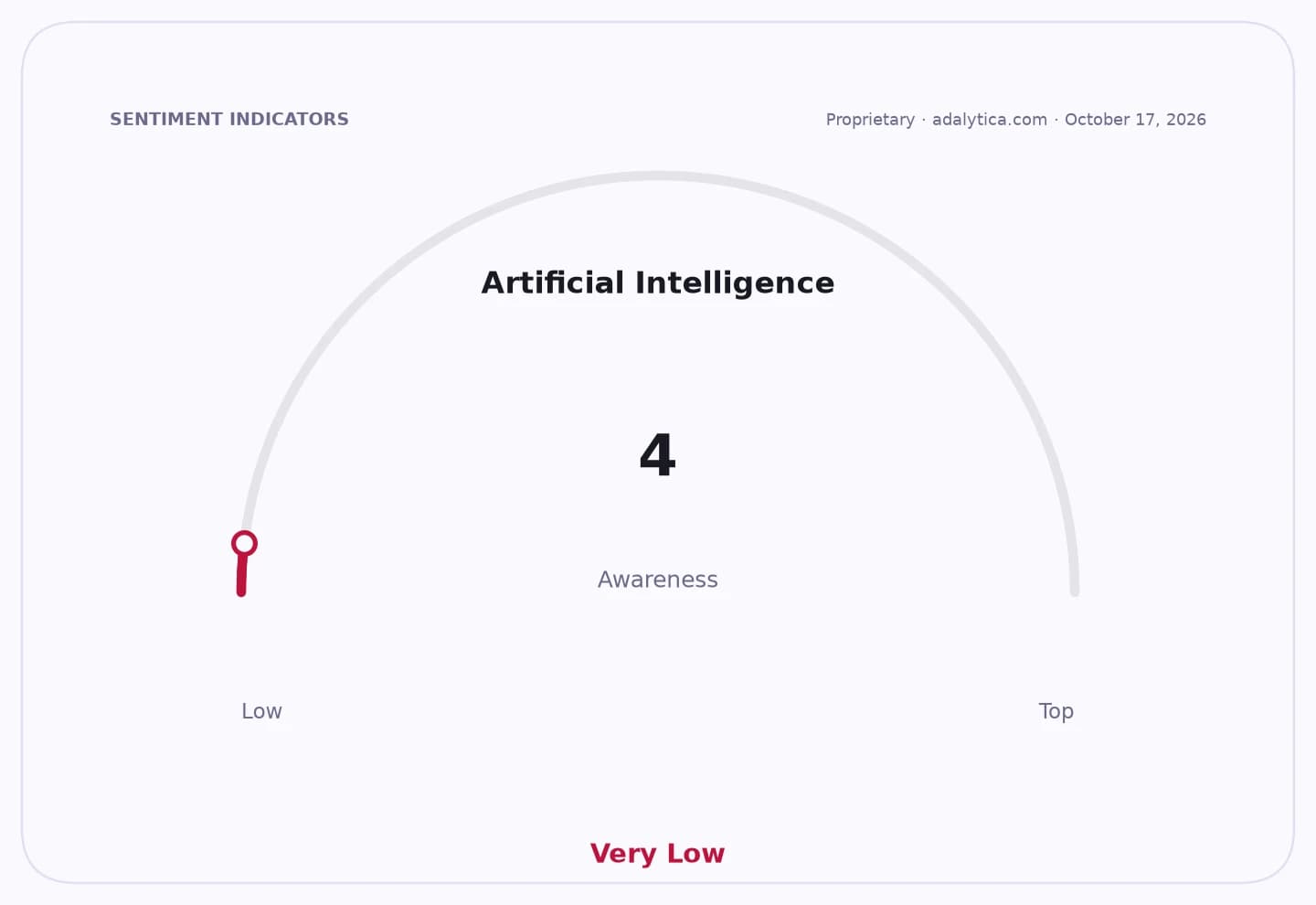
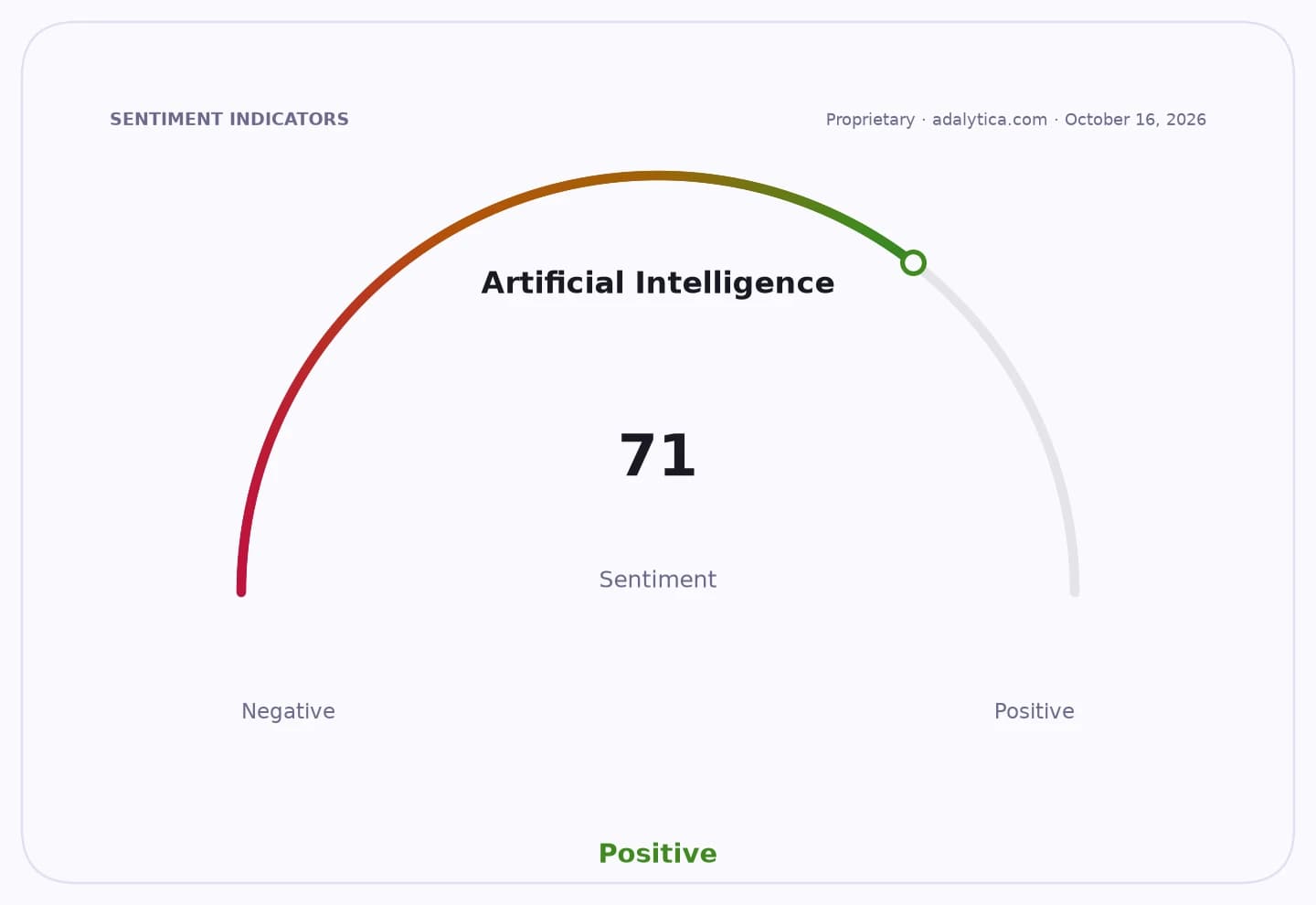
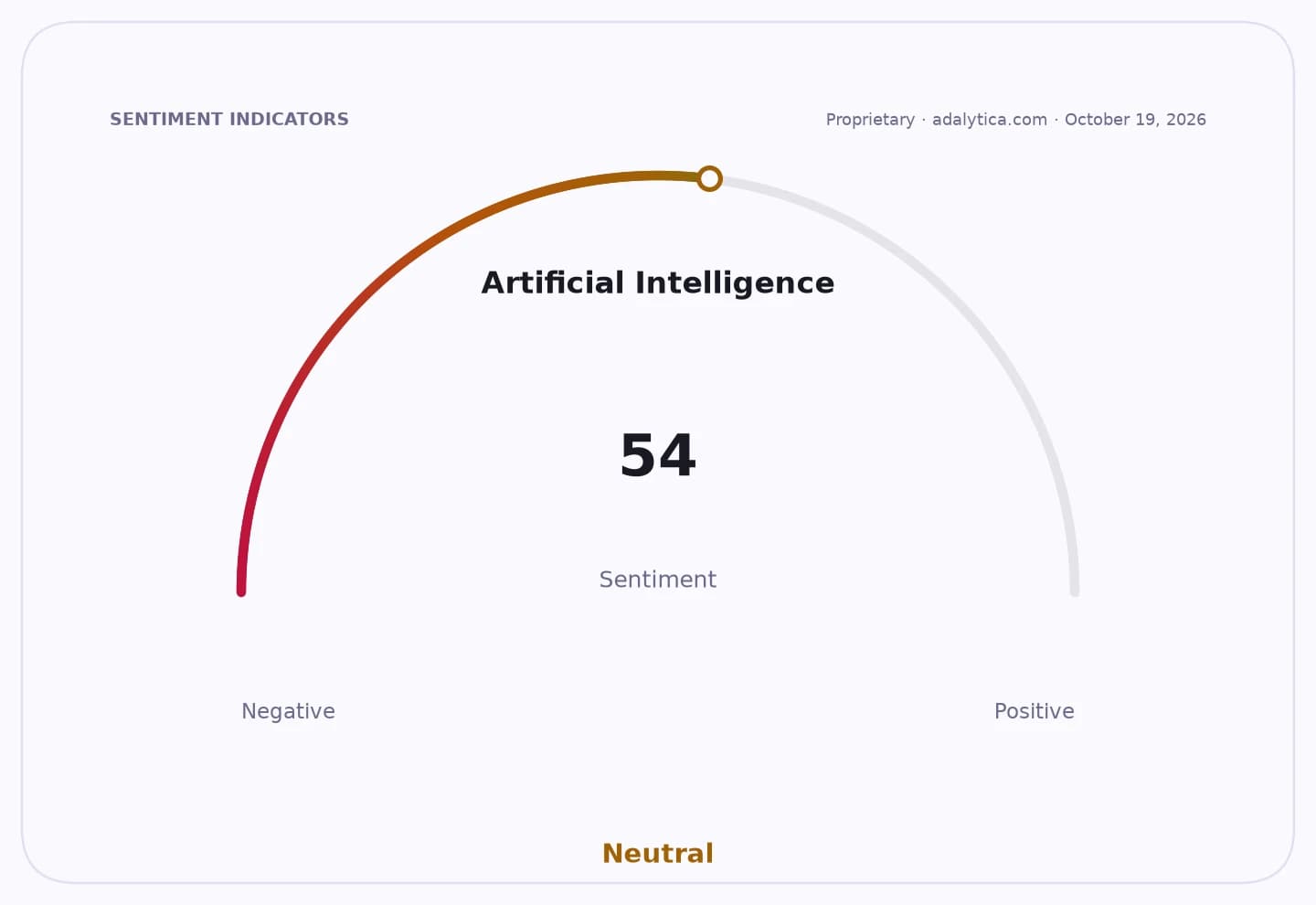
Sentiment IndicatorsⓘProprietary · adalytica.com · October 19, 2026
This is a snapshot — live sentiment, awareness and momentum for 130+ markets update continuously in the dashboard.Open AlphaPulse
Colla’s comments came at the presentation of a Nomisma study on AI adoption among Italian small and medium-sized companies, backed by UniCredit, in Castel San Pietro Terme near Bologna. His argument was simple: if supply chains lose competitiveness and know-how, even the global drivers of industry eventually run into trouble. In other words, AI is not just about software. It is about whether an economy can upgrade the entire value chain, from design and production to training and healthcare.
For investors, that is a useful reminder that the next phase of the AI boom may be less about hype and more about infrastructure. Winners are likely to include firms that supply the “picks and shovels” of adoption — semiconductors, industrial automation, cloud, data infrastructure and systems integration — as well as the banks and institutions financing modernization. The broader lesson also helps explain why companies such as Nvidia and Microsoft remain central to the story: demand for AI is increasingly tied to the health of the industrial and digital ecosystem around them, not just to flashy product launches.
The market backdrop underscores the point. Nvidia shares remain well above their 200-day moving average, even after recent volatility, while Microsoft has held onto a powerful long-term uptrend and remains a core beneficiary of enterprise AI spending. That does not mean investors should chase every AI name. It does mean the theme is still being judged on long-run earnings power, capital intensity and the ability to convert investment into durable productivity gains.
Colla’s emphasis on “making the ecosystem” also fits a wider European debate. If policymakers want AI to lift growth, they need to support research clusters, industrial partnerships and workforce training, not just regulate. The companies best placed to benefit are those with real distribution, manufacturing reach and repeatable use cases. The ones at risk are the businesses that treat AI as a side project or fail to modernize their supply chains.
For long-term investors, that makes AI less a trade than a compounding story. The most durable returns are likely to come from firms and regions that can turn experimentation into scale. Emilia-Romagna’s message is worth watching because it captures the next stage of the AI cycle: not whether the technology matters, but whether institutions and industry can build the machinery to profit from it.
| Entity | Gains | Losses |
|---|---|---|
| Italian SMEs | ▲Better AI adoption support | ▼Higher gap versus digital leaders |
| Regional institutions | ▲Stronger economic relevance | ▼Pressure to deliver results |
| AI infrastructure suppliers | ▲More demand for tools and systems | ▼Less if adoption stalls |
| Lagging supply chains | ▲Possible modernization | ▼Competitiveness erosion |