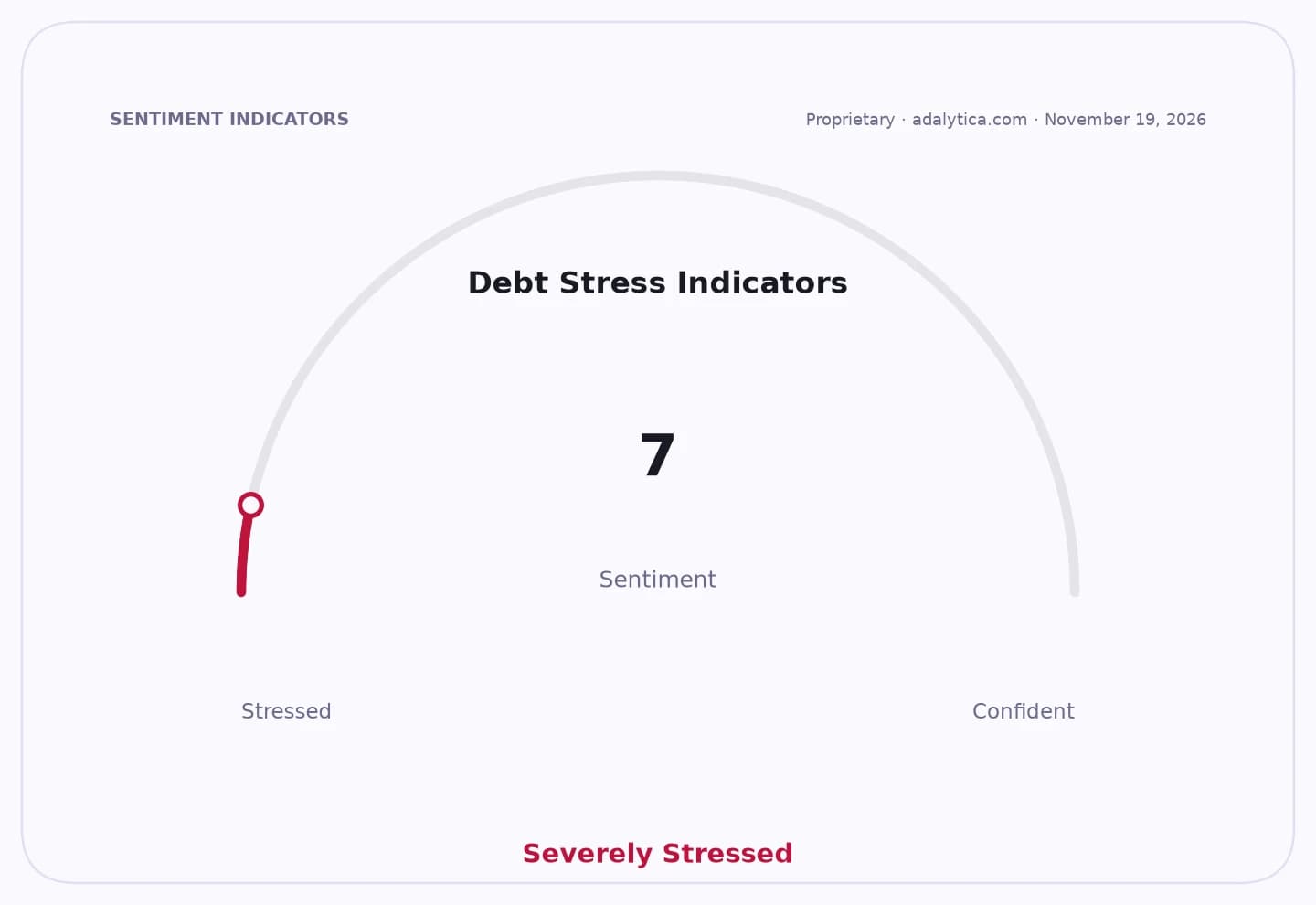
European lenders are starting to shut the door on overdrafts, even for balances of just 1 euro, as banks move to protect margins and rein in consumer risk in a more fragile credit environment.
Europe banks tighten overdraft access

That matters because overdrafts are one of the most visible forms of household liquidity backstop in Europe. When banks become stricter on short-term borrowing, it is usually a sign that credit officers are reassessing default risk, funding costs and regulatory scrutiny at the same time. For households already squeezed by higher living costs and weaker real incomes, the change can make everyday cash-flow stress more painful. For lenders, it is an early signal that the easy-money era is over and that profitability now depends more on discipline than on volume.
Sentiment Indicators
Euro
The shift also lands at a sensitive moment for the banking sector. Markets have been quick to punish any sign of balance-sheet weakness, and investors are watching whether lenders can keep credit losses contained while deposit competition remains intense. Adalytica’s Euro Trade Signals show neutral overall sentiment on the euro, while European Central Bank policy sentiment has turned more cautious, with awareness around the ECB still flagged at extreme fear. In other words, the market is not pricing a full-blown credit event, but it is clearly on alert for one.
For investors, that creates a split-screen trade. Banks that can tighten underwriting, defend net interest margins and avoid a spike in bad loans should outperform. Institutions with heavier consumer exposure or weaker risk controls are more vulnerable if borrowers start missing payments. The immediate read-through is not just about overdrafts; it is about whether Europe’s lenders are entering a phase where loan growth slows but capital discipline improves.
In the U.S., the biggest banks are still signaling balance-sheet strength. JPMorgan said in its latest filing that average loans rose 10% to $1.6 trillion and deposits climbed to $2.7 trillion, underscoring the difference between global megabanks and more pressured regional or European lenders. Yet share prices across the group have been choppy, with JPMorgan, Bank of America and Wells Fargo all pulling back in recent sessions as investors reassess the path for credit quality and funding costs.
The investment takeaway is straightforward: the market underestimates how much tightening credit standards can reshape bank earnings power in Europe. If overdraft access is being restricted at the margin, that is a sign lenders want less risk on the book, not more. The winners are the banks with scale, liquidity and strong underwriting; the losers are the borrowers who relied on short-term credit as a cushion, and the lenders that cannot keep defaults from rising.
| Entity | Gains | Losses |
|---|---|---|
| Large, well-capitalized banks | ▲Better risk control | ▼Slower loan growth |
| Smaller/consumer-heavy lenders | ▲Tighter lending discipline | ▼Higher default risk |
| Households using overdrafts | ▲Less systemic banking stress | ▼Reduced access to liquidity |
| Investors in bank equities | ▲Clearer credit visibility | ▼Short-term earnings pressure |