European investors should not treat warnings about Russian meddling in France’s election cycle as political theater: they are a reminder that geopolitical risk is becoming a live market variable again, with implications for the euro, French assets and volatility across the continent.
Europe Markets Eye French Election Interference Risk
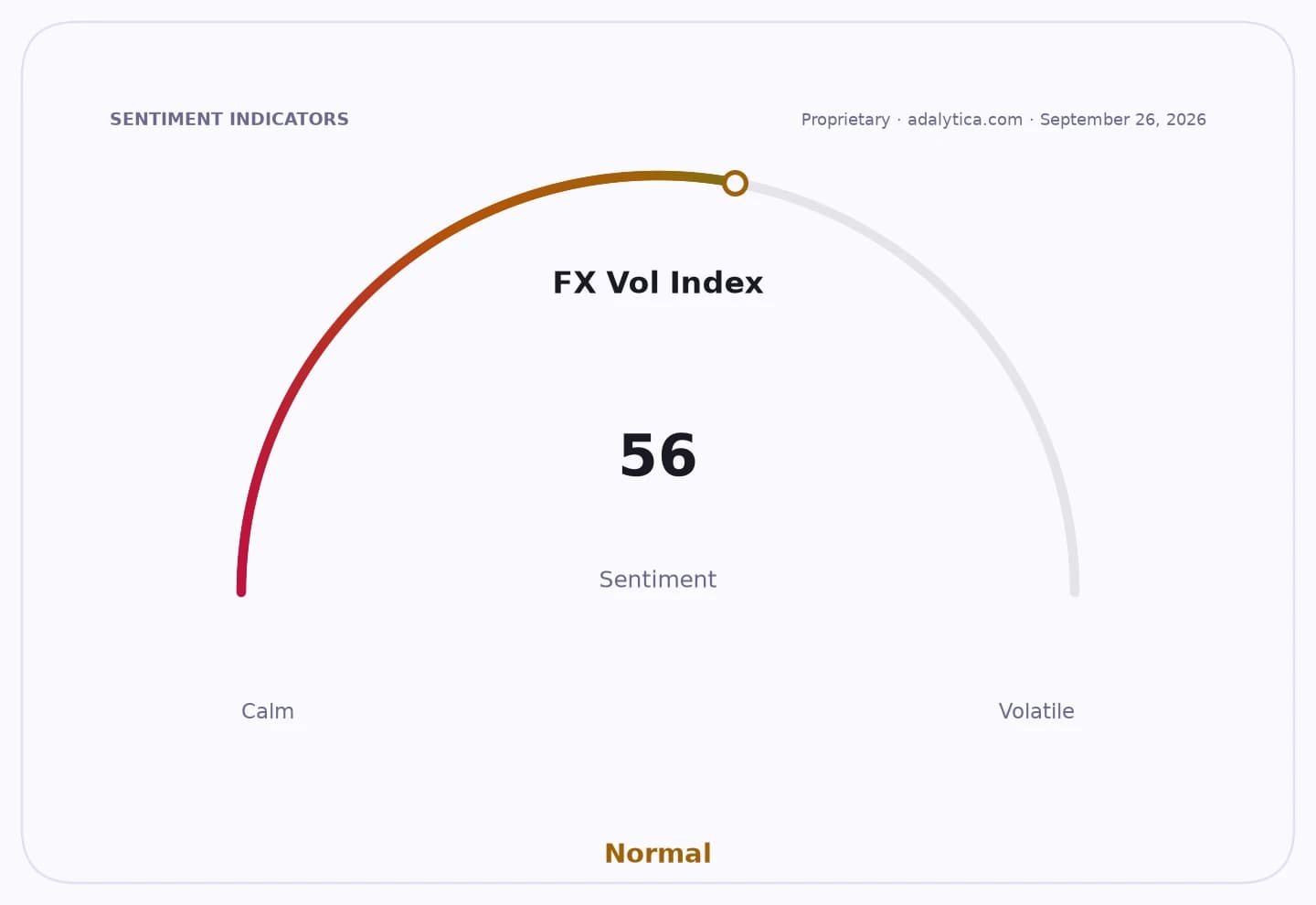
Frédéric Encel’s warning that Vladimir Putin will try to alter electoral campaigns, particularly the French one, lands at a moment when markets are already pricing a more fragile global stability backdrop. Adalytica’s Global Stability Sentiment sits at 70, still neutral, but its awareness gauge is at 15, or “Extreme Fear,” suggesting the market is underestimating how quickly election interference narratives can spill into pricing, confidence and risk premia.
Sentiment IndicatorsⓘProprietary · adalytica.com · September 26, 2026
This is a snapshot — live sentiment, awareness and momentum for 130+ markets update continuously in the dashboard.Open AlphaPulse
That matters because election meddling is no longer just about disinformation. It is about trust in institutions, the cost of capital and the willingness of foreign money to stay exposed to politically sensitive assets. France is one of the euro area’s core sovereigns, and any sustained perception that its political process is being targeted can widen the risk discount on French equities, lift hedging demand and keep investors cautious on Europe more broadly.
The data show that Europe is already carrying a geopolitical bid. The iShares MSCI Eurozone ETF, EZU, has held above its 200-day moving average and is trading near 68.71, though it remains below its 50-day moving average and has a weak RSI reading in the high 30s, a sign that sentiment is still shaky. That combination often marks a market waiting for a catalyst rather than one convinced of a breakout. In other words, Europe is not yet priced for a clean political backdrop.
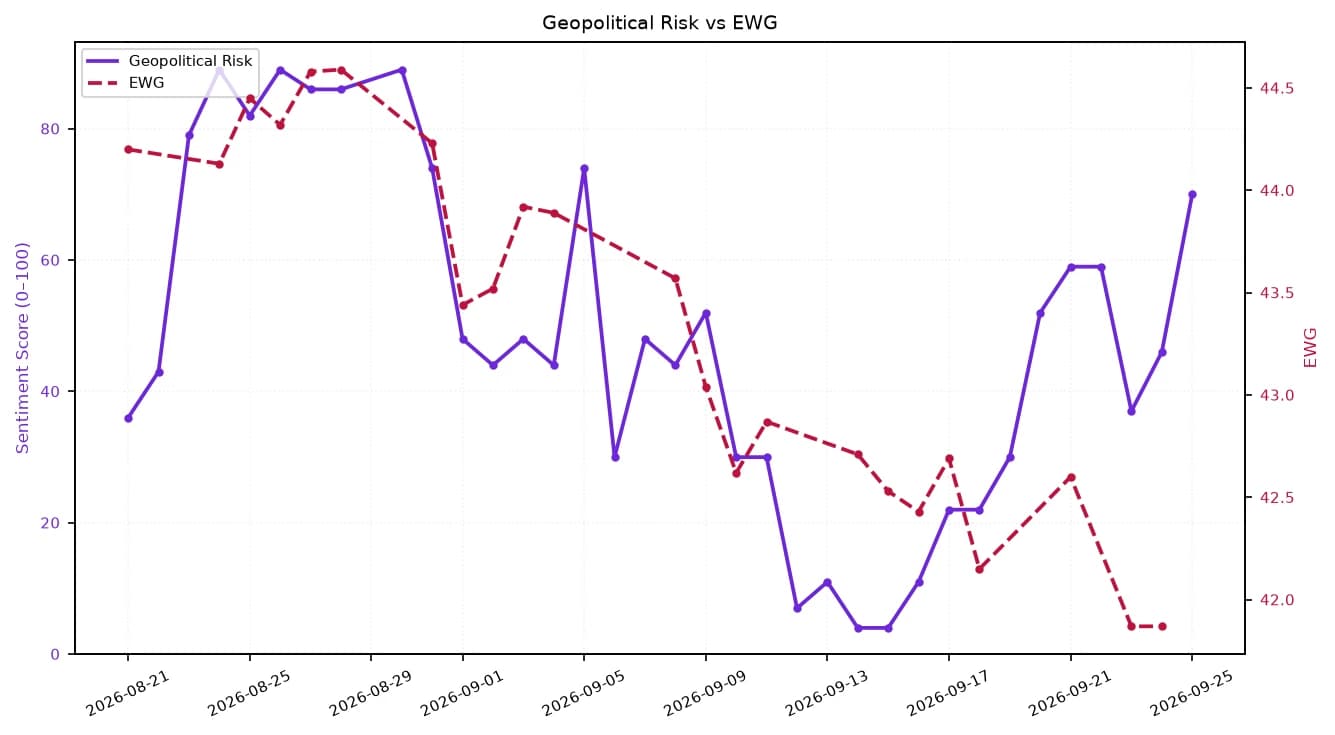
Geopolitical Risk — 30-day sentimentadalytica.com
Explore this data interactively — full history, time series and cross-market comparisons.Open AlphaPulse
Foreign-exchange positioning also tells the story. The FXF fund, which tracks the Swiss franc, has slipped to 106.29 and is well below both its 50-day and 200-day moving averages, but the move comes alongside elevated geopolitical vigilance rather than calm. When investors start to reprice election risk in Europe, the usual beneficiaries are defensive currencies, safe-haven assets and hedges tied to volatility, not broad cyclical exposure.
For investors, the implication is straightforward: this is a call to own resilience, not hope for normalcy. The market often discounts interference warnings until polling campaigns are already distorted, headlines are daily, and policymakers are forced into reactive defenses. That is when volatility jumps, not when the first warning is issued.
Brazil’s experience with election-security fears underscores the broader pattern: democracies are being forced to spend more on monitoring, AI-driven detection and information integrity. That creates opportunity in cybersecurity, cloud infrastructure, digital verification and defense-linked technology. The beneficiaries are the companies and funds that help governments secure communications, track bot activity and harden electoral systems. The losers are the countries and sectors that depend on political confidence, stable capital inflows and low-volatility risk appetite.
The best read-through for Europe is that geopolitical risk is no longer a tail event; it is part of the base case. If Russian influence operations intensify around the French cycle, expect higher demand for hedges, more policy noise in Brussels and Paris, and a continued premium for defense, cybersecurity and safe-haven positioning. Investors who wait for the interference to become obvious will have missed the trade.
| Entity | Gains | Losses |
|---|---|---|
| Cybersecurity firms | ▲Higher government spending | ▼Political stability |
| Defense contractors | ▲Security budgets rise | ▼Complacent investors |
| French equities | ▲None | ▼Higher risk premium |
| Euro-area hedges/safe havens | ▲More demand | ▼Risk-on trades |